 Bastien
Fermentation for beginners: how to start fermenting food at home
A practical guide to home fermentation covering sauerkraut, yogurt, kombucha, and more. Learn the science behind fermentation, essential equipment, safety basics, and step-by-step recipes for your first fermented foods.
TL;DR: Start with sauerkraut: it needs only cabbage and salt. Use 2-3% salt by weight, keep vegetables submerged, ferment at 65-75°F (18-24°C), and trust your senses. The lactic acid bacteria already on your produce do the rest.
My first attempt at fermentation was a jar of sauerkraut that sat on my kitchen counter for three weeks while I nervously checked it every day, convinced something had gone wrong. The cabbage had turned from bright green to pale gold, the brine had gone cloudy, and small bubbles rose to the surface when I pressed down on it. I almost threw it away. Then I tasted it — sharp, tangy, with a crunch that store-bought sauerkraut never has — and I was hooked.
That was four years ago. Since then I've fermented hundreds of jars of vegetables, brewed kombucha by the gallon, maintained a sourdough starter through two apartment moves, and turned more milk into yogurt than I can count. The learning curve is gentler than you think. Most fermentation failures come from overthinking, not from doing something wrong.
What fermentation actually is
Fermentation is a metabolic process where microorganisms (bacteria, yeast, or molds) break down sugars and produce acids, gases, or alcohol. It's one of the oldest food preservation methods, predating refrigeration by thousands of years.
For home cooks, three types of fermentation matter most:
- Lacto-fermentation: lactic acid bacteria (LAB) convert sugars into lactic acid. This is behind sauerkraut, kimchi, pickles, and yogurt. The acid preserves the food and creates that characteristic tang
- Alcoholic fermentation: yeast converts sugar into alcohol and CO₂. This powers bread, beer, wine, and kombucha
- Acetic acid fermentation: bacteria convert alcohol into vinegar. This is a two-stage process that starts with alcoholic fermentation
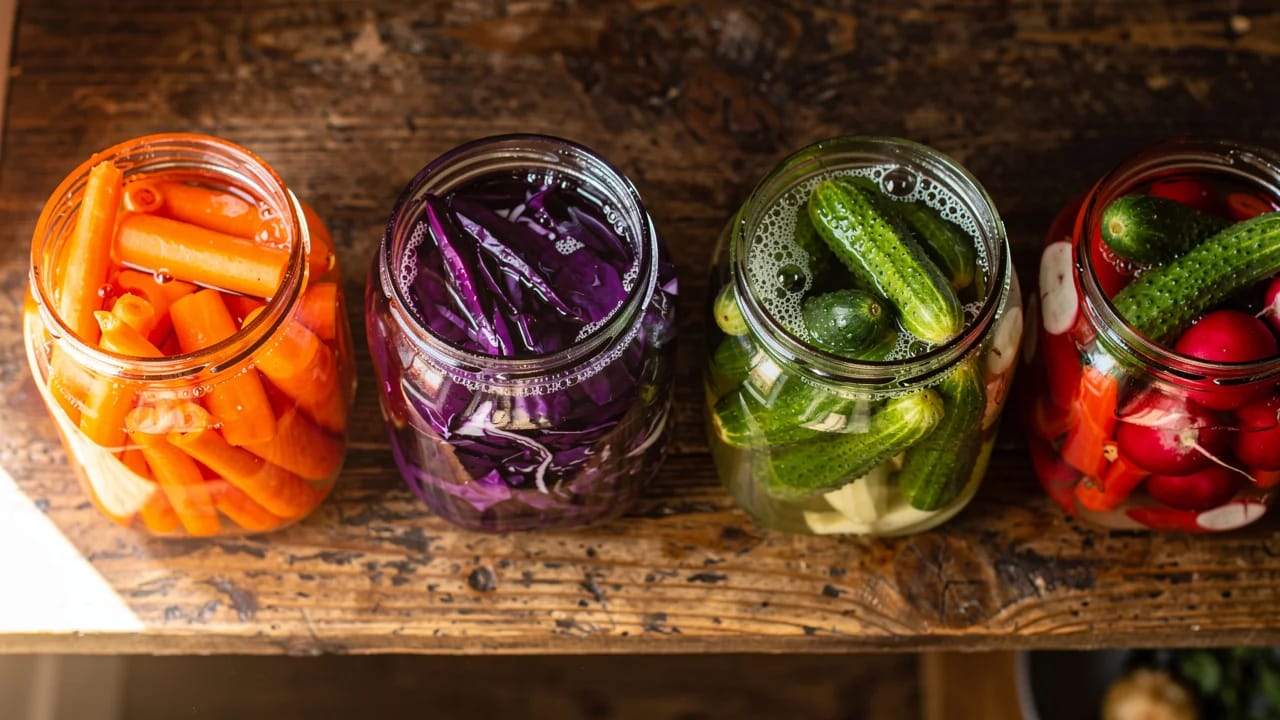
The bacteria you need for most vegetable ferments are already present on the produce. You don't need to buy cultures or starters. Just create the right environment (salt + no oxygen) and the beneficial microbes outcompete the harmful ones.
Why ferment at home
Store-bought fermented foods are often pasteurized, which kills the beneficial bacteria and flattens the flavor. When you ferment at home:
- Better flavor: you control the fermentation time, so you get exactly the level of tang you like. A one-week sauerkraut tastes very different from a four-week one
- Living probiotics: unpasteurized ferments contain billions of beneficial bacteria per serving. The gut health research is still evolving, but the evidence for fermented food improving digestion is strong
- Almost free: a head of cabbage and some salt costs under $3 and produces a quart of sauerkraut that would cost $8-12 at a health food store
- Less food waste: fermentation is preservation. That surplus of garden cucumbers, radishes, or peppers becomes shelf-stable food instead of compost
Essential equipment for beginners
You don't need much to start. Here's what actually matters:
A kitchen scale is the one piece of equipment I'd call essential. Accurate salt measurement is the difference between a successful ferment and a mushy, over-salted mess. Eyeballing salt by volume is unreliable because different salts have different densities. A tablespoon of fine sea salt weighs almost twice as much as a tablespoon of kosher salt.
Optional upgrades
After you've made a few successful batches, you might want:
- Airlock lids: fit on mason jars and let CO₂ escape without letting oxygen in. Reduces the chance of surface mold. Around $10-15 for a set
- Fermentation weights: glass discs sized to fit inside mason jars. More reliable than the zip-lock bag method
- pH strips or meter: lets you verify acidity objectively. A pH below 4.6 means the ferment is safe. Not necessary if you're using proper salt ratios, but reassuring for beginners
Your first ferment: sauerkraut
Sauerkraut is the ideal first project. One ingredient (cabbage), one preservative (salt), one vessel (jar), and time.
 1 medium
Green cabbage
about 900g / 2 lbs
1 medium
Green cabbage
about 900g / 2 lbs
Tip: If the cabbage hasn't released enough brine after 10 minutes of massaging, let it sit for 30 minutes and try again. If it's still dry, add a splash of non-chlorinated water mixed with 2% salt.
What to expect during fermentation
Beyond sauerkraut: four more beginner-friendly ferments
Once sauerkraut clicks, branch out. Each of these builds on the same core principles.
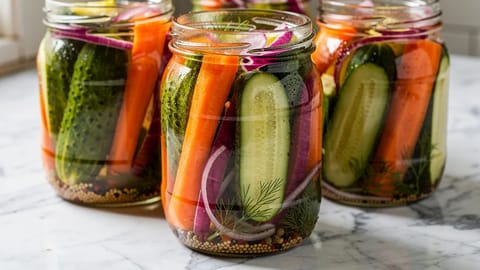
Fermented pickles (lacto-fermented cucumbers)
Unlike vinegar pickles, lacto-fermented pickles develop their tang from lactic acid bacteria, the same process as sauerkraut, but using a salt brine instead of dry-salting.
Use small, firm pickling cucumbers (Kirby type). Dissolve 3-5% salt in water to make a brine, pack the cucumbers into a jar with garlic, dill, and mustard seed, pour the brine over them, and weigh them down. They'll be half-sour in 3-5 days, full-sour in 1-2 weeks.
Note: Regular slicing cucumbers get soft during fermentation. Pickling cucumbers stay crunchy because they have thicker cell walls and less water content.
Yogurt
Yogurt is the fastest ferment on this list: 4-12 hours from start to finish. Heat milk to 180°F (82°C) to denature the proteins (this gives yogurt its thick texture), cool to 110°F (43°C), stir in a couple tablespoons of plain yogurt with live cultures as your starter, and hold at 110°F for 4-12 hours.
The tricky part is maintaining temperature. An oven with just the light on stays around 100-110°F. A cooler with a jar of hot water works too. Longer fermentation = tangier yogurt.
Kombucha
Kombucha is sweetened tea fermented by a SCOBY (symbiotic culture of bacteria and yeast). Brew strong sweet tea, cool it, add the SCOBY and some starter liquid from a previous batch, and ferment for 7-14 days at room temperature.
First fermentation produces a tangy, lightly fizzy tea. Second fermentation (sealed in bottles with fruit juice or ginger for 2-3 days) builds carbonation. Start with a shorter first ferment if you prefer it sweeter.
Sourdough starter
A sourdough starter captures wild yeast and lactic acid bacteria from flour and your environment. Mix equal parts flour and water by weight, discard half and feed with fresh flour and water daily, and within 5-7 days you'll have an active starter that can leaven bread.
The first few days smell funky. That's normal. Bad bacteria dominate initially before the LAB take over and acidify the environment. By day 5-7, it should smell pleasantly sour and double in volume within 4-8 hours of feeding.
The science you actually need to know
You don't need a microbiology degree, but understanding a few principles prevents most failures.
Salt controls everything
Salt is the single most important variable in vegetable fermentation. It:
- Inhibits harmful bacteria while letting beneficial LAB thrive (LAB are salt-tolerant; most pathogens are not)
- Draws water out of vegetables through osmosis, creating brine
- Slows fermentation: higher salt = slower, more controlled ferment
- Affects texture: too much salt makes vegetables mushy; too little lets them go soft from unchecked enzyme activity
Always measure salt by weight, not volume. Different salts have wildly different densities.
Temperature sets the pace
Fermentation rate roughly doubles with every 15°F (8°C) increase. This has practical consequences:
In summer, I move ferments to the basement or a cooler room. In winter, the kitchen counter is usually fine. If your house runs cool, fermentation just takes longer, which often produces better flavor.
Anaerobic conditions matter
The beneficial bacteria in lacto-fermentation thrive without oxygen. Keeping food submerged under brine creates the anaerobic environment they need. Surfaces exposed to air grow mold or kahm yeast. Not dangerous, but it affects flavor and is a sign your setup needs adjustment.
pH tells you when it's safe
Below pH 4.6, the environment is too acidic for Clostridium botulinum and other dangerous pathogens. Most well-salted vegetable ferments reach this pH within the first few days. You don't need to measure it if you're using proper salt ratios and the ferment smells right, but a pH meter removes all guesswork.
Troubleshooting common problems
Cause: Food exposed to air above the brine line.
Fix: Skim off the mold, make sure everything is submerged, and add a bit more brine (2% salt solution). White film is usually harmless kahm yeast. Black, pink, or fuzzy mold means discard and start over.
Cause: Wrong salt concentration, contaminated equipment, or temperature too high.
Fix: Discard it. A properly fermenting vegetable should smell sour and tangy, not putrid. Next time, verify your salt ratio with a scale and make sure your jar was clean.
Cause: Too little salt, temperature too high, or over-fermentation.
Fix: For future batches, ensure at least 2% salt and ferment at cooler temperatures. Adding a grape leaf or oak leaf (they contain tannins) helps maintain crunch. Move to the fridge sooner.
Cause: Too cold, too much salt, or chlorinated water killed the bacteria.
Fix: Move to a warmer spot (65-75°F). Check your salt ratio; over 5% slows things significantly. Always use non-chlorinated water for brines. If using tap water, let it sit uncovered overnight to off-gas chlorine.
Cause: Active CO₂ production. This is normal and good.
Fix: Place the jar on a plate or in a bowl to catch overflow. Leave headspace (at least 1 inch) in the jar. This is most common in the first 3-5 days.
Food safety: the rules that matter
Fermentation is one of the safest food preservation methods when done correctly. The acid environment that LAB create is inhospitable to pathogens. But there are rules:
- Weigh your salt: use a kitchen scale, not measuring spoons. Correct salt concentration is the primary safety barrier
- Keep food submerged: anything above the brine line is in the danger zone
- Use clean equipment: not sterile, just clean. Hot soapy water is fine. Avoid antibacterial soap
- Use non-iodized salt: iodine inhibits the beneficial bacteria you're trying to cultivate
- Use non-chlorinated water: chlorine kills bacteria. Use filtered water or let tap water sit uncovered for 24 hours
- Trust your nose: fermented food smells tangy. Spoiled food smells rotten. The difference is obvious
Warning: Fermentation is not the same as canning. Fermented vegetables stored in the fridge stay safe because the acid and cold temperature prevent bacterial growth. If you want shelf-stable room-temperature storage, you need proper canning equipment and procedures.
Building your fermentation practice
Start with one ferment. Make sauerkraut. When that batch is done and you understand the rhythm (salting, packing, waiting, tasting), try lacto-fermented pickles. Then yogurt. Then kombucha or a sourdough starter.
After six months, I had three or four ferments going at any time. A jar of sauerkraut, a jar of hot sauce, a kombucha vessel, and a sourdough starter in the fridge. Each one takes minutes of active work per week and provides food that's more flavorful, more nutritious, and cheaper than anything I could buy.
The hardest part of fermentation is patience. You have to wait, and trust that the invisible microbes are doing their job. They've been doing it for thousands of years. They don't need your help, just the right conditions.
- Start with sauerkraut: cabbage + 2% salt + jar + time
- Always measure salt by weight with a kitchen scale
- Keep food submerged under brine; this is the #1 safety rule
- Ferment at 65-75°F (18-24°C) for best results
- Trust your nose: tangy is good, rotten is bad
- You don't need special equipment to begin
- Patience is the main ingredient
Sources
Cook smarter
Join the waitlist for Fond. Recipes, meal plans, and a little AI sous-chef that learns how you cook.