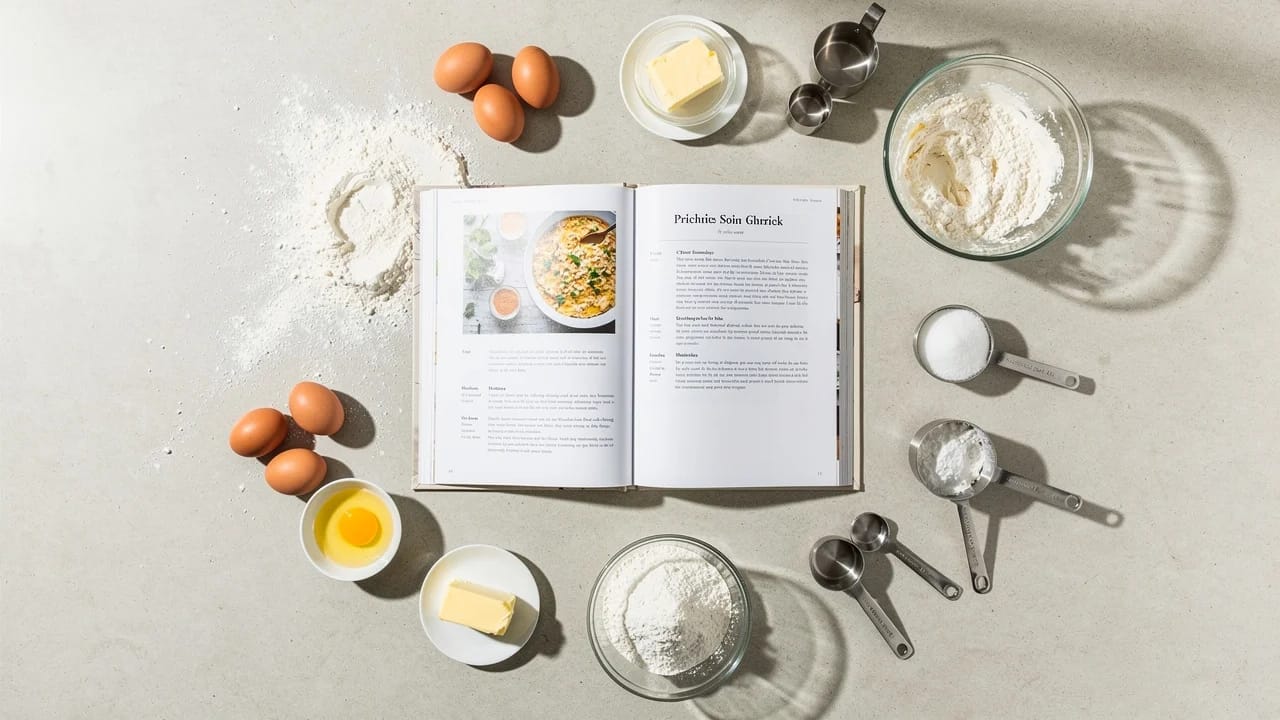
 Bastien
How to read a recipe: a complete guide for confident cooking
Reading a recipe well means understanding structure, decoding measurements, spotting hidden time requirements, and setting yourself up before a single burner clicks on. This guide breaks down every part of a recipe — from ingredient lists and abbreviations to doneness cues and digital tools — so you can cook with confidence every time.
Most kitchen disasters don't start at the stove. They start ten minutes earlier, when you glance at a recipe, skip half the ingredient list, and realize mid-cook that the dough was supposed to chill for two hours. I learned this the hard way while making croissants for the first time. Three hours in, butter pooling everywhere, I finally noticed the "refrigerate overnight" step I'd blown right past.
Reading a recipe sounds simple enough. But reading a recipe well means understanding the parts of a recipe, decoding cooking abbreviations, spotting hidden time requirements, and setting yourself up before a single burner clicks on.
This guide breaks down how to read a recipe from top to bottom: what every section means, how to follow a recipe efficiently, and how to avoid the mistakes that trip up beginners and experienced cooks alike. Whether you're working from a cookbook, a blog post, or a recipe manager, the fundamentals are the same.
The anatomy of a recipe: understanding every part
Every well-written recipe follows a consistent structure. Once you recognize the parts of a recipe, you can scan any recipe in under a minute and know exactly what you're getting into.
Recipe title and headnotes
The title tells you more than you think. "Pan-Seared Salmon with Lemon-Caper Butter" gives you the main ingredient (salmon), the cooking method (pan-searing), and the flavor profile (lemon, capers, butter) in one line.
Headnotes are the short paragraphs before the ingredient list. Skip them at your own risk. Good headnotes explain why a recipe works: why you're using chicken thighs instead of breasts, why the butter needs to be cold, why this ratio of flour to water produces a better result. Read them.
Yield and servings
Yield tells you how much a recipe makes. Servings tells you how many people it feeds. They're not always the same thing. A bread recipe might yield one 9x5 loaf. How many servings that is depends on how thick you slice it.
Pay attention to yield before you start. If a cookie recipe yields 24 cookies and you need 48 for a bake sale, you'll need to scale the recipe before you measure a single ingredient, not halfway through when you've already creamed the butter.
Time estimates: prep, cook, and total
Most recipes list prep time, cook time, and total time. Here's what they don't always tell you: prep time estimates assume you already know how to dice an onion in 30 seconds. If you're still learning your knife cuts, add 50% to the listed prep time.
Total time should also account for passive time: resting, chilling, marinating, rising. A recipe that says "total time: 45 minutes" but requires 30 minutes of marinating really needs an hour and fifteen minutes from start to plate.
The ingredient list: order matters
Ingredients are listed in the order you'll use them. This isn't random. When you see onions and garlic at the top and fresh herbs at the bottom, you know the aromatics go in first and the herbs finish the dish.
The comma rule is the single most important thing to understand about ingredient lists. It changes how much of an ingredient you actually use:
- "1 cup walnuts, chopped" means measure 1 cup of whole walnuts, then chop them.
- "1 cup chopped walnuts" means chop the walnuts first, then measure 1 cup of the chopped pieces.
The difference is significant. A cup of whole walnuts weighs about 100g. A cup of finely chopped walnuts packs more densely, closer to 120g. In baking especially, that 20% difference affects your results. If you're unsure, a kitchen scale removes the guesswork entirely.
Another term that confuses people: "divided." When you see "4 tablespoons butter, divided," it means you'll use that butter in separate steps. Maybe 2 tablespoons for sauteing vegetables and 2 tablespoons stirred in at the end. The method section tells you where each portion goes.
Watch for temperature and state instructions too. "Room temperature butter" means pull it from the fridge 30-60 minutes before you start. "Melted chocolate" means you need to melt it before adding it. These details hide planning steps inside the ingredient list.
The method: step-by-step instructions
The method section is where the cooking happens. Read it for flow and timing, not just individual steps. Good recipe instructions tell you what to do, when to do it, and what to look for.
Look for parallel tasks. "While the sauce simmers, prepare the pasta" means two things happen at once. If you read steps one at a time without looking ahead, you'll miss these overlaps and dinner takes twice as long.
Also watch for hidden ingredients in the method. Some recipes mention "salt and pepper to taste" or "a splash of vinegar" only in the instructions, not in the ingredient list. A full read-through catches these before they surprise you.
Decoding recipe language and cooking abbreviations
Recipes have their own shorthand. Knowing recipe terminology saves time and prevents mistakes.
Common cooking abbreviations
This reference covers the abbreviations you'll see most often in recipes. Keep it handy until they become second nature.
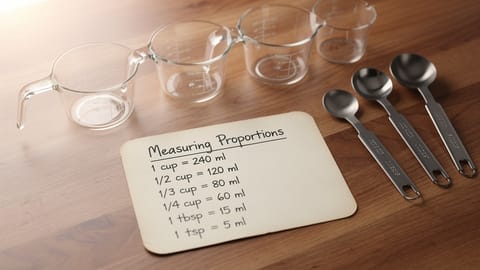
The most dangerous confusion on this list: tsp vs Tbsp. One tablespoon equals three teaspoons. Mix them up with salt or baking powder and the dish is ruined. When in doubt, use Fond's unit converter to double-check conversions between measurement systems.
Cooking terms you need to know
Recipe instructions assume you know certain vocabulary. Here are the terms that cause the most confusion:
Mixing methods:
- Fold means gently combining with a spatula in a sweeping, bottom-to-top motion. Used when you want to keep air in the batter.
- Stir means moving ingredients around with a spoon in a circular motion. General-purpose mixing.
- Whisk means beating vigorously with a whisk to incorporate air or combine liquids smoothly.
- Cream means beating butter and sugar together until light and fluffy. The goal is to trap air pockets that help baked goods rise.
Cutting terms:
- Dice means cutting into uniform cubes (1/4 inch for small dice, 1/2 inch for medium, 3/4 inch for large).
- Chop means cutting into rough, irregular pieces. Less precise than dicing.
- Mince means cutting as finely as possible. Garlic is almost always minced.
- Julienne means cutting into thin matchstick strips, about 1/8 inch wide and 2-3 inches long.
For a deeper breakdown with visual references, check out our knife cuts guide.
Heat levels:
- Simmer means small bubbles breaking gently at the surface, around 185-205°F (85-96°C). Most stews and sauces simmer.
- Boil means large, rolling bubbles that don't stop when you stir. 212°F (100°C) at sea level.
- Poach means even gentler than a simmer. Barely any bubbles, around 160-180°F (71-82°C). Used for eggs, fish, and delicate proteins.
Understanding doneness cues
Good recipes give you two types of doneness indicators: time and sensory cues. "Saute the onions until soft and translucent, about 5-7 minutes" gives you both.
Trust your senses over the timer. Stoves vary, pans conduct heat differently, and ingredients come in different sizes. If the recipe says "roast for 20 minutes until golden brown" and your vegetables are still pale at 20 minutes, keep going. The visual cue is the real target. The time is just an estimate.
After years of cooking, I've noticed that the sensory cues matter more than the clock in almost every situation. My oven runs about 10 degrees cool, so any recipe time is just a starting point for me. Once you cook enough, you'll learn your equipment's quirks too. The Serious Eats guide to cooking terminology is a solid reference when you encounter terms you're not familiar with.
Note that carryover cooking can also affect doneness. Meat and baked goods continue cooking after you remove them from heat, so pulling them out slightly early often gives better results.
How to read a recipe before you start cooking
The most important step in cooking happens before you turn on any heat. Professional chefs call it prep. Home cooks who follow this process have smoother, faster, more enjoyable cooking sessions.
The full read-through
Read the entire recipe from top to bottom before you do anything else. Every time. No exceptions.
This single habit prevents more cooking failures than any technique or gadget. During your read-through, look for:
- Time-sensitive steps. Does the dough need to rise for two hours? Does the meat need to marinate overnight?
- Temperature requirements. Does the butter need to be at room temperature? Does the oven need preheating?
- Equipment you might not have. A food processor, a cast iron skillet, a candy thermometer. Better to know now than mid-recipe.
- Unfamiliar techniques. If a step says "temper the eggs," look that up before you start, not while your custard base is on the stove.
Mise en place: set yourself up for success
Mise en place is a French term meaning "everything in its place." In practice, it means measuring, cutting, and organizing all your ingredients before you start cooking.
This isn't fussy or optional. It's how restaurant kitchens operate, and it works just as well at home. When the recipe says "add the garlic and cook for 30 seconds," you don't have 30 seconds to mince garlic. It needs to be ready. Line up your measured and prepped ingredients in the order you'll use them. When cooking starts, you just grab and go.
I started doing mise en place about two years into learning to cook, and it was the single biggest improvement to my cooking. Suddenly I wasn't burning the garlic while scrambling to chop the next ingredient. The whole experience went from stressful to enjoyable.
Equipment check
Scan the recipe for equipment requirements. Most recipes assume you have basics: a cutting board, a chef's knife, a couple of pots and pans. But some call for specific tools like a stand mixer, a fine-mesh sieve, a Dutch oven, parchment paper, or kitchen twine. Better to discover you need a candy thermometer now than when your sugar syrup is already on the stove.
Common recipe reading mistakes and how to avoid them
Even experienced cooks make these mistakes. Knowing them in advance puts you ahead.
Confusing cooking measurements
The tablespoon/teaspoon swap is the classic. One tablespoon of salt instead of one teaspoon is a meal in the trash. But measurement confusion goes deeper:
- Packed vs leveled. Brown sugar is packed, meaning you press it firmly into the cup. Flour is leveled: spoon it in and sweep off the excess. King Arthur Baking explains why scooping from the bag can add 30% more flour than intended.
- Weight vs volume. A cup of all-purpose flour weighs about 120g. A cup of bread flour weighs about 130g. For consistent baking results, a kitchen scale beats measuring cups every time.
Ignoring the comma rule
Worth repeating because it causes real problems. "1 cup rice, cooked" means cook the rice first, then measure one cup. You'll need roughly 1/3 cup dry. But "1 cup rice" with no modifier means one cup of dry rice, which yields about 3 cups cooked. That's a threefold difference from misreading a comma.
Not planning for passive time
Chilling, resting, marinating, and rising steps catch people off guard constantly. A recipe with "30 minutes prep, 45 minutes cook time" sounds like a 75-minute dinner. Add an hour of dough resting and you're at 2 hours 15 minutes. The full read-through catches these.
Skipping the preheat
Oven recipes assume a fully preheated oven. Most ovens take 15-20 minutes to reach temperature, and some take longer. If you slide a tray of cookies into a 300°F oven that was supposed to be 375°F, the baking time is meaningless and the texture will be wrong. Start preheating before you start prepping.
Reading recipes in the digital age
Recipes used to live in cookbooks and index cards. Now they live on phones, tablets, blogs, and apps. The way you read and follow a recipe has changed too.
Reading recipes on your phone or tablet
The biggest challenge with digital recipes is keeping the screen active while your hands are covered in flour or olive oil. Most phones lock after 30 seconds. Before you start cooking, adjust your screen timeout or use a cook mode feature that keeps the display on. Position your device where you can read it without touching it. A tablet propped against the backsplash works far better than a phone lying flat.
Importing and saving recipes from the web
Finding a great recipe on a blog is easy. Finding it again three weeks later when you want to make it is not. Bookmarks pile up. Screenshots disappear into your camera roll. The blog itself might rearrange or delete the page.
Importing recipes into a dedicated app solves this. Paste a URL and the recipe gets extracted: just the ingredients and steps, without the ads and life stories. Your saved recipes stay searchable, organized, and accessible from any device.
Scaling recipes up or down
A recipe serves four and you're cooking for two. Or it serves four and you're hosting eight. Either way, you need to scale the recipe, and doing the math manually is tedious and error-prone.
Halving a recipe that calls for 3 eggs doesn't have a clean answer. Digital tools handle the straightforward math instantly, freeing you to focus on the adjustments that require judgment, like reducing spice levels slightly when doubling or using a larger pan to avoid overcrowding.
How to tell if a recipe is reliable
Not all recipes are created equal. Before you commit time and ingredients, it's worth evaluating whether a recipe is likely to work.
Signs of a well-tested recipe
- Specific measurements. "2 tablespoons olive oil" is tested. "Some olive oil" is a guess.
- Doneness cues alongside times. "Roast for 25 minutes until the edges are golden and crispy" tells you both the estimate and what to look for. Time alone isn't enough.
- Headnotes with context. An author who explains why they chose a technique or ingredient has thought about the recipe deeply.
- Yield and serving information. If a recipe doesn't tell you how much it makes, it probably wasn't tested carefully.
Sources like America's Test Kitchen test every recipe dozens of times before publishing. That level of rigor shows in the specificity of their instructions.
Red flags in recipes
- Vague instructions. "Cook until done" without defining what "done" looks like.
- Missing temperatures. A baking recipe that doesn't specify an oven temperature is incomplete.
- No timing information. "Saute the onions" without context. Two minutes gives you crunchy onions. Twenty minutes gives you caramelized onions. Those are very different outcomes.
- Social media recipes stripped for aesthetics. A 15-second video with no measurements, no temperatures, and no timing might look impressive but gives you almost nothing to work with in the kitchen.
Recipe reading checklist
Before you start cooking, run through this quick checklist:
This becomes second nature after a few times. The payoff is immediate: less stress, fewer mistakes, and food that turns out the way the recipe intended.
Read the recipe, then cook with confidence
Reading a recipe well is a skill, and like any skill, it improves with practice. The difference between a frustrating cooking session and a smooth one often comes down to five minutes of preparation: reading the full recipe, understanding the parts of a recipe, prepping ingredients, and knowing what's ahead before the heat goes on.
Once you know what to look for, every recipe becomes easier to follow. The anatomy is always the same. The cooking abbreviations repeat. The pattern stays consistent whether you're making scrambled eggs or a multi-course dinner.
Keep your recipes organized, scaled, and ready to cook in Fond. Import from any source, convert units automatically, and read recipes hands-free in cook mode. Your future self, mid-cook with flour-covered hands, will thank you.
Sources
Cook smarter
Join the waitlist for Fond. Recipes, meal plans, and a little AI sous-chef that learns how you cook.
Related articles
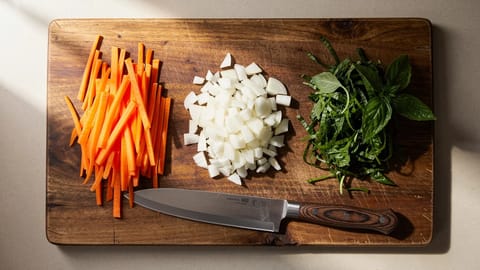
Types of knife cuts: the complete guide for home cooks
Professional chefs learn 12+ standard knife cuts in culinary school. Home cooks usually learn zero. That gap shows up on the plate — in uneven cooking, mushy textures, and dishes that never quite look like the recipe photo.
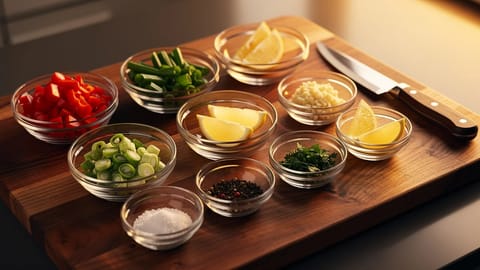
What is mise en place and why it matters
Mise en place is the practice of preparing and organizing every ingredient and tool before you start cooking. It's the single habit that separates chaotic, stressful cooking from calm, confident meals, and it works just as well in a home kitchen as it does in a professional one.
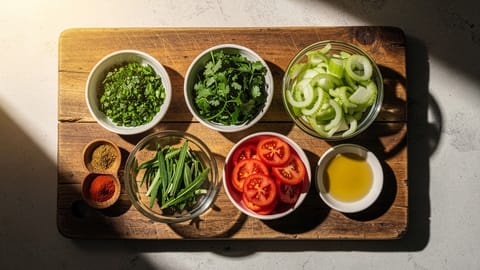
Mise en Place
The practice of preparing and organizing all ingredients before cooking — everything in its place.
Recipe Scaling
Adjusting ingredient quantities in a recipe to serve more or fewer people while maintaining correct proportions.
The 7 best recipe apps in 2026 (tested and compared)
An honest comparison of the top recipe manager apps — Fond, Paprika, Mealime, Plan to Eat, Mealie, Crouton, and Copy Me That. What each does well, where they fall short, and which one fits your cooking style.