 Bastien
How to reduce food waste at home (practical tips that work)
The average household throws away 30% of the food it buys, roughly $2,900 per year. This guide covers practical strategies to cut food waste at home: meal planning, proper food storage, the eat-me-first system, creative use of scraps and leftovers, understanding date labels, composting, and tracking your waste patterns.
Last week, Nadia pulled a bag of spinach from her fridge. Slimy. She tossed it, along with half a bell pepper, two limes, and a container of leftover rice she forgot about. Total damage: about $12 in groceries, straight into the trash. Sound familiar?
The food waste statistics are staggering: the average North American household throws away roughly 30% of the food it buys. According to a 2025 EPA report, that works out to about $2,900 per year per family of four. Not because people are careless, but because life gets busy. Produce wilts before you get to it. Leftovers get pushed to the back of the fridge. That ambitious Tuesday recipe calls for half a bunch of cilantro, and the rest turns to mush by Friday.
The good news: most food waste at home is preventable. You don't need a radical lifestyle change or a zero waste cooking philosophy. A few better habits around planning, food storage, and using what you already have will cut your waste in half. Here are the food waste tips that actually move the needle.
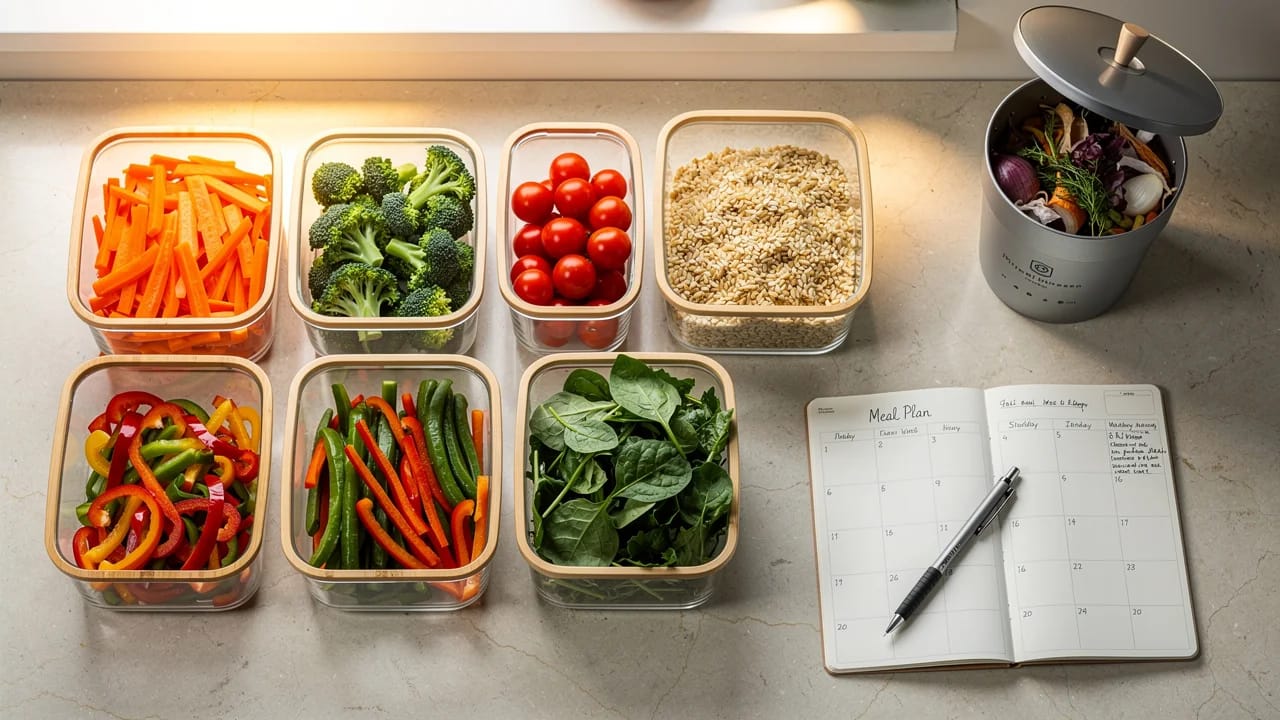
Use meal planning to reduce food waste
If you only change one thing, make it this: plan what you'll eat before you buy anything. Impulse purchases at the grocery store are the biggest driver of food waste at home. Smart grocery shopping habits start with a plan.
When you shop without a plan, you buy based on what looks good in the moment. Three avocados because they're on sale. A head of cauliflower you'll "figure out later." A bag of mixed greens for salads you never actually make. That food enters your kitchen without a purpose, and purposeless food gets wasted.
A simple weekly meal plan changes that equation. When every ingredient in your cart has a destination, a specific recipe on a specific day, waste drops dramatically.
A friend of mine started meal planning with his partner in January. Three months later, they were buying 25% less food and throwing away almost nothing. Not because they suddenly developed iron discipline, just because every ingredient in the cart had somewhere to go.
Want to simplify this? Fond's meal planner lets you drag recipes onto a weekly calendar and generates a consolidated shopping list with one click. Two recipes calling for onions? Your shopping list shows "Onions (3)," not two separate entries.
Store food properly (most people get this wrong)
So you planned well and bought smart. Now what? How you store those groceries determines whether they last three days or ten. Good food storage tips can double or triple the life of your produce.
Fridge organization matters
Your fridge isn't one uniform temperature. The back is coldest, the door is warmest, and the crisper drawers have different humidity levels. Use this to your advantage:
Most people toss everything on whatever shelf has space. That's how lettuce freezes against the back wall and milk goes warm on the door. Proper fridge organization is one of the easiest ways to reduce food waste at home without changing what you buy.
Keep ethylene producers away from sensitive produce
Some fruits release ethylene gas as they ripen, which speeds up spoilage in nearby produce. Apples, bananas, avocados, and tomatoes are heavy ethylene producers. Keep them away from ethylene-sensitive items like leafy greens, broccoli, cucumbers, and carrots. This one adjustment can add days of shelf life to your vegetables.
The herbs trick that saves $5 a week
Fresh herbs are one of the most-wasted grocery items. A bunch of cilantro costs $1-2, and most people use a quarter of it before it wilts.
The fix is simple: treat soft herbs like flowers. Trim the stems, stand them in a glass of water, and loosely cover the tops with a plastic bag. Parsley, cilantro, and mint stored this way last 2-3 weeks instead of 3-4 days. That's a 5x improvement from a 30-second habit. For more on this, check out our guide on how to store fresh herbs.
Hardy herbs like rosemary and thyme do better wrapped in a damp paper towel inside a loose bag in the crisper.
Freeze what you won't use in time
Your freezer is the pause button on food waste. Almost anything that's about to go bad can be frozen and used later:
- Overripe bananas: Peel, break into chunks, freeze flat on a sheet pan, then bag. Perfect for smoothies or banana bread.
- Wilting greens: Blanch and shock spinach or kale for 30 seconds, squeeze dry, and freeze in portions.
- Bread heels and stale bread: Freeze and pulse into breadcrumbs when you have enough.
- Leftover broth or stock: Pour into ice cube trays. Pop out frozen cubes and bag them. Each cube is roughly 2 tablespoons.
- Tomato paste: Drop tablespoon-sized dollops onto parchment, freeze, then bag. No more half-open cans going bad.
The key to successful freezing: label everything with the contents and date, and wrap tightly to prevent freezer burn. A freezer full of mystery packages isn't useful, it's just delayed waste.
Use the "eat me first" system
Restaurant kitchens use FIFO (first in, first out). The oldest stock gets used first. You can apply the same principle at home without the commercial rigor.
Designate one shelf or bin in your fridge as the "eat me first" zone. Anything approaching its use-by window goes there: the half-cut onion, yesterday's leftover soup, the strawberries that need to be eaten today, the yogurt expiring tomorrow.
When the family opens the fridge looking for a snack or wondering what to eat, they see this section first. It's a visual nudge that works better than any reminder app.
One family I know labels theirs "Use First," a clear plastic bin on the middle shelf. They say their weekly waste dropped from around $20 to under $5 once everything perishable had a visible home instead of hiding behind the milk.
Get creative with scraps and leftovers
Food waste doesn't just mean throwing away whole ingredients. It's also the carrot tops, broccoli stems, cheese rinds, and bones that go straight into the trash. Zero waste cooking starts with seeing these scraps as ingredients, not garbage.
The scrap bag method
Keep a gallon zip-lock bag in your freezer. Every time you cook, toss in vegetable trimmings: onion ends, carrot peels, celery leaves, mushroom stems, herb stems, leek tops. When the bag is full, dump it into a pot with water and simmer for 60-90 minutes. Strain, and you have free vegetable stock that's better than anything boxed.
Turn leftovers into new meals
The mental shift that kills food waste at home: leftovers aren't reheated meals. They're prepped ingredients for tomorrow's cooking.
- Last night's roast chicken? Today's chicken salad, tomorrow's quesadillas, and a stock from the carcass on the weekend.
- Extra rice is actually better the next day. Fried rice needs dry, day-old grains to work properly.
- Roasted vegetables that nobody finished go into frittatas, grain bowls, or a quick one-pot meal. Stale bread becomes croutons or panzanella.
This is batch cooking logic applied to everyday meals. Cook once, eat different ways across the week. It's one of the most effective food waste solutions because it turns potential waste into planned meals.
Fond tip: When you meal prep for the week, Fond's leftover tracking lets you mark meals as leftovers in your meal plan. Those meals get excluded from your shopping list automatically, so you never over-buy.
Understand food expiration dates (they don't mean what you think)
"Best by," "sell by," and "use by" are the most misunderstood labels in your kitchen. According to a study from the Natural Resources Defense Council, 84% of consumers throw away food based on the date stamp, even when the food is still perfectly safe.
Here's what the dates actually mean:
| Label | What it means | Should you toss it? |
|---|---|---|
| Best by | Peak quality (flavor, texture) | No. Still safe past this date. |
| Sell by | Retailer inventory management | No. Tells the store when to rotate stock. |
| Use by | Last date of guaranteed peak quality | Use caution, but often still safe 1-3 days after. |
| Expires on | Hard safety date (rare, mainly infant formula) | Yes, respect this one. |
The only federally regulated date in the US is on infant formula. Everything else is the manufacturer's best guess at peak quality, not a safety cutoff. According to the USDA, date label confusion alone causes roughly 20% of consumer food waste.
Use your senses. Does the milk smell sour? Toss it. Does it smell fine and it's two days past "best by"? It's almost certainly fine. Trust your nose, your eyes, and common sense over a printed date.
Compost what you can't save
Even with perfect planning, some food waste is unavoidable. Banana peels, eggshells, coffee grounds, and the occasional forgotten cucumber will happen. Composting turns that waste into nutrient-rich soil instead of methane-producing landfill material.
You don't need a backyard for this. Countertop compost bins with charcoal filters handle the odor problem in apartments. If you'd rather not deal with a bin at all, check whether your city offers curbside food scrap pickup, as most major metros do now.
What to compost: fruit and vegetable scraps, coffee grounds, tea bags, eggshells, bread, pasta, rice, paper towels, shredded newspaper.
What to skip: meat, dairy, oils, pet waste, diseased plants.
Even composting just your fruit and vegetable scraps diverts roughly 30-40% of your household waste from the landfill.
Track your waste for one week
You can't fix what you don't see. Before overhauling your kitchen, spend one week tracking what you throw away. Keep a notepad on the counter or a note on your phone. Every time food goes in the trash, write down what it was and roughly how much.
After seven days, patterns emerge. Maybe you always waste leafy greens because you buy them Monday and don't use them until Thursday. Maybe you cook too much rice. Maybe you forget about leftovers until they're science experiments.
I tried this myself last February. My top offenders: bagged salad mix ($4/bag, thrown away half-used twice in one week), fresh bread that staled before I finished it, and pasta sauce I made too much of and forgot about. Switching to whole heads of lettuce, freezing half the bread loaf on day one, and portioning sauce into freezer containers cut about $60/month from my grocery bill. The tracking itself took less than a minute per day, but the savings were immediate.
Start with one change
Reducing food waste at home doesn't require a complete kitchen overhaul. Pick the strategy that matches your biggest waste pattern:
Start meal planning. Even a rough 3-day plan cuts impulse purchases. Write a list and stick to it.
Fix your storage habits. Separate ethylene producers from sensitive produce, and try the herbs-in-water trick (saves $5-10 per week).
Set up the "eat me first" bin. Visual cues beat willpower every time. A clear container on the middle shelf puts aging food front and center.
Track your waste for one week. Write down every item you toss. The data will point you to the biggest fix.
There's an environmental side to this too. The EPA says food waste is the largest single category of material in US landfills. If global food waste were a country, it would be the third-largest greenhouse gas emitter, behind only the US and China.
But the personal math matters more for most people: $2,900 per year, back in your pocket, from habits that take 15 minutes a week to maintain.
Plan your first week of meals with Fond and see how much less you waste. Free for 14 days, no credit card required.
Sources
Cook smarter
Join the waitlist for Fond. Recipes, meal plans, and a little AI sous-chef that learns how you cook.
Related articles
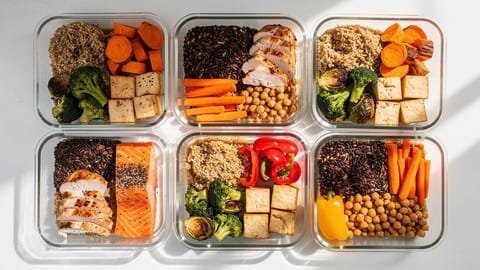
Batch cooking for beginners: how to cook once and eat all week
Batch cooking means dedicating a few hours to cooking large quantities of food that you portion and store for the week ahead. It's not the same as meal prep — instead of assembling complete meals, you cook versatile building blocks (grains, proteins, sauces, roasted vegetables) that mix and match into different dishes every night. This guide covers everything you need to start: planning, cooking, storing, and scaling.
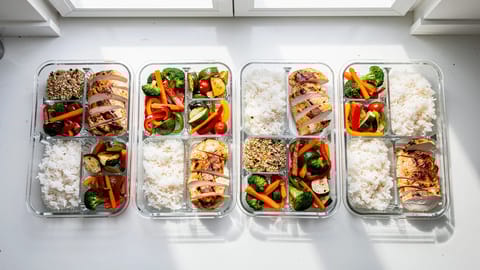
How to meal prep: a practical guide for beginners
Meal prep means dedicating about 2 hours on a Sunday to planning, cooking, and portioning complete meals for the week ahead. Unlike batch cooking, which produces versatile components you mix and match, meal prep gives you finished meals ready to grab and eat. This guide covers everything from equipment and shopping lists to a minute-by-minute prep day timeline and safe storage practices.
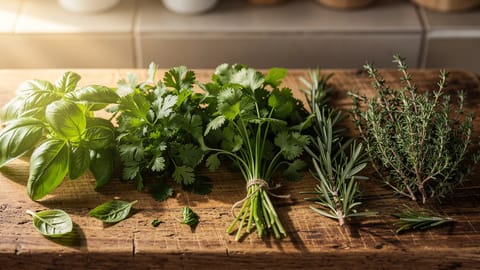
How to store fresh herbs so they last weeks, not days
Most fresh herbs die in 2-3 days because people store them wrong. The fix comes down to one distinction: soft herbs vs. hard herbs. This guide covers the best storage method for every common herb, how to freeze and dry herbs for long-term use, how to revive wilted ones, and how to plan meals around what's actually in your fridge.
Best meal prep containers for every budget and kitchen
A practical guide to choosing meal prep containers by material, size, and use case. Covers glass vs plastic vs stainless steel, container sizing for different meals, what features actually matter, how to organize prepped meals, and food safety storage times.