 Bastien
Spring meal prep ideas: seasonal recipes and a weekly prep plan
A practical guide to spring meal prep built around seasonal produce like asparagus, peas, radishes, and strawberries. Includes a mix-and-match component system, a timed 2-hour Sunday prep session, storage freshness chart, and budget-friendly recipes for breakfast, lunch, dinner, and snacks.
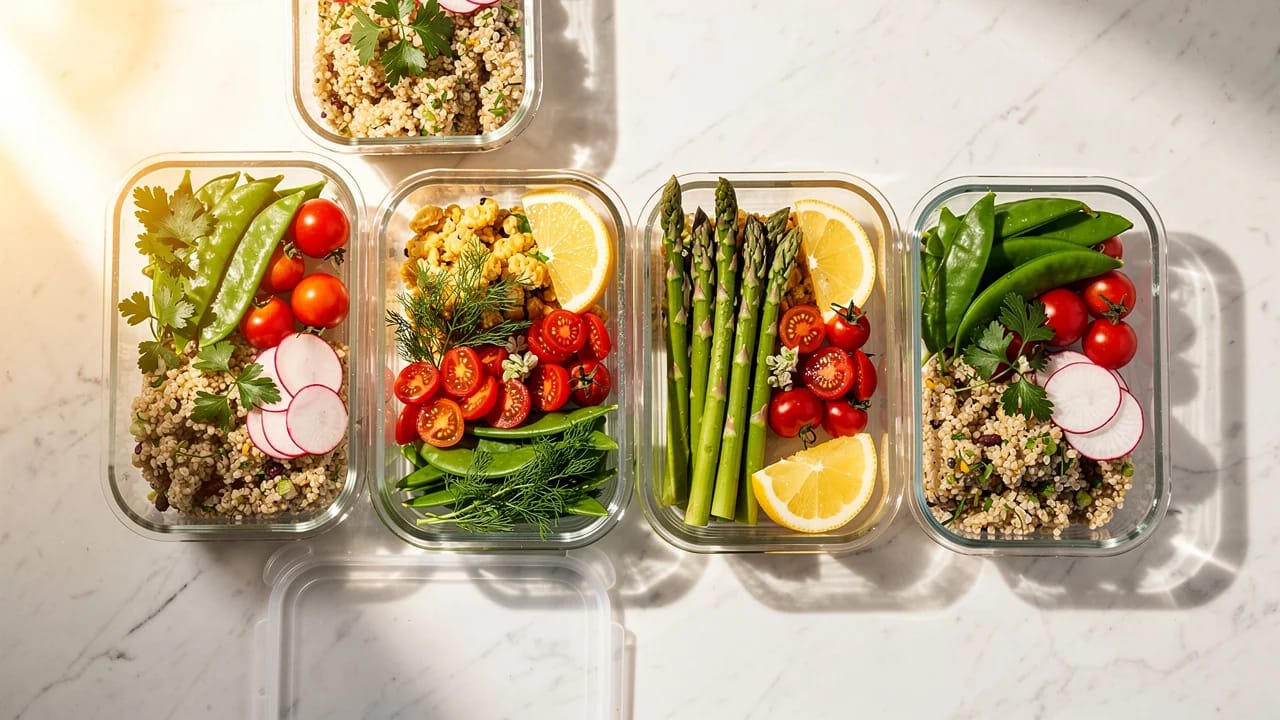
Two Sundays ago I opened my fridge to find three containers of the same brown rice and chicken combo I had been eating since January. Filling? Sure. Exciting? Not even close. Spring produce had been showing up at the farmers market for weeks (bundles of asparagus, bags of snap peas, radishes in every color) and I was still eating winter food out of habit.
That realization kicked off a full reset of my meal prep routine. The result: lighter meals, more variety, and a grocery bill that dropped because spring produce is cheaper when it is in season.
TL;DR: Spring meal prep works best with a component system: prep proteins, grains, and seasonal vegetables separately, then mix and match throughout the week. This guide covers what is in season, a 2-hour Sunday prep schedule, storage timelines, and budget tips.
What is in season: spring produce guide
Before you plan a single meal, you need to know what is actually available. Cooking with seasonal produce is cheaper, tastes better, and travels fewer miles to your plate. The USDA's seasonal produce guide confirms that in-season fruits and vegetables cost 20-30% less than their off-season counterparts.
I started buying asparagus in March when bundles dropped to $2.50, half the December price. Snap peas followed in April. Building meals around what is actually in season made my grocery runs faster and my shopping list shorter.
The spring meal prep component system
Most meal prep guides hand you a rigid menu: eat this on Monday, that on Tuesday. By Thursday you are bored and ordering takeout. A component system works differently. You prep building blocks (proteins, grains, vegetables, and dressings) then assemble different combinations each day.
Here is how to build your spring component system:
Pick one from each column
| Protein | Grain / Base | Spring Vegetable | Dressing / Sauce |
|---|---|---|---|
| Grilled chicken thighs | Quinoa | Roasted asparagus | Lemon tahini |
| Hard-boiled eggs | Farro | Blanched snap peas | Green goddess |
| Baked salmon | Brown rice | Raw radish + arugula | Miso ginger |
| Marinated tofu | Couscous | Sautéed spinach + peas | Herb vinaigrette |
| White beans | Sweet potato | Roasted new potatoes | Chimichurri |
That grid gives you 25 unique meal combinations from 5 components in each column. Prep all of them on Sunday, and you will never eat the same bowl twice in a week.
Spring proteins that prep well
Not every protein holds up for 5 days in the fridge. These do:
- Chicken thighs (not breasts, they dry out). Marinate in lemon, garlic, and olive oil. Bake at 425°F / 220°C for 25 minutes.
- Hard-boiled eggs. Blanch and shock method: boil 10 minutes, then straight into ice water. Peel and store in an airtight container.
- Baked salmon. Season simply: salt, pepper, lemon. Bake at 400°F / 200°C for 12-15 minutes. Keeps 3-4 days.
- Marinated tofu. Press, cube, toss in soy sauce and sesame oil, bake at 400°F / 200°C for 25 minutes until crispy edges.
- White beans. Cook a batch of dried cannellini or navy beans. Toss with olive oil, lemon zest, and fresh herbs. They are a protein and a side in one.
Spring meal prep recipes by category
Breakfast prep
Strawberry rhubarb overnight oats
Combine ½ cup rolled oats, ½ cup milk, ¼ cup yogurt, 1 tbsp chia seeds, and 2 tbsp rhubarb compote. Top with sliced strawberries in the morning. Makes 5 jars in 10 minutes.
Asparagus and goat cheese egg muffins
Whisk 8 eggs with ¼ cup milk. Divide chopped asparagus and crumbled goat cheese across a 12-cup muffin tin. Pour egg mixture over the top. Bake at 375°F / 190°C for 20 minutes. Store 5 days, reheat in 30 seconds.
Lunch prep
Spring grain bowl (the workhorse)
Farro + roasted asparagus + blanched snap peas + shaved radish + crumbled feta + lemon tahini dressing. Assemble in the morning from your prepped components. Keep dressing on the side until you eat.
Pea and mint soup
Sauté 1 diced onion, add 4 cups peas (frozen work fine), 3 cups vegetable stock, and a handful of mint. Simmer 15 minutes, blend smooth. Portion into 4 containers. Tastes better on day 2.
Dinner prep
Sheet pan lemon herb chicken with new potatoes
Toss halved new potatoes with olive oil, salt, and rosemary on one half of a sheet pan. Place marinated chicken thighs on the other half. Roast at 425°F / 220°C for 30 minutes. Add asparagus for the last 8 minutes. Four dinners, one pan.
Miso ginger salmon bowls
Bake salmon fillets with a miso-ginger glaze (2 tbsp white miso, 1 tbsp grated ginger, 1 tbsp rice vinegar, 1 tsp sesame oil). Serve over brown rice with sautéed spinach and pickled radishes. Assemble fresh from prepped components.
Snack prep
- Radishes with herb butter. Mix softened butter with chopped dill and chives. Spread on halved radishes. Old-school French snack.
- Snap peas with hummus. Wash, trim, and portion into snack bags. Add 2 tbsp hummus per bag.
- Strawberry yogurt parfaits. Layer yogurt, granola, and sliced strawberries in small jars. Eat within 2 days (granola gets soggy beyond that).
Your 2-hour Sunday prep schedule
This timeline assumes you are prepping components for 4-5 lunches and 3-4 dinners. Adjust quantities based on household size.
After doing this for three weeks, I got the whole session down to about 1 hour and 40 minutes. The first time takes longer because you are figuring out oven timing. By the third week it is almost automatic.
Storage guide: what to eat when
Not everything lasts the same number of days. This chart helps you plan which components to eat first and which can wait until Friday.
| Component | Fridge life | Freezer life | Eat by |
|---|---|---|---|
| Cooked grains (quinoa, farro, rice) | 5 days | 3 months | Friday |
| Roasted vegetables | 5 days | 2 months | Friday |
| Baked chicken thighs | 4 days | 3 months | Thursday |
| Baked salmon | 3 days | 2 months | Wednesday |
| Hard-boiled eggs | 5 days | Not recommended | Friday |
| Blanched snap peas | 4 days | 3 months | Thursday |
| Raw sliced radishes | 5 days (in water) | Not recommended | Friday |
| Dressed salads | 1-2 days | Not recommended | Monday-Tuesday |
| Dressings (in jars) | 7 days | Not recommended | Next Sunday |
| Overnight oats | 4 days | Not recommended | Thursday |
| Egg muffins | 5 days | 2 months | Friday |
Tip: Eat salmon and dressed salads early in the week. Save grains, roasted vegetables, and eggs for Thursday and Friday. This way nothing goes to waste.
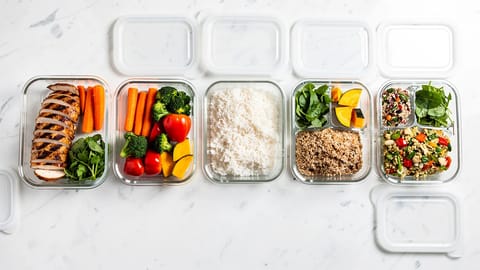
Store everything in airtight containers. Glass is better than plastic for reheating. It does not stain from turmeric or tomato, and you can see what is inside without opening the lid. Keep dressings and sauces in separate small jars so they don't make other components soggy.
Budget tips for spring meal prep
Spring meal prep should cost less than winter prep because seasonal produce is at its cheapest. Here is how to keep costs down:
- Buy whole chickens and break them down. Thighs for meal prep, breast for a separate dinner, carcass for stock. A whole chicken costs roughly $1.50/lb versus $3.50/lb for boneless thighs.
- Use dried beans instead of canned. A 1 lb bag of dried cannellini beans costs $1.50 and yields about 6 cups cooked, equivalent to 4 cans at $1.25 each. Learn how to cook dried beans properly and you will never go back.
- Don't skip the "ugly" produce. Farmers markets often sell cosmetically imperfect vegetables at a discount. A bent asparagus spear tastes exactly the same as a straight one.
- Make your own dressings. A bottle of store-bought tahini dressing costs $5-7. Homemade lemon tahini: ¼ cup tahini, 2 tbsp lemon juice, 1 clove garlic, water to thin. Cost: about $0.75.
Common mistakes to avoid
Making it stick
The hardest part of spring meal prep is not the cooking — it is switching out of your winter routine. You have spent months defaulting to stews, roasted root vegetables, and heavy grains. Spring calls for lighter ingredients and quicker cooking methods.
Start small. This week, swap one winter component for a spring one: roasted asparagus instead of roasted broccoli, snap peas instead of green beans, a lemon vinaigrette instead of a heavy ranch. Next week, try the full component system. By the third week, your meal planning will feel seasonal without any extra effort.
The farmers market trick that changed my prep routine: I go on Saturday morning, buy whatever looks best, and plan Sunday's prep around what I actually have — not the other way around. That flexibility is exactly what the component system is designed for. No rigid menu. Just good ingredients, prepped and ready to combine however you feel like eating them.
Sources
Cook smarter
Join the waitlist for Fond. Recipes, meal plans, and a little AI sous-chef that learns how you cook.
Related articles
Batch cooking for beginners: how to cook once and eat all week
Batch cooking means dedicating a few hours to cooking large quantities of food that you portion and store for the week ahead. It's not the same as meal prep — instead of assembling complete meals, you cook versatile building blocks (grains, proteins, sauces, roasted vegetables) that mix and match into different dishes every night. This guide covers everything you need to start: planning, cooking, storing, and scaling.
How to meal prep: a practical guide for beginners
Meal prep means dedicating about 2 hours on a Sunday to planning, cooking, and portioning complete meals for the week ahead. Unlike batch cooking, which produces versatile components you mix and match, meal prep gives you finished meals ready to grab and eat. This guide covers everything from equipment and shopping lists to a minute-by-minute prep day timeline and safe storage practices.
How to reduce food waste at home (practical tips that work)
The average household throws away 30% of the food it buys, roughly $2,900 per year. This guide covers practical strategies to cut food waste at home: meal planning, proper food storage, the eat-me-first system, creative use of scraps and leftovers, understanding date labels, composting, and tracking your waste patterns.
Best meal prep containers for every budget and kitchen
A practical guide to choosing meal prep containers by material, size, and use case. Covers glass vs plastic vs stainless steel, container sizing for different meals, what features actually matter, how to organize prepped meals, and food safety storage times.