 Bastien
What is umami? The fifth taste explained for home cooks
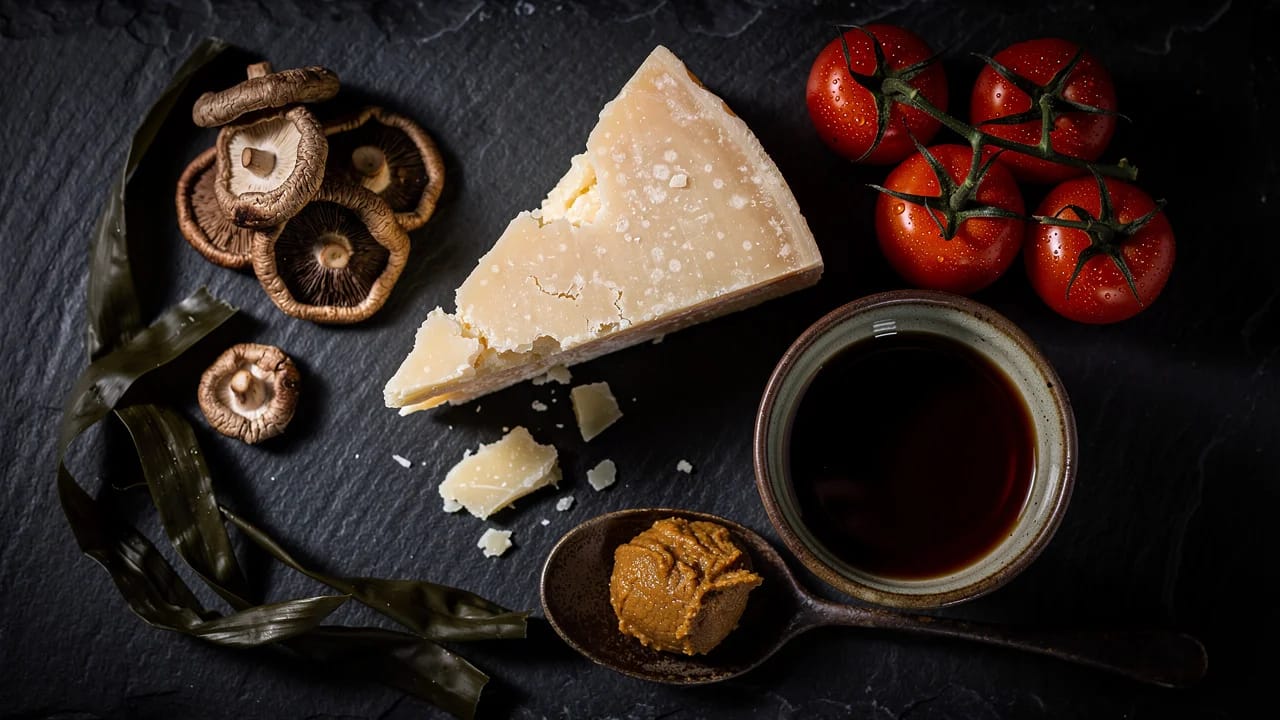
You know the taste. That deep, savory richness in a slow-cooked broth, a chunk of aged parmesan, or a spoonful of miso stirred into soup. It's the reason tomato sauce tastes better after simmering for hours and why a dash of soy sauce transforms a stir-fry. That taste has a name: umami.
For most of Western culinary history, four basic tastes covered the map: sweet, sour, salty, and bitter. Then in 1908, a Japanese chemist named something cooks had always sensed but never had a word for. He called it umami, and it changed how we think about flavor.
Umami is the deep, savory richness you taste in a slow-simmered broth, a chunk of aged parmesan, or a spoonful of miso stirred into soup. It explains why a weeknight pasta sauce improves after hours on the stove, and why a splash of soy sauce pulls a stir-fry together. Once you understand what creates that taste and how to build it deliberately, your cooking gets noticeably better, from a simple rice bowl to a fully loaded pizza dough.
The science behind umami flavor
Dr. Kikunae Ikeda, a chemistry professor at Tokyo Imperial University, discovered umami while studying dashi, a Japanese stock made from kombu seaweed. The broth didn't taste sweet, sour, salty, or bitter. It was something else entirely. Ikeda isolated the compound responsible: glutamate, an amino acid naturally present in many foods.
He named it umami, combining the Japanese words umai (delicious) and mi (taste). The umami meaning is, quite directly, "pleasant savory taste." You pronounce it oo-MAH-mee.
Western science took nearly a century to catch up. In 2002, researchers at the University of Miami identified specific taste receptors on the human tongue that respond to glutamate, confirming umami as a distinct, scientifically recognized basic taste.
The three umami compounds
Three key compounds trigger the umami taste, and they don't all come from the same molecule:
These compounds have a synergistic effect that matters in the kitchen. Combine glutamate with either inosinate or guanylate, and the perceived umami intensity multiplies by up to eight times. That synergy is why classic flavor pairings work so well. Kombu (glutamate) plus bonito flakes (inosinate) in dashi. Tomato sauce (glutamate) with parmesan (glutamate) and anchovies (inosinate). The pairing doesn't just add umami. It multiplies it.
I stumbled onto this synergy by accident years ago, tossing a parmesan rind into a pot of tomato soup that already had a splash of fish sauce. The flavor went from "pretty good" to "what did you put in this?" in seconds. That's glutamate meeting inosinate, doing exactly what the science predicts.
What does umami taste like?
Umami is a deep, savory, mouth-coating sensation. It creates a feeling of fullness and richness across your whole tongue, not just a single spot. Distinct from the sharpness of salt or the brightness of acid.
A few contrasts make it tangible:
- A plain tomato versus one slow-roasted with olive oil. The roasted one has significantly more umami.
- Chicken broth from a bouillon cube versus one simmered from bones for 12 hours. The long-simmered stock is rich with umami.
- Fresh mushrooms versus dried shiitake reconstituted in warm water. Drying concentrates their umami dramatically.
Salt and sugar hit you immediately. Umami lingers. It coats. It makes you want another bite. Food scientists describe it as promoting salivation and a sensation of "mouthfulness." When a dish tastes flat and you can't pinpoint what's missing, not more salt, not more acid, the answer is usually umami.
Umami foods: the complete list
Some foods are naturally loaded with glutamate and related umami compounds. Knowing which ingredients carry the most impact helps you cook with more intention.
| Food | Glutamate (mg/100g) | Notes |
|---|---|---|
| Kombu seaweed | 1,600-3,400 | The original source Ikeda studied. Highest glutamate of any food. |
| Parmesan cheese | 1,200-1,680 | The king of umami in Western cooking. Aging concentrates glutamate. |
| Soy sauce | 400-1,700 | Fermentation converts proteins to free glutamate. |
| Fish sauce | 950-1,380 | Concentrated umami in liquid form. A little goes far. |
| Dried shiitake mushrooms | 1,060 | Rich in guanylate too, so double umami. |
| Anchovies | 630-1,200 | Melt into sauces for invisible depth. |
| Miso paste | 200-700 | Varies by type. Red (aka) miso has more than white (shiro). |
| Tomatoes (ripe) | 140-250 | Sun-dried tomatoes concentrate to 650+ mg/100g. |
| Aged cheddar | 120-180 | Less than parmesan but still significant. |
| Fermented foods | Varies | Kimchi, sauerkraut, and other fermented foods develop umami over time. |
Three patterns stand out. Aging concentrates umami: a 24-month parmesan has far more than a young cheese. Drying does the same: dried shiitake mushrooms contain about 10 times the glutamate of fresh ones. And fermentation creates umami by breaking proteins down into free amino acids, including glutamate.
How to add umami to your cooking
Theory is one thing. Getting dinner on the table is another. Here are practical ways to build umami into everyday meals.
Layer umami sources
Because of the synergy effect, combining umami ingredients creates exponentially more flavor than any single source. A few tested combinations:
- Tomato sauce: Add 1 tablespoon of fish sauce and 2 tablespoons of grated parmesan per 28 oz can of tomatoes. The fish sauce disappears into the background. Nobody will taste "fish."
- Soups and stews: Drop a 2-inch piece of kombu into the pot while simmering. Remove before serving. It adds depth without any seaweed flavor.
- Stir-fries: Combine 1 tablespoon soy sauce with 1 teaspoon miso paste dissolved in a splash of warm water.
Finish with umami
- Grate parmesan over roasted vegetables, pasta, and even salads
- Stir 1 teaspoon of white miso into vinaigrettes. It emulsifies beautifully.
- Add a few drops of soy sauce to beef stew or chili in the last 10 minutes
- Deglaze a pan with soy sauce or fish sauce instead of reaching for salt
Build umami through technique
Cooking methods matter as much as ingredients. The Maillard reaction (the browning you get from high-heat searing, roasting, or grilling) generates new umami compounds. A properly seared steak has more umami than a boiled one, even though the raw ingredient is identical.
Slow cooking and reducing concentrate umami too. A tomato sauce simmered for three hours has measurably more free glutamate than one cooked for 20 minutes. Heat breaks down proteins into their component amino acids, releasing glutamate in the process.
After dozens of tomato sauces, I can tell you the jump between 20 minutes and 2 hours is dramatic. The sauce goes from bright and acidic to round and almost meaty. That's glutamate building up as proteins break down.
The umami bomb shortcut
For maximum umami impact with minimum effort, combine three or more high-umami ingredients in one preparation:
- Umami butter: Soften 100g butter. Mix in 1 tablespoon soy sauce, 1 tablespoon finely grated parmesan, and 1 teaspoon tomato paste. Roll in cling film, refrigerate, and slice onto steaks, vegetables, or toast.
- Umami paste: Blend 50g sun-dried tomatoes, 2 anchovy fillets, 1 tablespoon miso paste, and 1 clove of roasted garlic. Stir into soups, spread on sandwiches, or toss with pasta.
MSG vs natural umami: clearing up the confusion
Monosodium glutamate (MSG) is glutamate, the same amino acid found naturally in parmesan, tomatoes, and soy sauce, combined with sodium. That's it. Modern MSG is produced through bacterial fermentation of sugars, similar to how yogurt or vinegar is made.
The idea that MSG causes headaches, numbness, or other symptoms (sometimes called "Chinese Restaurant Syndrome") originated from a 1968 letter to the New England Journal of Medicine. The letter was anecdotal, not a study. In the decades since, extensive double-blind research has consistently failed to establish a causal link between MSG and adverse symptoms at normal dietary levels.
A simple comparison: a tablespoon of parmesan contains about 75mg of free glutamate. A tablespoon of soy sauce contains roughly 900mg. A serving of MSG seasoning contains about 500mg. If glutamate caused problems, parmesan and soy sauce would too.
MSG is a practical tool. A quarter teaspoon in a pot of soup, a stew, or a marinade adds clean umami without additional liquid, sodium, or competing flavors. Not a replacement for good cooking, but a legitimate ingredient, no different in principle from salt or black pepper.
Umami and pizza: a natural connection
Pizza is, when you break it down, an umami delivery system. Every component contributes.
The sauce: Tomatoes are one of the richest plant-based sources of glutamate. Cooking concentrates it further. A pizza sauce that simmers for even 30 minutes develops noticeably more umami than raw crushed tomatoes.
The cheese: Mozzarella has modest umami on its own (about 80mg glutamate per 100g), but parmesan, often added as a finishing cheese, is one of the most glutamate-dense foods on earth. A generous dusting on a Margherita multiplies the umami synergy between tomato and cheese.
The dough: This is the connection most people miss. Fermentation generates umami. During a long cold ferment (24 to 72 hours in the refrigerator) yeast and bacteria break down proteins in the flour into free amino acids, including glutamate. A pizza dough cold-fermented for 48 hours has measurably more umami than one made and used the same day. That's a big part of why long-fermented doughs taste more complex. The same principle applies to sourdough, where wild fermentation produces even more amino acid development.
The toppings: Anchovies, cured meats like prosciutto, roasted mushrooms, caramelized onions. The most popular pizza toppings tend to be the ones highest in umami. Not a coincidence.
Tracking your dough formulas and fermentation times helps you reproduce the results you like. Fond makes that straightforward with tools built for home cooks who care about the details, including a pizza dough calculator that handles the math for you.
- Umami is the fifth basic taste, caused by glutamate and related compounds (inosinate, guanylate)
- Combining umami sources creates a synergy effect that multiplies perceived intensity by up to 8x
- The richest umami foods: kombu, parmesan, soy sauce, fish sauce, dried shiitake
- Aging, drying, and fermentation all concentrate umami in foods
- MSG is chemically identical to natural glutamate and safe at normal levels
- When a dish tastes flat, reach for umami (soy sauce, miso, parmesan) before reaching for salt
Sources
Cook smarter
Join the waitlist for Fond. Recipes, meal plans, and a little AI sous-chef that learns how you cook.
Related articles
Cooking oil smoke points: the complete guide for every cooking method
Every cooking oil has a temperature limit. Push past it and you get bitter flavors, acrid smoke, and potentially harmful compounds filling your kitchen. That temperature limit is called the smoke point, and knowing it is the difference between a perfect sear and a smoking disaster.
The science of cooking: why your food works the way it does
A practical guide to the chemistry, physics, and biology behind everyday cooking. Covers the Maillard reaction, caramelization, emulsification, fermentation, heat transfer, protein denaturation, and common cooking myths debunked by science.
How to cook rice perfectly every time
Rice is the most consumed grain on the planet, yet it trips up even confident home cooks. Too sticky, too mushy, burned on the bottom. The failures are predictable, and so are the fixes. Learning how to cook rice well comes down to the right water ratio, proper heat control, and leaving it alone while it cooks.
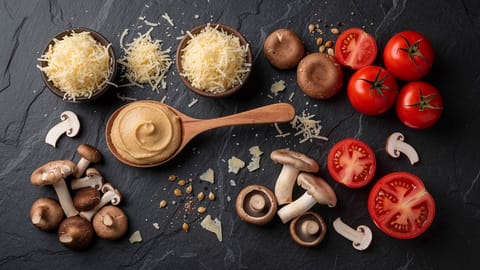
Umami
The fifth basic taste — a savory, meaty depth found in aged cheeses, soy sauce, mushrooms, and fermented foods.
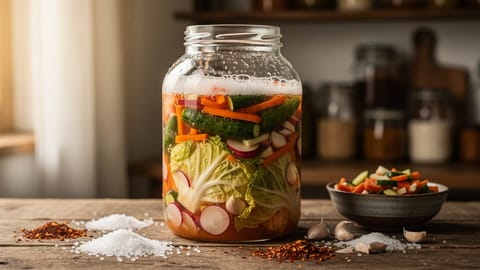
Fermentation
A metabolic process where microorganisms convert sugars into acids, gases, or alcohol — the basis of bread, yogurt, kimchi, and beer.
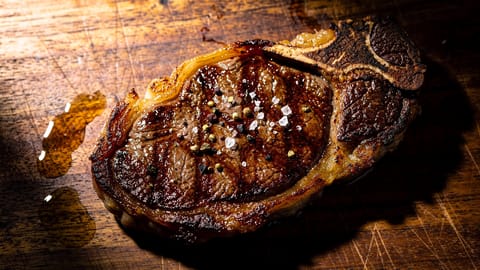
Maillard Reaction
The chemical reaction between amino acids and sugars that occurs when food is heated, creating the brown color and complex flavors of seared meat, toasted bread, and roasted coffee.
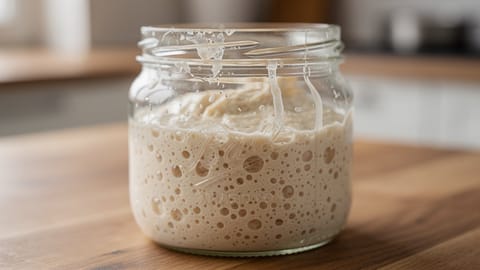
Sourdough Starter
A live culture of wild yeast and bacteria maintained with regular feedings of flour and water, used to leaven bread.
Stock vs. Broth
Stock is made from bones and connective tissue for body and richness; broth is made from meat for direct flavor. Both have different culinary uses.