 Bastien
Bain-Marie
A cooking technique that uses a water bath to apply gentle, indirect heat — essential for custards, cheesecakes, melting chocolate, and delicate sauces.
A bain-marie is a cooking technique that uses a water bath to apply gentle, indirect heat to food. Instead of exposing a dish directly to oven or burner heat, you place it inside or above a container of hot water. The water acts as a buffer, keeping temperatures low and even.
The name comes from medieval Latin balneum Mariae — "Mary's bath" — likely a reference to Maria the Jewess (also called Mary the Prophetess), an early alchemist in Alexandria who used water baths to control heat during experiments. The technique crossed from alchemy into cooking centuries ago and became a foundation of French pastry and sauce work.
Two forms of bain-marie
Oven bain-marie (water bath)
The dish sits in a larger, deeper pan filled with hot water, and the whole assembly goes into the oven. The surrounding water limits the temperature to 100°C (212°F) — water can't exceed its boiling point — so the food cooks gently and evenly.
This is the method for:
- Custards — crème brûlée, flan, crème caramel
- Cheesecakes — prevents cracking on the surface
- Terrines and pâtés — even cooking throughout a dense loaf
- Bread pudding — creamy interior without dried-out edges
Stovetop bain-marie (double boiler)
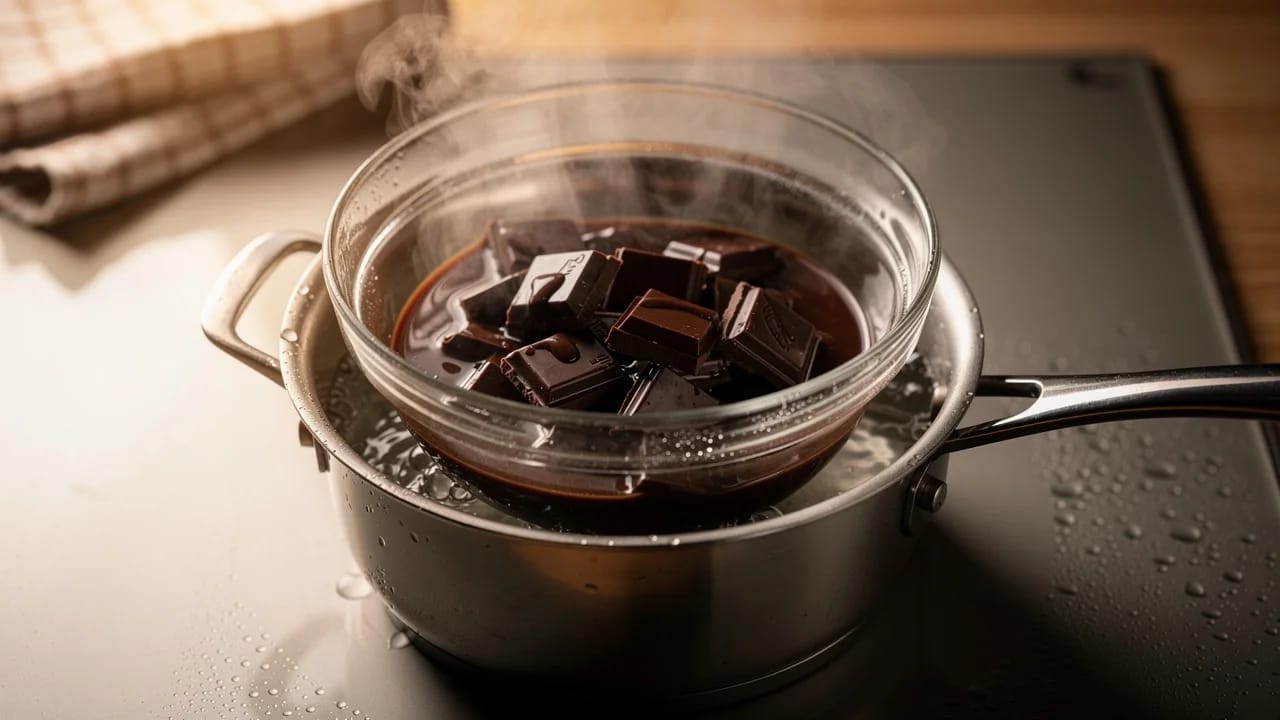
A heatproof bowl sits over a pot of simmering water. Steam from the water heats the bowl indirectly. The bowl should not touch the water — you want steam heat, not direct-contact heat.
This is the method for:
- Melting chocolate — prevents scorching and seizing
- Hollandaise and béarnaise — emulsification of egg yolks and butter at controlled heat
- Tempering eggs — gradually raising yolk temperature without scrambling
- Sabayon — whisking egg yolks and sugar into a foamy custard
How to set up an oven bain-marie
- Boil a kettle of water. You want hot water ready before the dish goes in the oven — adding cold water slows everything down and extends cooking time
- Place your filled dish (ramekins, cheesecake pan, terrine mold) inside a larger roasting pan or deep baking dish
- If using a springform pan, wrap the outside in two layers of aluminum foil. This prevents water from seeping through the seam into your cheesecake or custard
- Pull out the oven rack partway, place the roasting pan on it, then pour hot water into the outer pan until it reaches halfway up the sides of the inner dish
- Slide the rack in gently and bake at the recipe's specified temperature
Filling the water on the pulled-out rack avoids carrying a heavy, sloshing pan across the kitchen.
How to set up a stovetop bain-marie
- Fill a saucepan with 3-5 cm (1-2 inches) of water and bring it to a gentle simmer — small bubbles, not a rolling boil
- Set a heatproof bowl on top. The bowl should sit snugly on the rim of the saucepan without falling in. It must not touch the water surface
- Add your ingredients to the bowl and work with them — stir chocolate until melted, whisk egg yolks for Hollandaise, etc.
- Keep the heat low. If water boils vigorously, steam becomes too hot. A gentle simmer is enough
Glass or metal bowls both work. Metal heats faster; glass holds heat more evenly.
Why a bain-marie works
The physics are simple: water cannot exceed 100°C (212°F) at standard pressure. By surrounding your dish with water, you cap the maximum temperature the food is exposed to, even if the oven is set higher.
This matters because:
- Egg-based mixtures curdle above 85°C (185°F). A direct oven at 160°C (325°F) can push custard edges past that threshold while the center stays raw. The water bath keeps the entire custard within a safe range
- Even heat distribution. Water conducts heat better than air, surrounding the dish uniformly instead of blasting it from one direction
- Moisture. The steam from the water bath keeps the oven humid, preventing surface cracking on cheesecakes and custards
Common uses
| Application | Method | Why bain-marie helps |
|---|---|---|
| Crème brûlée / flan | Oven | Prevents curdling, silky texture |
| Cheesecake | Oven | Prevents cracking and uneven cooking |
| Terrine / pâté | Oven | Even cooking through a dense mixture |
| Melting chocolate | Stovetop | Prevents scorching and seizing |
| Hollandaise / béarnaise | Stovetop | Controlled heat for emulsification |
| Tempering eggs | Stovetop | Gradual warming without scrambling |
| Sabayon / zabaglione | Stovetop | Gentle heat for whisking to foam |
Tips for better results
- Start with hot water, not cold. Boiling the kettle first cuts setup time and gets the water bath working immediately
- Don't let water boil hard. A gentle simmer is the goal — vigorous boiling creates turbulence that can splash into open ramekins and produces too much heat for stovetop work
- Fill to halfway. The water should come halfway up the sides of your inner dish. Too little and the buffer effect is weak. Too much and it risks overflowing or floating the dish
- Wrap springform pans in foil. Even pans that claim to be leakproof can let water in. Double-wrap with heavy-duty foil
- Use a kitchen towel on the bottom of the outer pan if your ramekins slide around — it adds grip and provides a small extra buffer
Bain-marie vs double boiler
These are the same principle applied two different ways. "Bain-marie" is the French culinary term that covers both oven and stovetop versions. "Double boiler" is the English term specifically for the stovetop setup — a pot of water with a bowl or insert on top. In practice, most English-language recipes use "water bath" for the oven method and "double boiler" for the stovetop method. They all rely on water to moderate heat.
Bain-marie in Fond
Fond's recipe timers help you manage bain-marie cooking, where timing matters but the visual cues are subtle. When a recipe calls for a water bath custard or a stovetop chocolate melt, Fond tracks the duration so you can focus on the texture rather than watching the clock.
Frequently asked questions
Can I use a bain-marie in a regular baking pan?
Yes. Any oven-safe pan deep enough to hold water halfway up your dish works. A roasting pan is ideal because of its size and depth.
How do I know when a bain-marie custard is done?
Jiggle the pan gently. The custard should wobble like set gelatin in the center — it firms up more as it cools due to carryover cooking. If the center is still liquid, give it more time.
Does the bowl have to sit above the water for a double boiler?
Yes. If the bowl touches the water, it gets too hot and you lose the gentle-heat advantage. Leave a gap of at least 2-3 cm between the water surface and the bottom of the bowl.
Can I skip the bain-marie for cheesecake?
You can, but expect cracks on the surface and a drier texture around the edges. The water bath is what gives a cheesecake its signature creamy, even texture throughout.
Cook smarter
Join the waitlist for Fond. Recipes, meal plans, and a little AI sous-chef that learns how you cook.
Related terms
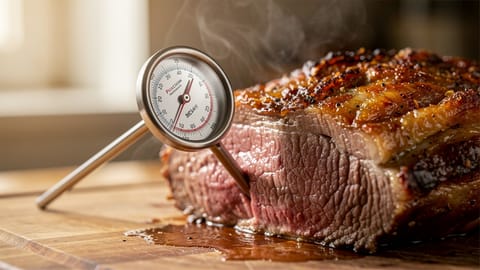
Carryover Cooking
The phenomenon where food continues to cook after being removed from heat, as residual thermal energy from the exterior migrates to the cooler interior.
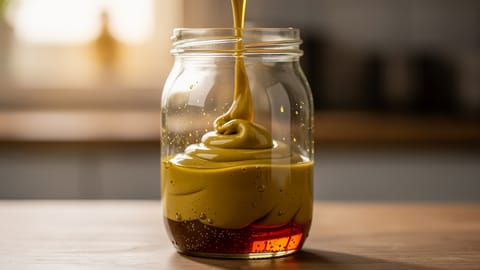
Emulsification
Combining two liquids that normally don't mix (like oil and water) into a stable, uniform mixture.
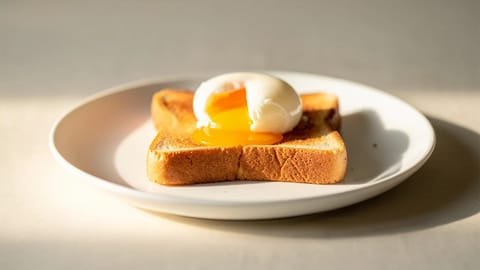
Poaching
Gentle cooking technique using liquid at low temperatures (160-180°F) to preserve the delicate texture of eggs, fish, and poultry.
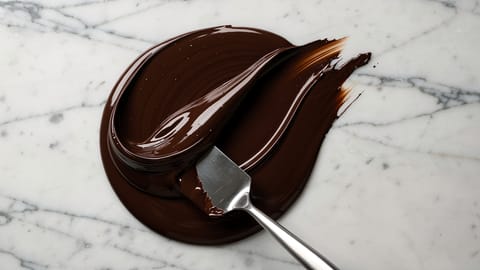
Tempering
Gradually adjusting the temperature of a sensitive ingredient to prevent curdling (eggs) or seizing (chocolate).
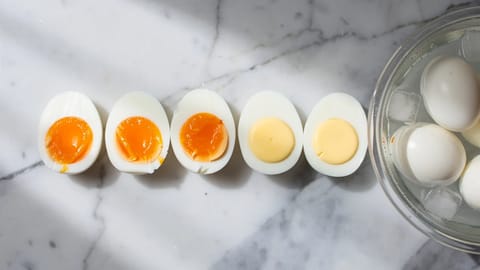
How long to boil eggs for soft, medium, and hard yolks
The difference between a runny, jammy, or fully set yolk comes down to minutes. Knowing how long to boil eggs removes the guesswork and gives you the exact result you want, every single time.