 Bastien
Baker's Percentage
A method of expressing bread recipe ingredients as percentages relative to the total flour weight, making recipes infinitely scalable.
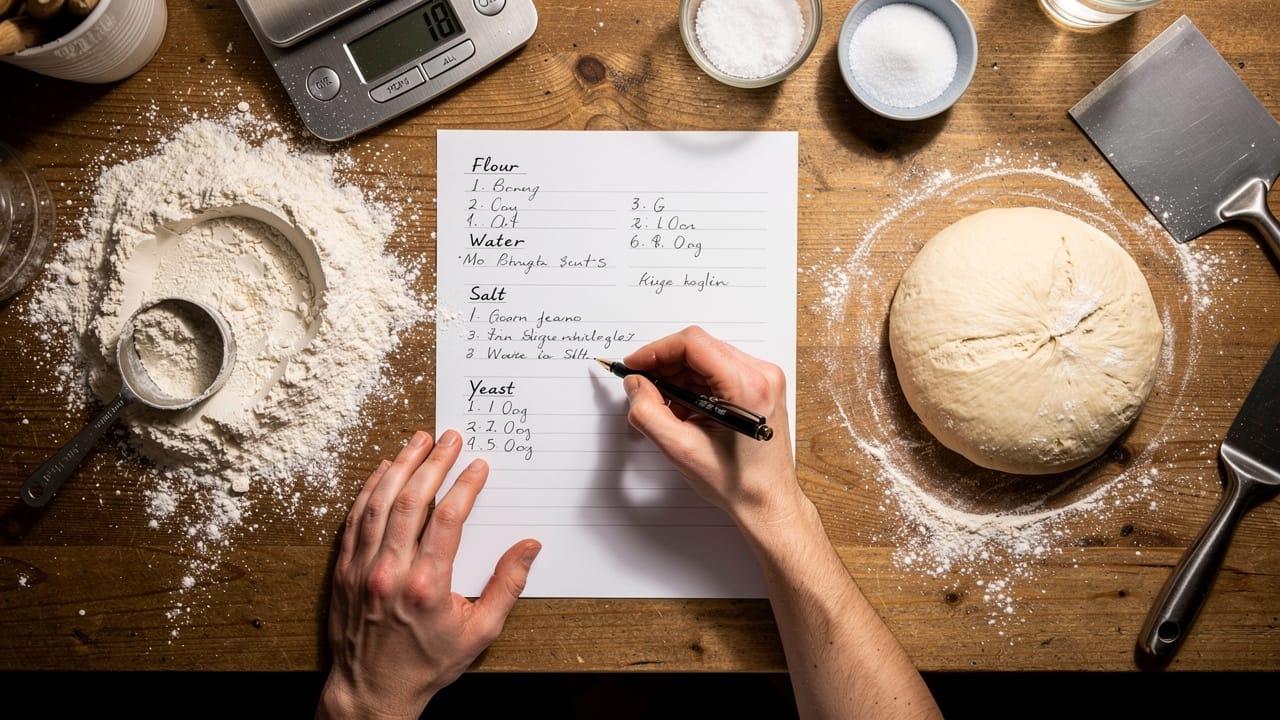
Baker's percentage (also called baker's math or baker's formula) is a notation system where every ingredient in a bread recipe is expressed as a percentage of the total flour weight. Flour is always 100%. This single convention makes any recipe instantly scalable, comparable, and reproducible — which is why professional bakeries, bread books, and pizza communities worldwide rely on it.
How baker's percentage works
In baker's percentage, flour is always the reference at 100%. Every other ingredient is expressed relative to it by weight. You need a kitchen scale — volume measurements do not work here.
Basic formula
Ingredient % = (ingredient weight ÷ total flour weight) × 100
Example: a simple bread dough
| Ingredient | Weight | Baker's % |
|---|---|---|
| Bread flour | 1000g | 100% |
| Water | 650g | 65% |
| Salt | 20g | 2% |
| Instant yeast | 5g | 0.5% |
| Total dough | 1675g | 167.5% |
This recipe has 65% hydration — the most commonly discussed baker's percentage. The total dough weight equals the sum of all percentages applied to the flour weight.
Multiple flours
When a recipe uses more than one flour, the combined weight of all flours equals 100%. Each flour gets its own percentage that adds up to 100%.
| Ingredient | Weight | Baker's % |
|---|---|---|
| Bread flour | 800g | 80% |
| Whole wheat flour | 200g | 20% |
| Total flour | 1000g | 100% |
| Water | 700g | 70% |
| Salt | 20g | 2% |
The 20% whole wheat means one-fifth of the total flour is whole wheat. Whole wheat absorbs more water, so this recipe needs higher hydration (70%) than a 100% white flour dough at the same consistency.
Why bakers use percentages instead of weights
| Benefit | Explanation |
|---|---|
| Infinite scaling | Change flour weight to any amount, apply percentages, done |
| Universal language | A "65% hydration dough" means the same thing everywhere |
| Recipe comparison | Instantly see if a recipe is wetter, saltier, or has more yeast than another |
| Consistency | Ratios stay identical whether you make 2 dough balls or 200 |
| Troubleshooting | If bread is too salty, you know 2.5% salt is high — reduce to 2% |
| Pre-ferment math | Calculating poolish or biga contributions is straightforward |
Weight-based recipes break when you scale them. A recipe for "500g flour, 325g water" requires manual math to make 6 pizza dough balls. With baker's percentage (65% hydration), you set your target dough weight or ball count and the numbers follow.
Common ratios by bread type
| Bread | Hydration | Salt | Yeast (instant) | Notes |
|---|---|---|---|---|
| Basic white bread | 60-65% | 2% | 0.5-1% | Good starting point |
| French baguette | 65-68% | 2% | 0.3-0.5% | Long fermentation preferred |
| Ciabatta | 75-85% | 2% | 0.3% | Very wet, open crumb |
| Neapolitan pizza | 60-65% | 2.5-3% | 0.1-0.3% | 24h+ cold fermentation |
| NY-style pizza | 63-67% | 2% | 0.3-0.5% | 1-3 day cold ferment |
| Focaccia | 75-80% | 2% | 0.5% | High hydration, olive oil 5-10% |
| Sourdough | 70-78% | 2% | 0% (20% starter) | No commercial yeast |
| Brioche | 55-60% | 2% | 1% | Plus 40-60% butter, 10-15% eggs |
| Whole wheat | 70-80% | 2% | 0.5% | Higher hydration for bran absorption |
These ranges are starting points. Flour type, ambient temperature, and technique all shift what works best.
Scaling with baker's percentage
From percentages to weights
- Decide how much flour you want (or calculate from a target dough weight)
- Multiply flour weight by each ingredient's percentage
- Weigh everything on a kitchen scale
Example: You want 4 dough balls at 250g each = 1000g total dough.
Total percentage = 100% + 65% + 2% + 0.5% = 167.5%
Flour = 1000g ÷ 1.675 = 597g. Water = 597 × 0.65 = 388g. Salt = 597 × 0.02 = 12g. Yeast = 597 × 0.005 = 3g.
From weights to percentages
Divide each ingredient by the flour weight and multiply by 100.
Example: A recipe says 500g flour, 350g water, 10g salt, 3g yeast.
Water: 350 ÷ 500 × 100 = 70%. Salt: 10 ÷ 500 × 100 = 2%. Yeast: 3 ÷ 500 × 100 = 0.6%.
Now you can scale this recipe to any size or compare it to other formulas.
Pre-ferments and baker's percentage
Pre-ferments like poolish and biga contain flour and water that count toward the total formula. The overall baker's percentage stays the same — you just split ingredients between the pre-ferment and the final mix.
Example: 30% poolish
For a dough with 1000g total flour at 67% hydration:
| Component | Flour | Water | Yeast |
|---|---|---|---|
| Poolish (30% of flour) | 300g | 300g (100% of poolish flour) | 0.3g |
| Final mix | 700g | 370g | 4.7g |
| Total | 1000g | 670g (67%) | 5g (0.5%) |
The poolish uses 30% of the total flour. Its water (300g) plus the final mix water (370g) equals 670g — still 67% of the total flour.
Key percentages explained
Hydration (most important)
Hydration is the water percentage and the single most important number in a bread formula. It determines dough consistency, crumb structure, and crust character.
| Hydration range | Dough feel | Typical use |
|---|---|---|
| 50-58% | Stiff, easy to handle | Bagels, pretzels |
| 60-65% | Moderate, good for beginners | White bread, pizza |
| 66-72% | Soft, slightly sticky | Baguettes, artisan loaves |
| 73-80% | Very wet, sticky | Ciabatta, focaccia |
| 80%+ | Batter-like | Some ciabatta, specialty breads |
Salt
Most bread uses 1.8-2.2% salt. Below 1.5% tastes bland. Above 2.5% can inhibit fermentation and taste overly salty. Pizza dough often runs 2.5-3% because it is eaten with toppings.
Yeast
Yeast percentage controls fermentation speed. Lower percentages (0.1-0.3%) with longer fermentation produce more complex flavors. Higher percentages (0.5-1%) give faster results with less flavor development. See the yeast types guide for conversions between instant, active dry, and fresh.
Troubleshooting with baker's percentage
| Problem | Check | Fix |
|---|---|---|
| Dough too sticky to handle | Hydration may be too high for your flour | Reduce by 2-3% or use stronger flour |
| Dense, tight crumb | Hydration may be too low | Increase by 3-5% |
| Bland flavor | Salt below 1.8% or yeast too high | Target 2% salt, reduce yeast, extend bulk fermentation |
| Dough spreads flat | Hydration too high for dough strength | Reduce hydration or add more folds |
| Crust too thick | Hydration too low | Increase by 5% |
| Over-fermented | Yeast percentage too high for time/temp | Reduce yeast, use cold fermentation |
Tips
- Always weigh ingredients with a kitchen scale — baker's percentage only works with weight, never volume
- When comparing recipes, look at hydration first — it tells you more about the dough than any other number
- Different flours absorb water differently — whole wheat and rye need 5-10% more hydration than white flour
- Oil, butter, and eggs count as separate ingredients with their own percentages, not as part of hydration
- If using a poolish or biga, always account for the flour and water they contribute to the total formula
Baker's percentage in Fond
Fond's recipe scaling displays and calculates in baker's percentages natively. Set your target dough ball count and weight, and Fond computes every ingredient. When you switch yeast types — say from fresh to instant — the app converts the percentage automatically. All ingredients flow to your shopping list with correct weights for your batch size.
Frequently asked questions
Is baker's percentage the same as regular percentage?
No. In regular math, percentages of all ingredients would add up to 100%. In baker's percentage, flour alone is 100% and the total exceeds 100%. A typical bread formula totals 165-185%.
Do liquids other than water count toward hydration?
Milk, juice, and other liquids count toward hydration when calculating dough consistency. However, milk contains solids (proteins, fats, sugars), so replacing water with milk produces a slightly different dough even at the same percentage.
How do I handle sourdough starter in baker's percentage?
Starter contains flour and water in a known ratio (typically 1:1 or 100% hydration). Add the flour from the starter to total flour and the water from the starter to total water. A formula with 1000g flour, 200g starter (100% hydration) actually has 1100g flour and 100g starter water contributing to hydration.
Why do some recipes list "total formula" and "final dough" separately?
The total formula shows overall percentages including pre-ferment ingredients. The final dough shows only what you mix on bake day. Both are useful — the total formula for comparing recipes, the final dough for mixing day.
Can I use baker's percentage for cakes and pastries?
Yes, though it is less common. Cake recipes have much higher sugar and fat percentages than bread. The system works the same way — flour is 100%, everything else is relative.
Cook smarter
Join the waitlist for Fond. Recipes, meal plans, and a little AI sous-chef that learns how you cook.
Related terms
Dough Ball
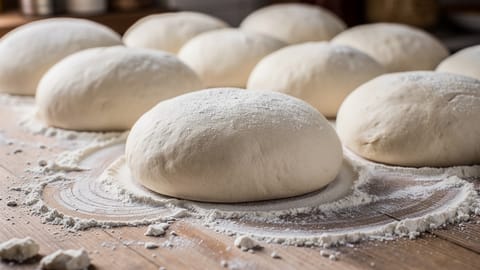
An individual portion of pizza dough, shaped into a smooth sphere after bulk fermentation. Each dough ball becomes one pizza, with typical weights ranging from 200-500g depending on the style.
Hydration (Bread)
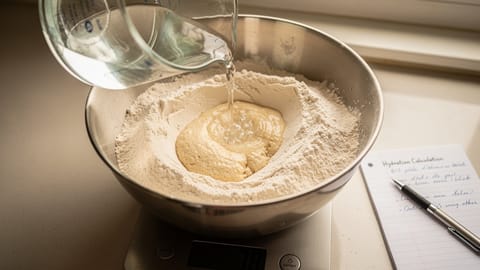
The ratio of water to flour in bread dough, expressed as a percentage. Higher hydration means wetter, more open-crumb bread.
Kitchen Scale
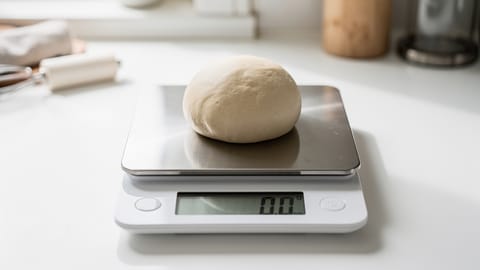
A digital scale for measuring ingredients by weight — far more accurate than cups and spoons, especially in baking.
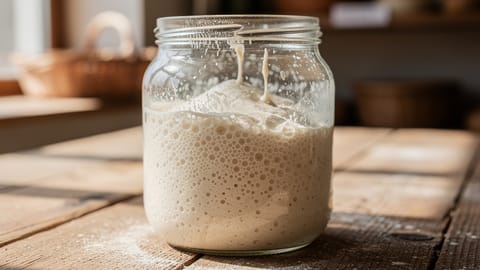
Poolish
A wet pre-ferment made with equal parts flour and water plus a small amount of yeast, fermented 8-16 hours to develop flavor and improve dough extensibility.
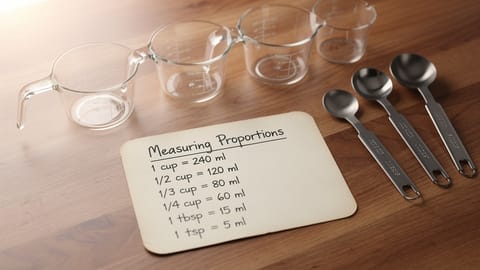
Recipe Scaling
Adjusting ingredient quantities in a recipe to serve more or fewer people while maintaining correct proportions.
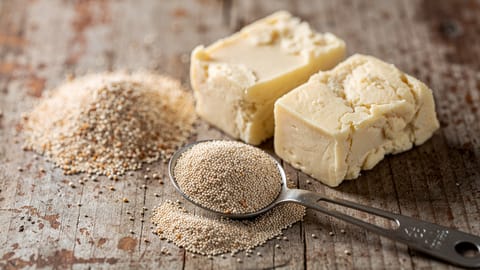
Yeast Types
The three main bread yeasts — active dry, instant, and fresh — differ in how they're processed and used, but can be converted between each other.
ToolBaker's Percentage Calculator
Convert recipes to and from baker's percentages instantly.
ToolPizza Dough Calculator
Calculate precise ingredient quantities for any pizza style.