 Bastien
Blanch and shock
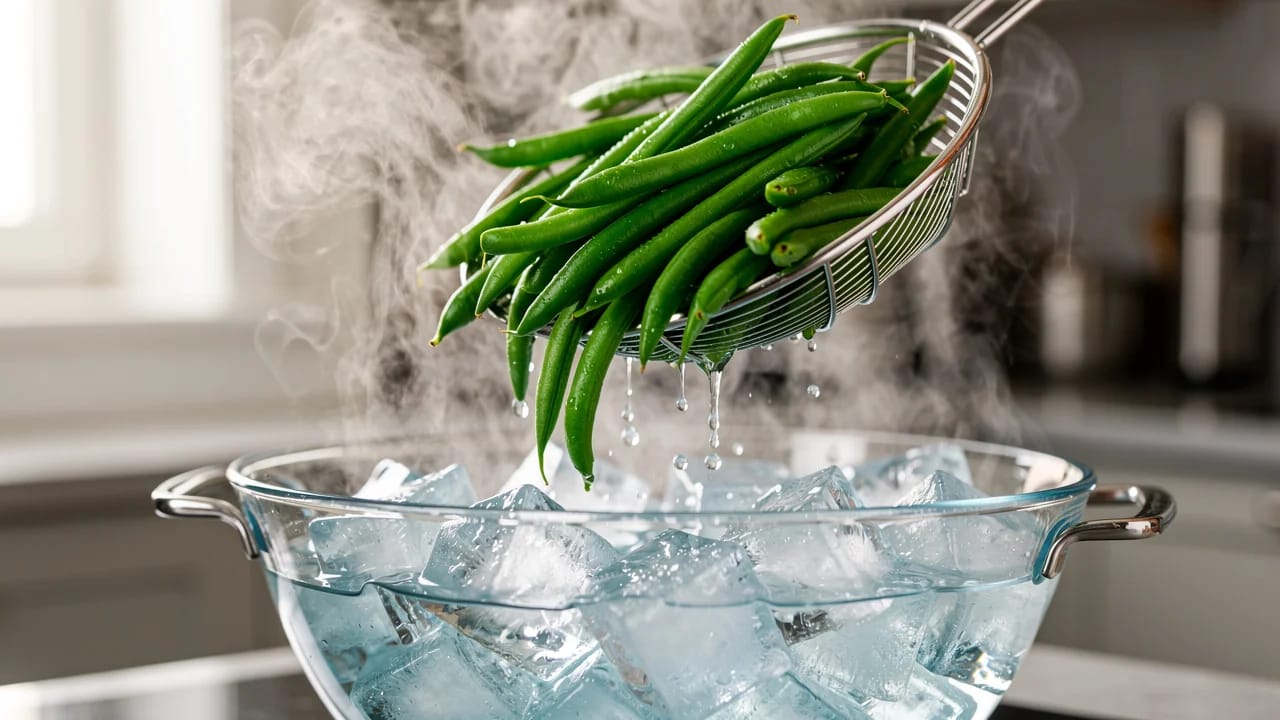
The blanch and shock technique involves briefly cooking food in boiling salted water, then immediately plunging it into ice water to stop cooking. It locks in color, texture, and nutrients in vegetables, and is used for meal prep, freezing, peeling, and brightening dishes.
You've seen it in every cooking show: vegetables plunged into boiling water, then immediately transferred to ice water. That two-step process is blanching and shocking, and it shows up constantly because it actually works.
Blanching means briefly cooking food in boiling salted water. Shocking (also called refreshing) means plunging that food immediately into ice water to halt the cooking process. Together, they give you vegetables that stay bright, hold their snap, and land right between raw and mushy.
The blanch and shock technique isn't just for restaurant kitchens. It's the reason your favorite restaurant's green beans look impossibly vibrant, and it's just as useful at home for meal prep and freezing.
Why blanching and shocking works
Raw vegetables contain enzymes that cause browning, flavor loss, and texture breakdown over time. Blanching deactivates those enzymes in seconds. The brief exposure to boiling water also:
- Sets the color. Chlorophyll in green vegetables brightens in the first 30-60 seconds of boiling. Blanching catches that vivid green before it fades.
- Softens slightly. The outer cell walls soften just enough to remove the raw edge without turning vegetables mushy.
- Cleans the surface. Boiling water kills surface bacteria and removes residual dirt, which matters for vegetables you'll eat raw after blanching (like on a crudite platter).
The shocking step matters just as much. Without it, residual heat continues cooking the vegetables even after you pull them from the water. That carryover cooking (the same principle that affects resting meat) turns bright green beans dull olive-green in minutes.
Ice water drops the temperature fast enough that cooking stops and you keep the color and texture you worked for.
Blanching vs boiling
People often confuse blanching with boiling, but the difference comes down to time and what happens next. Blanching is brief — 30 seconds to 4 minutes — and always followed by immediate cooling in ice water to stop the cooking. Boiling cooks food all the way through, usually for 10 minutes or more, with no shock step. If you skip the ice bath or leave vegetables in the water until they're fully tender, you're boiling, not blanching.
As an alternative, steam blanching uses a steamer basket instead of submerging vegetables in water. It takes about 1.5x longer than water blanching but preserves roughly 30% more water-soluble vitamins. For most home cooking, water blanching is simpler and more consistent.
How to blanch and shock (step by step)
What you need
- A large pot (4+ quarts) of water at a rolling boil
- Plenty of salt (1 tablespoon per quart of water, roughly as salty as the sea)
- A large bowl filled with ice and cold water (the ice bath)
- A slotted spoon, spider strainer, or tongs
- A clean kitchen towel or paper towels for drying
The process
- Bring a large pot of heavily salted water to a rolling boil. You want a full, aggressive boil, not a gentle simmer. The volume matters too: enough water that adding vegetables doesn't tank the temperature. Aim for 4 quarts per pound of vegetables.
- Prepare your ice bath. Fill a large bowl with equal parts ice and water. You need enough ice to keep the water truly cold even after hot vegetables go in. If you're blanching multiple batches, refresh the ice between rounds.
- Add vegetables to the boiling water. Don't overcrowd the pot. If you're blanching two pounds of green beans, do it in two batches. Overcrowding drops the water temperature and leads to uneven cooking.
- Cook for the exact time. Blanching times are short: 30 seconds to 4 minutes depending on the vegetable. Even 15 extra seconds can push past crisp-tender into mush. Start timing when the water returns to a boil after adding the vegetables.
- Transfer immediately to the ice bath. Use a spider strainer or slotted spoon. Speed matters here. Every second of delay means more carryover cooking.
- Leave in ice water until completely cool. Usually 2-3 minutes, roughly the same time as the blanching. The vegetables should feel cold to the touch all the way through.
- Drain and dry thoroughly. Wet blanched vegetables won't sear properly, spoil faster in storage, and water down any sauce they touch. Pat dry with clean towels or spin in a salad spinner.
How long to blanch each vegetable
Times start when the water returns to a boil after adding the vegetables. These are for vegetables cut to standard sizes.
| Vegetable | Size/Cut | Blanching time |
|---|---|---|
| Green beans | Whole, trimmed | 2-3 minutes |
| Broccoli | Small florets | 2-3 minutes |
| Asparagus (thin) | Whole spears | 1-2 minutes |
| Asparagus (thick) | Whole spears | 2-3 minutes |
| Snow peas / sugar snaps | Whole | 30-60 seconds |
| Corn on the cob | Whole ears | 4 minutes |
| Carrots | 1/4-inch coins | 2-3 minutes |
| Cauliflower | Small florets | 2-3 minutes |
| Spinach / kale | Leaves | 30-45 seconds |
| Brussels sprouts | Halved | 3-4 minutes |
| Edamame (in pod) | Whole | 3-4 minutes |
| Tomatoes (for peeling) | Whole, scored | 15-30 seconds |
The test: When in doubt, pull one piece out early and bite into it. It should be crisp-tender: cooked enough that it's not raw, but with a definite snap when you bite. If it bends without breaking, it's overcooked.
When to use blanch and shock
Meal prep
Blanched vegetables make meal prep much easier. Blanch a big batch of broccoli, green beans, and snap peas on Sunday. Shock, dry, and store in containers. They hold their color and crunch for 4-5 days in the fridge, ready to toss into grain bowls, stir-fries, or eat with dip.
Without blanching, raw cut broccoli starts browning by Wednesday. Blanched broccoli stays green all week.
Freezing vegetables
Blanching before freezing is essential for long-term quality. The National Center for Home Food Preservation confirms that those enzymes causing browning stay active even at 0°F. Unblanched frozen vegetables go mushy and off-flavored within weeks.
Blanch, shock, dry thoroughly, spread on a sheet pan to freeze individually, then transfer to freezer bags. This prevents clumping and keeps vegetables bright and firm for 8-12 months, versus the freezer burn you get with poorly stored produce.
Peeling tomatoes and peaches
Score a small X on the bottom of the fruit. Blanch for 15-30 seconds (tomatoes) or 30-60 seconds (peaches). Shock in ice water. The skins slip right off. You avoid the waste and mangled flesh that come with knife peeling.
Brightening vegetables for a dish
Say you're making pasta primavera for eight people. Blanch and shock the green beans, asparagus, and peas an hour before dinner. When it's time to plate, toss them into the hot pasta for 30 seconds to warm through. The vegetables come out bright green and tender without any last-minute scramble at the stove.
Preparing mise en place
For recipes that call for briefly cooked vegetables added at the end (stir-fries, curries, pasta dishes), blanching ahead of time means you just need to warm them through during final assembly. It takes the timing pressure off when everything else demands your attention.
Blanching vs parboiling
People use these interchangeably, but they're different techniques with different goals. Blanching is brief (under 4 minutes) and always followed by shocking in ice water. The goal is to partially cook the food while preserving color and crunch. Parboiling is longer — 5 to 15 minutes, depending on the ingredient — and doesn't involve an ice bath. The goal is to soften food partway so it finishes faster in a later cooking step (roasting, frying, grilling).
Parboiling potatoes before roasting gives you a fluffy interior and crispy exterior. Blanching green beans gives you bright, snappy beans that stay that way for days. Different goals, different timing, different results.
Common mistakes
The most common problem is not using enough water. A small pot with two cups of water drops 30-40°F when you add cold vegetables, and your blanching time becomes unreliable. Use a big pot.
Similarly, a few ice cubes in a bowl of tap water isn't an ice bath. As Serious Eats emphasizes, you need a 1:1 ratio of ice to water, at minimum. If the water feels merely cool instead of painfully cold, add more ice.
Blanching too long is easy to do. The difference between crisp-tender and mushy is often 30 seconds. Set a timer and taste-test early.
People also skip drying. Wet vegetables steam instead of searing, water down sauces, and spoil faster in storage. Take the extra minute.
Finally, don't blanch in unsalted water. Salt seasons the vegetable from the inside during blanching. Plain water produces bland vegetables no matter how much salt you add later. Use 1 tablespoon per quart.
Once you've put blanched and unblanched green beans side by side, the difference is hard to ignore. Ten minutes of setup, and your vegetables look and taste noticeably better.
Frequently asked questions
What's the difference between blanching and boiling?
Blanching is a brief dip in boiling water (30 seconds to 4 minutes) followed immediately by an ice bath to stop cooking. Boiling cooks food all the way through with no shock step. The key distinction is time and the immediate cooling that preserves color and texture.
Do you have to blanch vegetables before freezing?
For best results, yes. Blanching deactivates enzymes that cause flavor loss, color changes, and texture breakdown during frozen storage. Unblanched frozen vegetables deteriorate noticeably within a few weeks, while properly blanched vegetables hold quality for 8-12 months.
Can you blanch without an ice bath?
Technically you can run the vegetables under cold tap water, but it's far less effective. Tap water isn't cold enough to stop cooking quickly, so you lose the bright color and crisp texture that make blanching worthwhile. An ice bath is the only reliable way to halt carryover cooking fast enough.
How long do blanched vegetables last in the fridge?
Properly blanched, shocked, and dried vegetables last 4-5 days refrigerated in airtight containers. They hold their color and crunch much longer than raw cut vegetables, which start browning within a day or two.
Can you over-blanch vegetables?
Absolutely. The difference between crisp-tender and mushy can be as little as 30 seconds. Always set a timer, taste-test early, and err on the side of pulling vegetables out sooner rather than later.
Organize your prep with recipes that use blanching and more. Try Fond free for 14 days.
Cook smarter
Join the waitlist for Fond. Recipes, meal plans, and a little AI sous-chef that learns how you cook.
Related terms
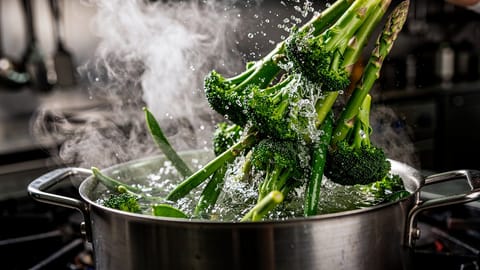
Blanching
Briefly boiling food then plunging it into ice water to stop cooking — used to preserve color, texture, and nutrients.
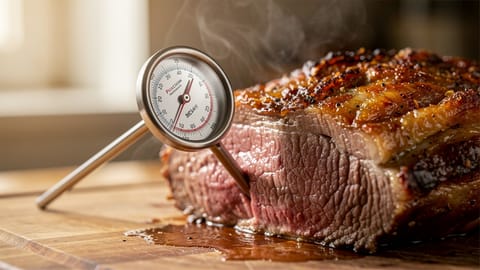
Carryover Cooking
The phenomenon where food continues to cook after being removed from heat, as residual thermal energy from the exterior migrates to the cooler interior.
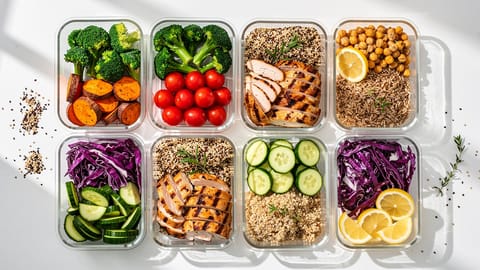
Meal Prep
Preparing meals or meal components in advance, typically for the week ahead, to save time and reduce daily cooking effort.
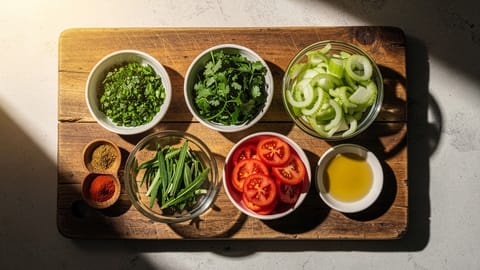
Mise en Place
The practice of preparing and organizing all ingredients before cooking — everything in its place.
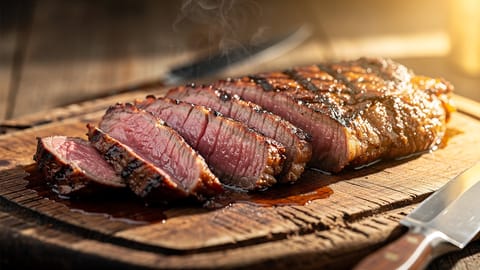
Resting Meat
Letting cooked meat sit before cutting — allows juices to redistribute, resulting in a more flavorful and moist result.