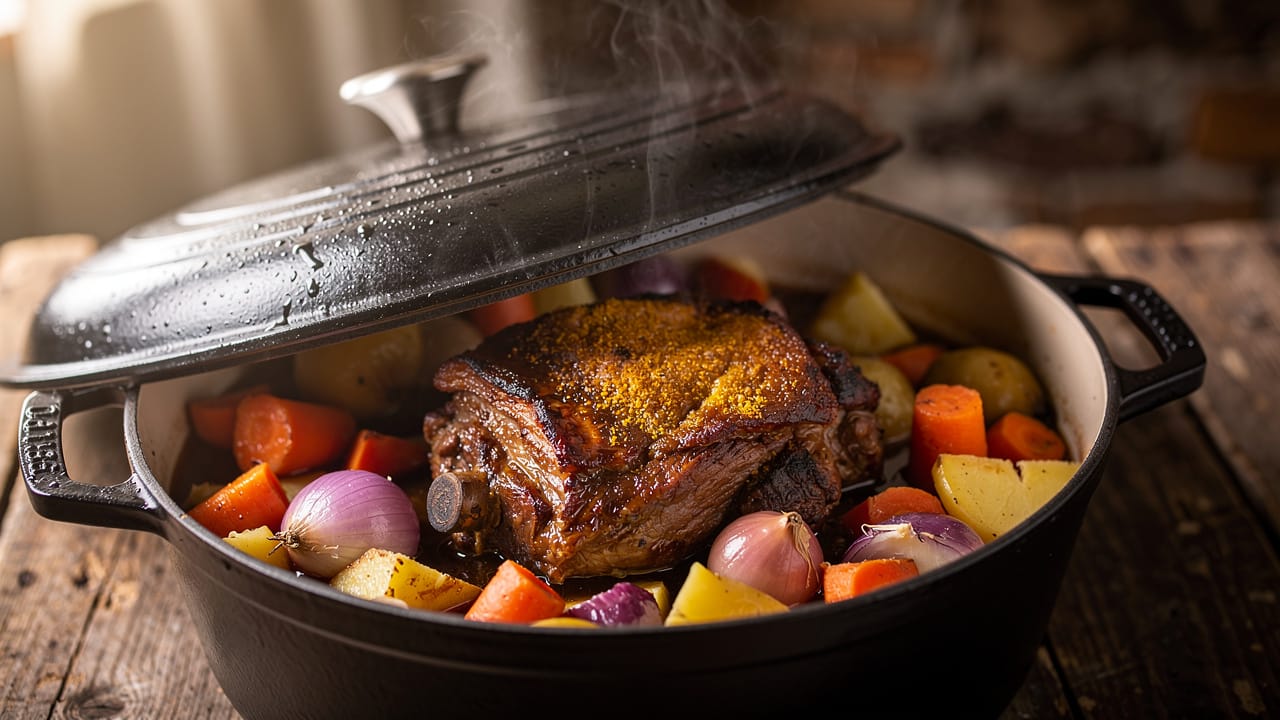
 Bastien
Braising
A slow-cooking method that sears food at high heat, then simmers it in liquid in a covered pot until tender.
Braising is a combination cooking method that uses both dry and wet heat: you sear food at high temperature first, then cook it slowly in a covered pot with liquid until tender. It turns inexpensive, tough cuts of meat into rich, deeply flavored dishes — and it does most of the work unattended.
Braising differs from stewing (where food is fully submerged and cut small) and from roasting (which uses dry heat only). In a braise, the liquid comes only partway up the food, so the top steams while the bottom simmers. This dual action creates complex flavor and fall-apart texture.
The braising process step by step
Good braising follows a reliable sequence. Have your mise en place ready before you start.
- Pat the meat dry and season generously with kosher salt and pepper. Dry surfaces brown better.
- Sear in a hot pan. Use a heavy-bottomed pot or Dutch oven with a high-smoke-point oil. Sear on all sides until a deep brown crust forms — this Maillard reaction builds the flavor foundation. Do not crowd the pan; work in batches if needed.
- Remove the meat and sauté aromatics — onions, garlic, carrots, celery — in the rendered fat until softened.
- Deglaze the pot with wine, beer, or stock, scraping up all the browned bits (fond) stuck to the bottom.
- Return the meat and add liquid — stock, wine, tomatoes, or a combination — until it reaches roughly halfway up the sides of the meat.
- Cover and cook at low heat. Oven braising at 150-160°C (300-325°F) gives the most even results. Stovetop works at the lowest simmer.
- Rest before serving. Let the braise sit 15-20 minutes so the meat reabsorbs juices. Skim fat from the surface and reduce the braising liquid into a sauce.
Best cuts for braising
The best braising candidates are tough, collagen-rich cuts. Tender steaks and lean cuts dry out during long cooking.
| Protein | Best cuts | Approximate time | Notes |
|---|---|---|---|
| Beef | Chuck roast, short ribs, brisket, oxtail, cheeks | 2.5-4 hours | Short ribs braise well bone-in |
| Pork | Shoulder (butt), shanks, ribs, cheeks | 2-3.5 hours | Shoulder is the most forgiving cut |
| Lamb | Shoulder, shanks, neck | 2-3 hours | Shanks are a classic single-serving braise |
| Chicken | Thighs, legs, whole legs | 45-90 minutes | Dark meat only; breast dries out |
| Veal | Shanks (osso buco), shoulder | 2-3 hours | Cross-cut shanks expose the marrow |
| Vegetables | Cabbage, leeks, fennel, endive, artichokes | 30-60 minutes | Use stock for richer flavor |
Why braising works: the science
Tough cuts contain large amounts of collagen, a structural protein in connective tissue. Collagen is chewy and unpleasant to eat raw. When heated slowly in a moist environment above 70°C (160°F), collagen gradually converts into gelatin — a soft, slippery protein that gives braised meat its melt-in-your-mouth texture.
This conversion takes time. At the oven temperatures used for braising (150-160°C), the interior of the meat stays around 85-95°C for hours. This extended time at moderate temperature is what makes braising fundamentally different from high-heat methods like searing or roasting.
The gelatin also dissolves into the cooking liquid, giving braising sauces their characteristic body and silky mouthfeel. This is why a well-made braise produces both tender meat and a rich sauce from the same pot.
Braising vs other cooking methods
| Method | Heat type | Liquid | Temperature | Best for |
|---|---|---|---|---|
| Braising | Dry + wet | Partial (halfway up) | Low (150-160°C oven) | Large tough cuts |
| Stewing | Wet | Fully submerged | Low simmer | Small pieces of meat |
| Roasting | Dry | None | High (190-230°C) | Tender cuts, vegetables |
| Poaching | Wet | Fully submerged | Very low (70-85°C) | Delicate proteins |
| Searing | Dry | None | Very high (230°C+) | Surface browning only |
Braising liquids
The liquid you braise in becomes the sauce, so choose with care.
Wine. Red for beef and lamb, white for chicken and pork. Alcohol evaporates during cooking; the acidity and fruit flavor remain. Always cook with wine you would drink.
Stock or broth. The most common braising liquid. Homemade stock with gelatin produces noticeably richer sauces than store-bought broth.
Tomatoes. Crushed or whole canned tomatoes add acidity and body. Common in Italian braises like ragu.
Beer. Dark beers work well with pork and beef. Belgian-style ales add sweetness and complexity.
Combinations. Most braises use a mix — half wine, half stock is a reliable starting point.
Tips for better braising
Use a heavy pot. A Dutch oven or heavy-bottomed pot with a tight lid distributes heat evenly and minimizes evaporation. Cast iron and enameled cast iron are ideal.
Do not skip the sear. Browning creates hundreds of flavor compounds through the Maillard reaction. A good sear takes 3-4 minutes per side.
Keep the liquid level right. Too much liquid and you are stewing, not braising. Too little and the meat dries out. Aim for liquid halfway up the sides of the meat.
Braise in the oven, not on the stovetop. Oven heat surrounds the pot evenly. Stovetop heat comes only from below, which can cause hot spots and scorching.
Cook until done, not until the timer goes off. Braised meat is ready when a fork slides in and out with no resistance. Check an hour before your expected finish time — actual cooking time varies with cut thickness and collagen content. Use an instant-read thermometer to verify internal temperature has been above 85°C (185°F) for an extended period.
Make it a day ahead. Braised dishes taste better the next day. The flavors meld and intensify as the meat cools in the sauce. Refrigerate overnight, skim the solidified fat, and reheat gently.
Classic braised dishes around the world
- Pot roast (American) — beef chuck braised with root vegetables
- Boeuf bourguignon (French) — beef in red wine with mushrooms and pearl onions
- Osso buco (Italian) — veal shanks in white wine and tomatoes
- Coq au vin (French) — chicken braised in red wine
- Carnitas (Mexican) — pork shoulder braised until shreddable
- Red-braised pork belly (Chinese, 红烧肉) — pork belly in soy, sugar, and Shaoxing wine
- Ragu bolognese (Italian) — meat sauce braised for hours
Braising in Fond
Fond's Cook mode guides you through each braising step with built-in timers. The recipe view shows braising time and temperature at a glance, and you can scale ingredients for larger batches using recipe scaling.
Frequently asked questions
Can you braise in a slow cooker?
Yes. Brown the meat in a pan first, then transfer everything to the slow cooker. Cook on low for 6-8 hours or high for 3-4 hours. The results are good, though oven braising produces slightly better browning and sauce reduction.
How do I thicken a braising sauce?
Remove the meat and reduce the liquid over medium-high heat until it coats the back of a spoon. For more body, whisk in a small amount of flour paste or strain and mount with cold butter.
What if my braise is tough?
It needs more time. Collagen conversion is not complete. Return it to the oven at the same temperature and check again in 30-minute intervals.
Can I braise vegetables?
Yes. Braised fennel, leeks, cabbage wedges, and endive are all traditional dishes. Reduce the cooking time to 30-60 minutes and use stock as the braising liquid.
Cook smarter
Join the waitlist for Fond. Recipes, meal plans, and a little AI sous-chef that learns how you cook.
Related terms
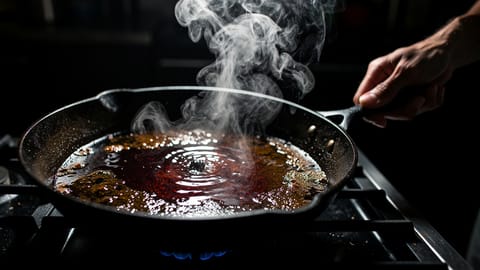
Deglazing
Adding liquid to a hot pan to dissolve the caramelized bits stuck to the bottom, creating a flavorful base for sauces.
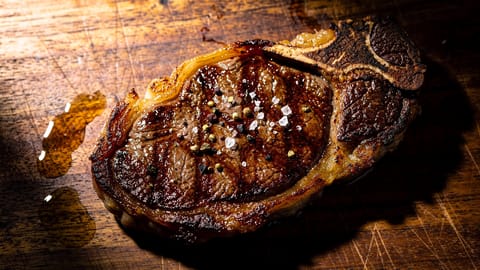
Maillard Reaction
The chemical reaction between amino acids and sugars that occurs when food is heated, creating the brown color and complex flavors of seared meat, toasted bread, and roasted coffee.
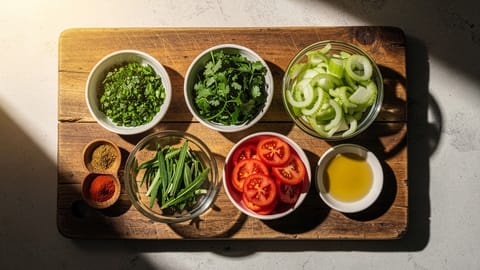
Mise en Place
The practice of preparing and organizing all ingredients before cooking — everything in its place.
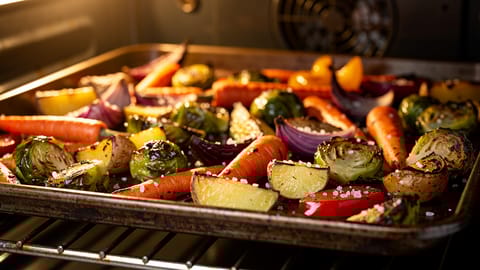
Roasting
Dry-heat oven cooking method that caramelizes the exterior while keeping the interior moist and tender.
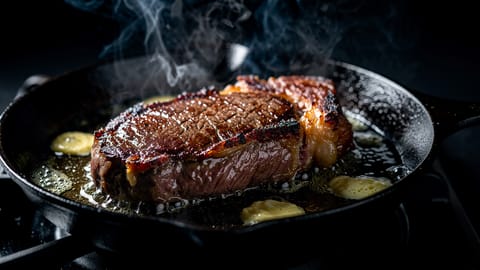
Searing
High-heat browning technique that creates a flavorful Maillard crust on meat, fish, or vegetables.
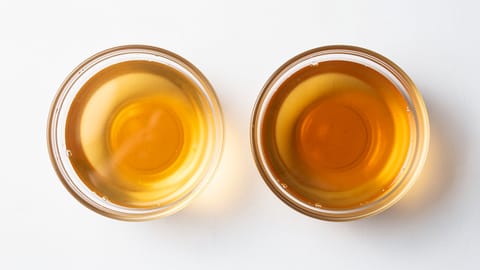
Stock vs. Broth
Stock is made from bones and connective tissue for body and richness; broth is made from meat for direct flavor. Both have different culinary uses.
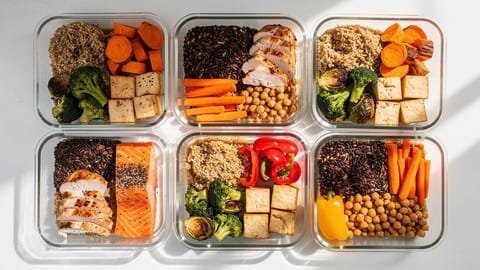
Batch cooking for beginners: how to cook once and eat all week
Batch cooking means dedicating a few hours to cooking large quantities of food that you portion and store for the week ahead. It's not the same as meal prep — instead of assembling complete meals, you cook versatile building blocks (grains, proteins, sauces, roasted vegetables) that mix and match into different dishes every night. This guide covers everything you need to start: planning, cooking, storing, and scaling.
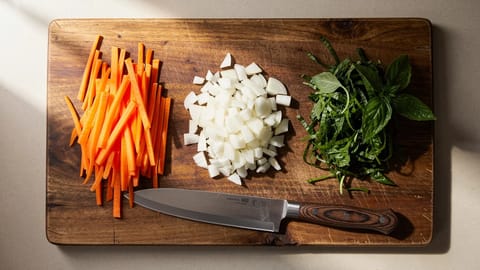
Types of knife cuts: the complete guide for home cooks
Professional chefs learn 12+ standard knife cuts in culinary school. Home cooks usually learn zero. That gap shows up on the plate — in uneven cooking, mushy textures, and dishes that never quite look like the recipe photo.
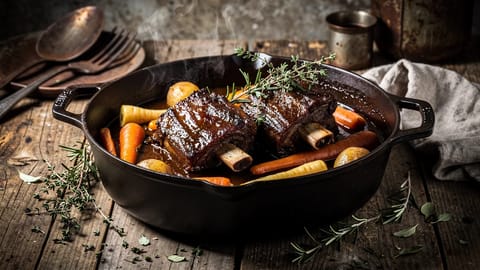
How to braise meat: the complete guide to low and slow cooking
Everything you need to braise meat at home. Covers the best cuts for braising, step-by-step technique, braising liquids, equipment, and global traditions from French daube to Korean galbi-jjim — with times, temperatures, and troubleshooting.
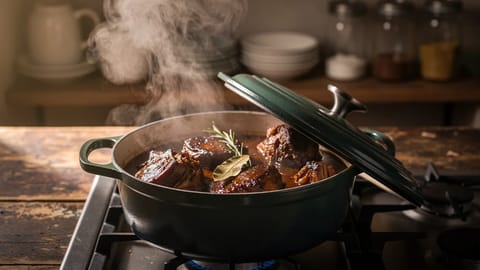
Dutch oven recipes: 20 essential dishes to master
A Dutch oven is the most versatile pot in your kitchen. These 20 essential recipes — organized by technique — cover braised meats, soups, no-knead bread, and more, plus the temperatures, times, and tips you need to make each one well.