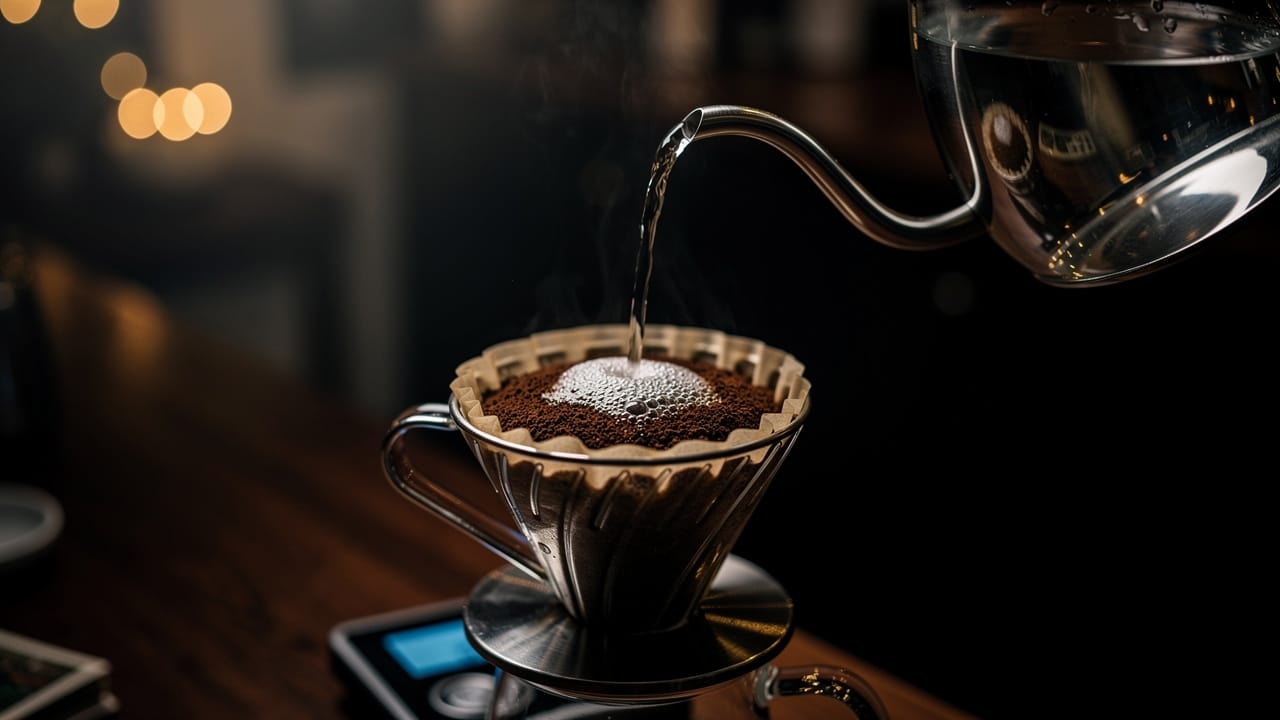
 Bastien
Brew Ratio
The ratio of coffee grounds to water used when brewing, typically expressed as 1:15 to 1:18 for filter coffee. The single most important variable for consistent, great-tasting coffee.
The brew ratio is the relationship between the amount of coffee grounds and water you use. It is the single most important variable in coffee brewing — more impactful than grind size, water temperature, or pouring technique. Get the ratio right and you are most of the way to a great cup. Get it wrong and no amount of technique will save it.
How brew ratios work
A brew ratio is expressed as coffee : water by weight. A ratio of 1:16 means 1 gram of coffee for every 16 grams of water.
| Coffee dose | Ratio | Water needed | Approximate yield |
|---|---|---|---|
| 15 g | 1:16 | 240 g | 1 cup (220 ml) |
| 20 g | 1:16 | 320 g | 1 large mug (295 ml) |
| 30 g | 1:16 | 480 g | 2 cups (440 ml) |
| 42 g | 1:16 | 672 g | 4 cups (Chemex) |
| 60 g | 1:16 | 960 g | 1 liter batch |
The yield is slightly less than the water weight because coffee grounds absorb roughly twice their weight in water. A kitchen scale is essential here — volumetric scoops can vary by 20-30% depending on grind size and how you scoop.
Common ratios by brew method
| Method | Ratio range | Starting point | Flavor profile |
|---|---|---|---|
| Pour-over (V60, Kalita) | 1:15 to 1:17 | 1:16 | Clean, bright, nuanced |
| Chemex | 1:15 to 1:17 | 1:16 | Clean, sweet, lighter body |
| French press | 1:14 to 1:16 | 1:15 | Full body, rich, heavier |
| AeroPress | 1:12 to 1:16 | 1:15 | Versatile — adjust to taste |
| Moka pot | 1:7 to 1:10 | 1:8 | Strong, concentrated |
| Cold brew concentrate | 1:4 to 1:8 | 1:5 | Very strong — dilute 1:1 before drinking |
| Cold brew ready-to-drink | 1:12 to 1:15 | 1:14 | Smooth, ready to drink |
| Espresso | 1:1.5 to 1:2.5 | 1:2 | Intense, thick, concentrated |
| Batch brewer | 1:15 to 1:17 | 1:16 | Consistent, crowd-friendly |
| Turkish / Cezve | 1:9 to 1:12 | 1:10 | Very strong, thick body |
These are starting points. Every coffee, roast level, and personal preference is different — the best ratio is the one that tastes right to you.
How ratio affects flavor
Changing the ratio shifts the balance between strength (concentration) and extraction (how much flavor is pulled from the grounds):
| Ratio | Strength | Extraction | Typical taste |
|---|---|---|---|
| 1:12 – 1:14 | Strong | Higher | Bold, intense, sometimes bitter |
| 1:15 – 1:16 | Medium | Balanced | Sweet, clean, well-rounded |
| 1:17 – 1:18 | Light | Lower | Delicate, tea-like, sometimes thin |
| 1:19+ | Weak | Under-extracted | Sour, watery, lacking body |
A stronger ratio (more coffee, less water) does not automatically mean better. Very strong brews can taste bitter because more compounds are extracted. The SCA golden ratio of 1:16 to 1:18 hits the sweet spot for most people.
Finding your ideal ratio
- Start at 1:16 — the Specialty Coffee Association recommendation
- Brew and taste — note whether the cup is too strong, too weak, or just right
- Adjust one step at a time — move to 1:15 if too weak, 1:17 if too strong
- Keep everything else constant — same grind, same water temperature, same brew time
- Log your results — track what worked so you can repeat it
Fine-tuning beyond ratio
Once your ratio is dialed in, you can adjust flavor through these secondary variables:
| Variable | Effect when increased | Effect when decreased |
|---|---|---|
| Grind size (finer) | More extraction, stronger | Less extraction, weaker |
| Water temperature | More extraction, brighter | Less extraction, sweeter |
| Brew time | More extraction, bolder | Less extraction, lighter |
| Agitation (stirring) | More even extraction | Less even extraction |
The key discipline is changing only one variable at a time. If you change ratio and grind size simultaneously, you will not know which change affected the taste.
Weighing vs scooping
| Method | Accuracy | Consistency | Best for |
|---|---|---|---|
| Kitchen scale (grams) | High (±1g) | Excellent | Anyone who wants repeatable results |
| Standard scoop (~10g) | Low (±3-5g) | Poor | Casual brewing where precision is not important |
| Tablespoon (~5-7g) | Very low (±3g) | Poor | Emergency only |
A standard coffee scoop holds roughly 10 grams, but this varies dramatically with grind size — coarse grounds weigh less per scoop than fine grounds. A kitchen scale that reads to 0.1 g or 1 g removes all guesswork and costs less than a bag of specialty coffee.
Brew ratio for espresso
Espresso uses a fundamentally different ratio and deserves its own section:
| Espresso style | Dose | Yield | Ratio | Time |
|---|---|---|---|---|
| Ristretto | 18 g | 27 g | 1:1.5 | 22-27 s |
| Normale | 18 g | 36 g | 1:2 | 25-30 s |
| Lungo | 18 g | 54 g | 1:3 | 30-40 s |
For espresso, the ratio is dose (dry coffee in the portafilter) to yield (liquid in the cup). A 1:2 ratio is the modern standard — 18 g in, 36 g out. Ristretto pulls less water for a sweeter, more concentrated shot. Lungo pulls more for a lighter, more diluted shot.
Brew ratio for cold brew
Cold brew uses a much stronger ratio because:
- Cold water extracts less efficiently than hot water
- The concentrate is typically diluted before drinking
- Long brew times (12-24 hours) compensate for lower temperature
| Style | Ratio | Steep time | How to serve |
|---|---|---|---|
| Concentrate | 1:5 | 12-18 hours | Dilute 1:1 with water, ice, or milk |
| Ready-to-drink | 1:14 | 18-24 hours | Drink straight over ice |
| Japanese iced (flash brew) | 1:16 | 2-4 minutes | Brew hot over ice — no dilution needed |
Scaling brew ratios
Scaling a brew ratio is straightforward multiplication. If your single cup uses 15 g coffee at 1:16, scaling to four cups is 60 g coffee and 960 g water. The ratio stays the same — only the absolute amounts change.
One thing to watch: extraction efficiency can change at different batch sizes. A 1-liter batch in a Chemex may extract slightly differently than a single cup. Adjust grind size if the larger batch tastes different than the small one.
Common mistakes
| Mistake | Why it happens | Fix |
|---|---|---|
| Using volume instead of weight | Scoops seem convenient | Use a kitchen scale — even a cheap one |
| Changing ratio and grind at the same time | Trying to fix everything at once | Change one variable at a time |
| Using the same ratio for every method | Assuming all brew methods work the same | Start with the recommended ratio for your method |
| Not accounting for water absorbed by grounds | Wondering why you get less coffee than expected | Grounds absorb ~2× their weight in water |
| Measuring water before heating | Water volume changes with temperature | Weigh water, do not measure by volume |
| Using a ratio designed for concentrate | Cold brew concentrate ratios are not for drinking straight | Dilute cold brew concentrate 1:1 |
Tips
- Weigh both coffee and water — do not weigh one and measure the other by volume
- Write down your ratio when you brew a cup you love — you will forget otherwise
- Different roast levels often taste best at different ratios: lighter roasts shine at 1:16, darker roasts at 1:15
- Water quality matters almost as much as ratio — filtered water with some mineral content brews best
- Pre-wet your filter (pour-over) to avoid paper taste, but do not count that water in your ratio
- When sharing coffee recipes with others, always include the ratio — it is the most transferable piece of information
Brew ratios in Fond
Fond's Coffee Lab has a ratio calculator built in. Pick your brew method, enter your dose, and it calculates exactly how much water to use. The brew log tracks each cup — dose, ratio, grind, temperature, and your tasting notes — so you can reproduce your best brews and refine the ones that were not quite right. Over time, the Coffee Lab builds a profile of what ratios work best for each bean and method combination.
Frequently asked questions
What is the best coffee-to-water ratio?
For most filter methods, 1:16 is the standard starting point recommended by the Specialty Coffee Association. This means 1 gram of coffee for every 16 grams of water. Adjust from there based on taste — stronger (1:14-1:15) or lighter (1:17-1:18).
Does grind size affect the ratio I should use?
No — ratio and grind size are independent variables. A finer grind extracts more flavor at the same ratio, and a coarser grind extracts less. Keep your ratio constant and adjust grind size separately to fine-tune flavor.
Why do I need a scale for brew ratio?
Because volumetric measurements (scoops, tablespoons) are wildly inconsistent. Grind size, roast level, and bean density all change how much coffee fits in a scoop. A kitchen scale removes guesswork and makes your ratio repeatable.
What ratio should I use for iced coffee?
For Japanese-style flash brew (hot coffee over ice), use the same 1:16 ratio but replace 30-40% of the water weight with ice. The hot water hits the ice and chills instantly. For cold brew concentrate, use 1:5 and dilute before drinking.
Can I use brew ratios for tea?
Yes. Tea brewing follows the same principle — weight of leaf to weight of water. Western-style tea typically uses 1:100 to 1:150 (2-3 g per cup). Gongfu-style uses 1:15 to 1:20 with very short steep times. The concept is the same as coffee, just different numbers.
Cook smarter
Join the waitlist for Fond. Recipes, meal plans, and a little AI sous-chef that learns how you cook.
Related terms
Cooklang
A markup language for writing recipes in plain text, making ingredients, cookware, and timers machine-readable while keeping files human-readable and portable.
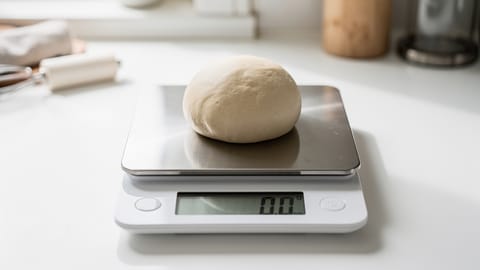
Kitchen Scale
A digital scale for measuring ingredients by weight — far more accurate than cups and spoons, especially in baking.
Meal Prep
Preparing meals or meal components in advance, typically for the week ahead, to save time and reduce daily cooking effort.

Recipe Manager
Software for storing, organizing, and accessing recipes digitally — replacing physical cookbooks, bookmarks, and scattered notes with a searchable, scalable collection.
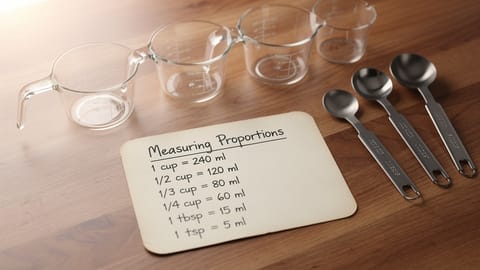
Recipe Scaling
Adjusting ingredient quantities in a recipe to serve more or fewer people while maintaining correct proportions.
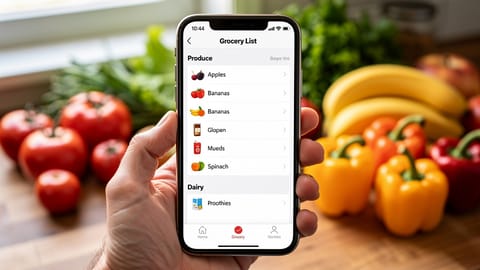
Smart Shopping List
An automatically generated grocery list that combines ingredients from multiple recipes, merges duplicates, and organizes by store aisle.
ToolBaker's Percentage Calculator
Convert recipes to and from baker's percentages instantly.