 Bastien
Fermentation
A metabolic process where microorganisms convert sugars into acids, gases, or alcohol — the basis of bread, yogurt, kimchi, and beer.
Fermentation is a metabolic process where microorganisms — bacteria, yeast, or molds — break down sugars and starches in the absence of oxygen, producing acids, gases, or alcohol. It is one of the oldest food preservation techniques, predating written history, and remains the foundation of bread, yogurt, cheese, soy sauce, wine, beer, and dozens of other staple foods.
For cooks, fermentation is both a preservation method and a flavor-building tool. The acids, alcohols, and aromatic compounds that microorganisms produce during fermentation create the tang of yogurt, the umami depth of miso, and the complex flavors of sourdough bread. Understanding fermentation helps you control dough rise, build more flavorful stocks, and work with fermented ingredients confidently.
Types of fermentation
Alcoholic fermentation
Yeast (typically Saccharomyces cerevisiae) consumes sugar and produces ethanol and carbon dioxide. This is the fermentation behind bread, beer, wine, and cider.
In bread baking, the CO₂ is the goal — it inflates the dough during bulk fermentation and proofing. The alcohol evaporates during baking. The speed and character of this fermentation depend on temperature, hydration, and whether you use commercial yeast or a sourdough starter.
Lactic acid fermentation
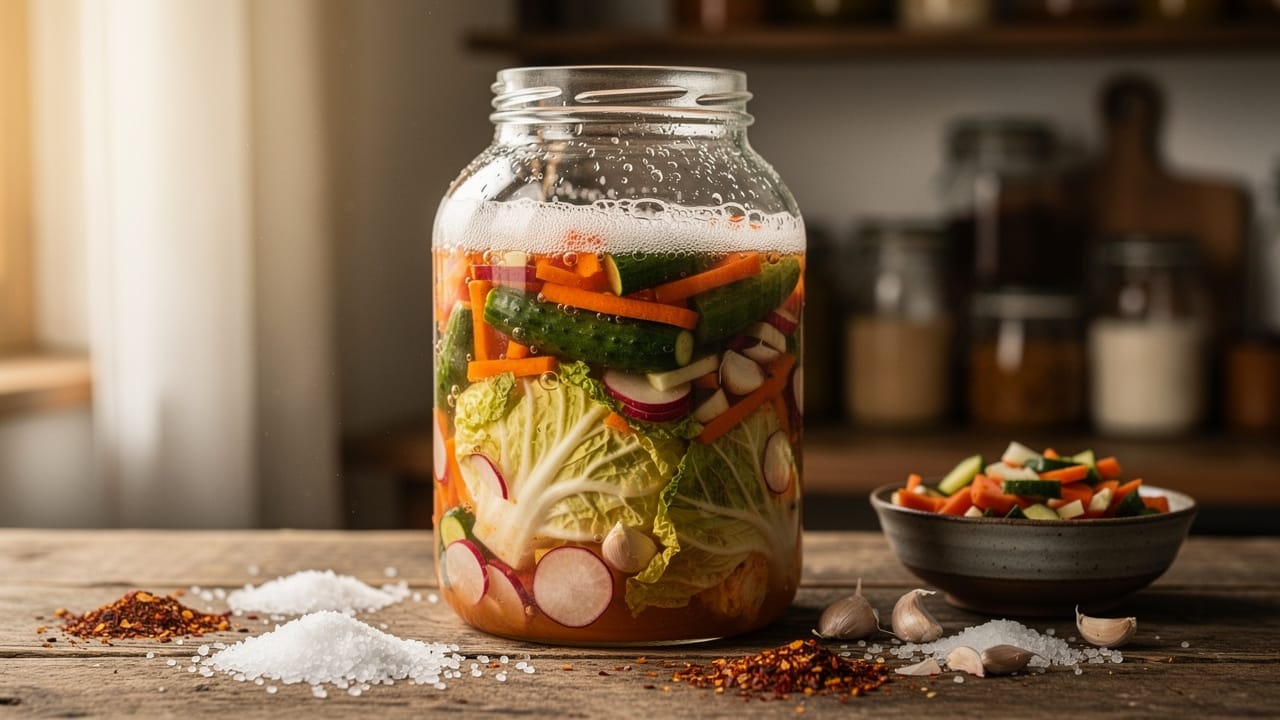
Lactic acid bacteria (LAB) consume sugar and produce lactic acid. This is the fermentation behind yogurt, sauerkraut, kimchi, pickles, and sourdough's tang. The acid lowers pH, creating an environment that preserves food by inhibiting harmful bacteria.
Lactic acid fermentation happens in two forms:
- Homofermentative — produces mainly lactic acid (yogurt, some cheese)
- Heterofermentative — produces lactic acid plus CO₂ and other compounds (sourdough, kimchi). This type creates more complex flavors
Acetic acid fermentation
Acetic acid bacteria convert alcohol into acetic acid (vinegar). This is a two-stage process: first alcoholic fermentation produces alcohol, then acetobacter converts it to vinegar. This is why vinegar-making starts with wine, cider, or another alcoholic liquid.
Mixed fermentation
Many traditional foods use multiple types of fermentation simultaneously or sequentially. Sourdough bread combines alcoholic fermentation (from wild yeast) with lactic acid fermentation (from LAB). Soy sauce and miso involve mold fermentation (Aspergillus) followed by bacterial and yeast fermentation over months.
Common fermented foods
| Food | Fermentation type | Key microorganism | Time |
|---|---|---|---|
| Bread (yeasted) | Alcoholic | S. cerevisiae | 1-24 hours |
| Sourdough | Alcoholic + lactic | Wild yeast + LAB | 4-48 hours |
| Yogurt | Lactic acid | L. bulgaricus, S. thermophilus | 4-12 hours |
| Sauerkraut | Lactic acid | L. plantarum and others | 1-6 weeks |
| Kimchi | Lactic acid | L. mesenteroides and others | 1-4 weeks |
| Miso | Mold + lactic | Aspergillus oryzae + LAB | 3 months-3 years |
| Soy sauce | Mold + lactic + alcoholic | A. oryzae + LAB + yeast | 6-18 months |
| Wine | Alcoholic | S. cerevisiae | 2 weeks-months |
| Vinegar | Acetic acid | Acetobacter | 1-3 months |
| Cheese | Lactic acid (+ others) | Various LAB | Hours-years |
| Coffee | Lactic + alcoholic | Wild yeast + LAB | 12-72 hours |
Coffee and chocolate are both fermented — the beans undergo fermentation after harvest to develop their characteristic flavors. Without fermentation, coffee beans taste grassy and chocolate tastes bitter and flat.
Fermentation in bread baking
Fermentation is the heart of bread baking. Every stage of the process — mixing, bulk fermentation, shaping, proofing — is structured around controlling fermentation.
What happens during dough fermentation
- Yeast consumes sugars in the flour, producing CO₂ and alcohol
- CO₂ gets trapped in the gluten network, inflating the dough
- Enzymes break down starches into simpler sugars, feeding the yeast
- Organic acids accumulate, developing flavor (especially in long fermentations)
- The gluten network matures, becoming more extensible and easier to shape
Temperature controls speed
Fermentation rate roughly doubles with every 15°F (8°C) increase in temperature. This is why cold fermentation in the refrigerator (38-40°F / 3-4°C) slows the process to 12-72 hours, while room temperature fermentation (75°F / 24°C) takes 1-4 hours.
Cold fermentation doesn't just slow things down — it changes the flavor. LAB remain active at cold temperatures while yeast slows dramatically, producing more lactic and acetic acids relative to CO₂. This is why cold-fermented pizza dough and overnight bread have more complex, tangy flavors. The pizza dough calculator lets you adjust fermentation time and see how yeast amounts change accordingly.
Pre-ferments
A poolish or biga is a pre-fermented mixture of flour, water, and a small amount of yeast that ferments for 8-16 hours before being added to the final dough. Pre-ferments develop flavor, strengthen gluten, and improve shelf life — all by giving fermentation more time to work. See our poolish vs biga guide for a detailed comparison of these two pre-ferments.
How to control fermentation
Whether you're making bread, yogurt, or sauerkraut, the same variables control fermentation:
Temperature — warmer speeds it up, cooler slows it down. For bread, 75-78°F (24-26°C) is the standard range. For cold fermentation, 38-40°F (3-4°C).
Salt — inhibits microbial activity. In bread, salt at 1.8-2.2% of flour weight controls fermentation speed while strengthening gluten. In vegetable ferments (sauerkraut, kimchi), 2-3% salt by weight of vegetables creates the right environment for LAB while suppressing harmful bacteria.
Sugar availability — more available sugar means faster initial fermentation. Autolyse gives enzymes time to break down complex starches into simple sugars before active fermentation begins.
Hydration — higher hydration generally promotes faster fermentation because water makes sugars more accessible to microorganisms.
Starter quantity — more yeast or starter culture means faster fermentation. Reducing the amount extends fermentation time and develops more flavor.
Fermentation and flavor
Fermentation builds umami and flavor complexity through several mechanisms:
- Protein breakdown — enzymes break proteins into amino acids, particularly glutamate (the molecule responsible for umami). This is why aged cheese, miso, and soy sauce are intensely savory
- Acid production — lactic and acetic acids provide tanginess that balances richness in dishes. Deglazing a pan with wine leverages the acids produced by alcoholic fermentation
- Ester formation — yeast produces fruity esters during fermentation, contributing to wine and beer aroma
- Maillard precursors — fermentation creates amino acids and sugars that fuel the Maillard reaction during baking or searing, producing deeper browning and more complex crust flavors
Fermentation safety
Properly managed fermentation is safe. The acids and alcohol produced by beneficial microorganisms create an environment that harmful bacteria cannot survive in. Key safety principles:
- Salt concentration matters — too little salt in vegetable ferments allows harmful bacteria to grow before LAB can acidify the environment
- Keep it submerged — vegetables must stay under the brine. Exposure to air promotes mold growth
- Trust your senses — fermented foods should smell tangy and pleasant, not putrid. Off odors mean something went wrong
- Temperature range — most ferments work best at 65-75°F (18-24°C). Above 85°F (30°C), undesirable bacteria can outcompete beneficial ones
Fermentation in Fond
Fond's Bread Studio tracks fermentation timing for your dough — temperature, bulk fermentation duration, and proofing time. When you adjust the timeline (starting the dough later, using a cold fermentation approach), Fond recalculates the schedule and adjusts yeast quantities accordingly.
Frequently asked questions
Is fermentation the same as rotting?
No. Fermentation is controlled decomposition by specific beneficial microorganisms in conditions (salt, temperature, anaerobic environment) that prevent harmful bacteria from growing. Rotting is uncontrolled decomposition by whatever microorganisms happen to be present.
Do I need special equipment to ferment food?
For basic vegetable ferments (sauerkraut, pickles), you need a jar, salt, and a weight to keep vegetables submerged. For bread, you need flour, water, and time. Specialized equipment (airlocks, fermentation crocks) helps but isn't essential for beginners.
How do I know when fermentation is done?
It depends on what you're making. Bread dough is fermented when it has roughly doubled in volume and passes the poke test (a gentle finger indent springs back slowly). Sauerkraut is done when it tastes tangy enough for your preference — anywhere from 1 to 6 weeks. Yogurt is done when it's thick and tart, usually 4-12 hours.
What's the difference between fermented and pickled?
Fermented pickles are preserved by lactic acid produced by bacteria (naturally fermented in salt brine). Vinegar pickles are preserved by adding vinegar — they're not fermented. Fermented pickles have probiotics and more complex flavor; vinegar pickles have a sharper, more one-dimensional tang.
Cook smarter
Join the waitlist for Fond. Recipes, meal plans, and a little AI sous-chef that learns how you cook.
Related terms
Autolyse
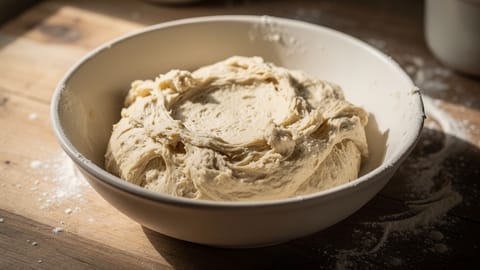
A bread-making technique where flour and water are mixed and rested before adding salt and leavening, allowing gluten to develop naturally.
Bulk Fermentation
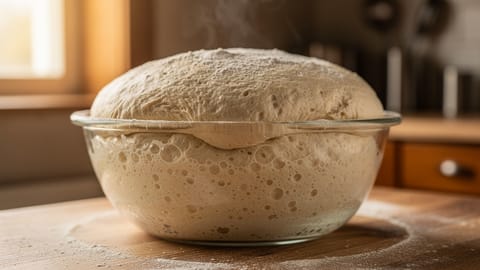
The primary rise of bread dough after mixing, where yeast or starter ferments the dough as a single mass before shaping.
Cold Fermentation
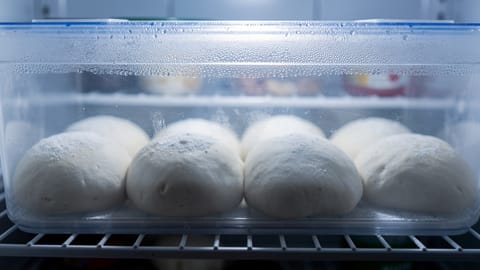
A technique of retarding dough in the refrigerator (2-5°C) for 24-72 hours, slowing yeast activity while allowing enzymes to develop deeper flavors and better texture.
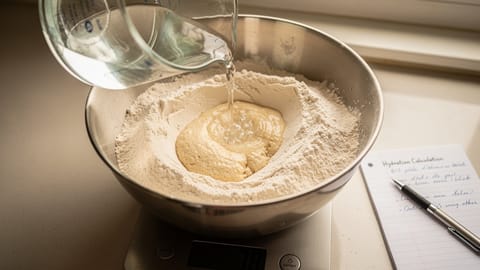
Hydration (Bread)
The ratio of water to flour in bread dough, expressed as a percentage. Higher hydration means wetter, more open-crumb bread.
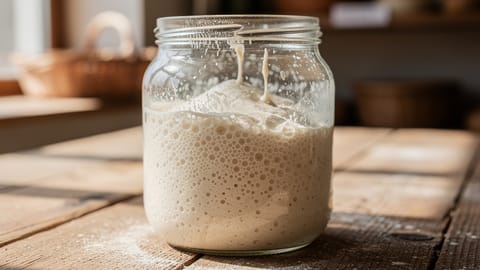
Poolish
A wet pre-ferment made with equal parts flour and water plus a small amount of yeast, fermented 8-16 hours to develop flavor and improve dough extensibility.
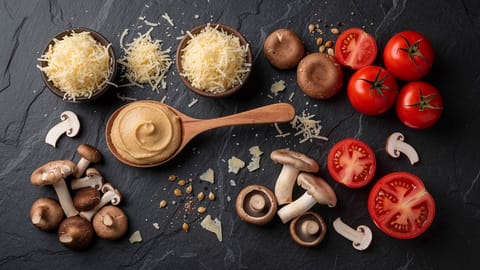
Umami
The fifth basic taste — a savory, meaty depth found in aged cheeses, soy sauce, mushrooms, and fermented foods.
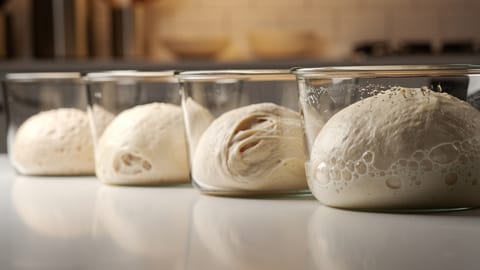
Pizza Dough Fermentation: Room Temperature vs Cold Fermentation
Room temp vs. fridge, 4 hours vs. 72 hours, and how to tell when your dough is actually ready. The time-temperature relationship is the single biggest lever for better-tasting pizza.
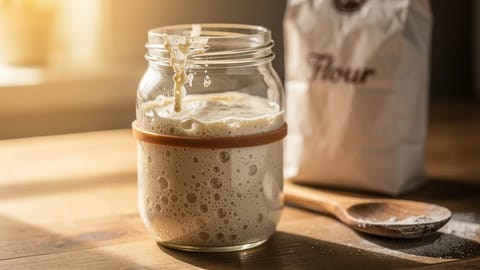
How to make a sourdough starter from scratch
A day-by-day guide to creating and maintaining a sourdough starter at home using just flour and water. Covers feeding schedules, signs of activity, troubleshooting slow starters, and how to know when it is ready to bake with.