 Bastien
Folding
A gentle mixing technique that preserves air in delicate batters by cutting through and turning the mixture rather than stirring.
Folding is a gentle mixing technique designed to combine ingredients while preserving as much incorporated air as possible. Unlike stirring or beating — which develop gluten and deflate bubbles — folding uses a slow, deliberate motion that keeps the mixture light and airy.
Folding appears in two very different parts of the kitchen: pastry (combining whipped egg whites, cream, or meringue into batters) and bread baking (building gluten structure in high-hydration doughs without kneading). The motion is similar in both cases, but the purpose is different.
When to fold
In pastry and desserts
- Adding whipped egg whites to a soufflé base, mousse, or sponge cake batter
- Incorporating whipped cream into a mousse, ice cream base, or filling
- Combining sifted dry ingredients (flour, cocoa) into a delicate batter
- Adding fruit, nuts, or chocolate chips to a batter without deflating it
- Mixing macaron batter (macaronage) to the right consistency
In bread baking
- Building gluten structure during bulk fermentation — stretch and fold sets replace kneading
- Incorporating mix-ins (seeds, dried fruit, olives) into bread dough
- Redistributing fermentation gases and equalizing dough temperature
The folding technique for pastry
Have your mise en place ready — once you start folding, speed matters.
- Lighten the base first. Stir about one-third of the whipped mixture (egg whites, cream) into the heavier base. This sacrifices some air but makes the base closer in density to the remaining whipped mixture, making the final fold much easier.
- Add the remaining lighter mixture on top of the lightened base.
- Cut down the center of the bowl with a large flexible spatula, slicing through the middle to the bottom.
- Sweep along the bottom — drag the spatula along the curve of the bowl.
- Fold up and over — bring the bottom mixture up and over the top in one smooth motion.
- Rotate the bowl 90 degrees with your other hand.
- Repeat until just combined — 10-15 strokes is typical. Some visible streaks are perfectly fine. Overfolding deflates the mixture and defeats the entire purpose.
Stretch and fold for bread
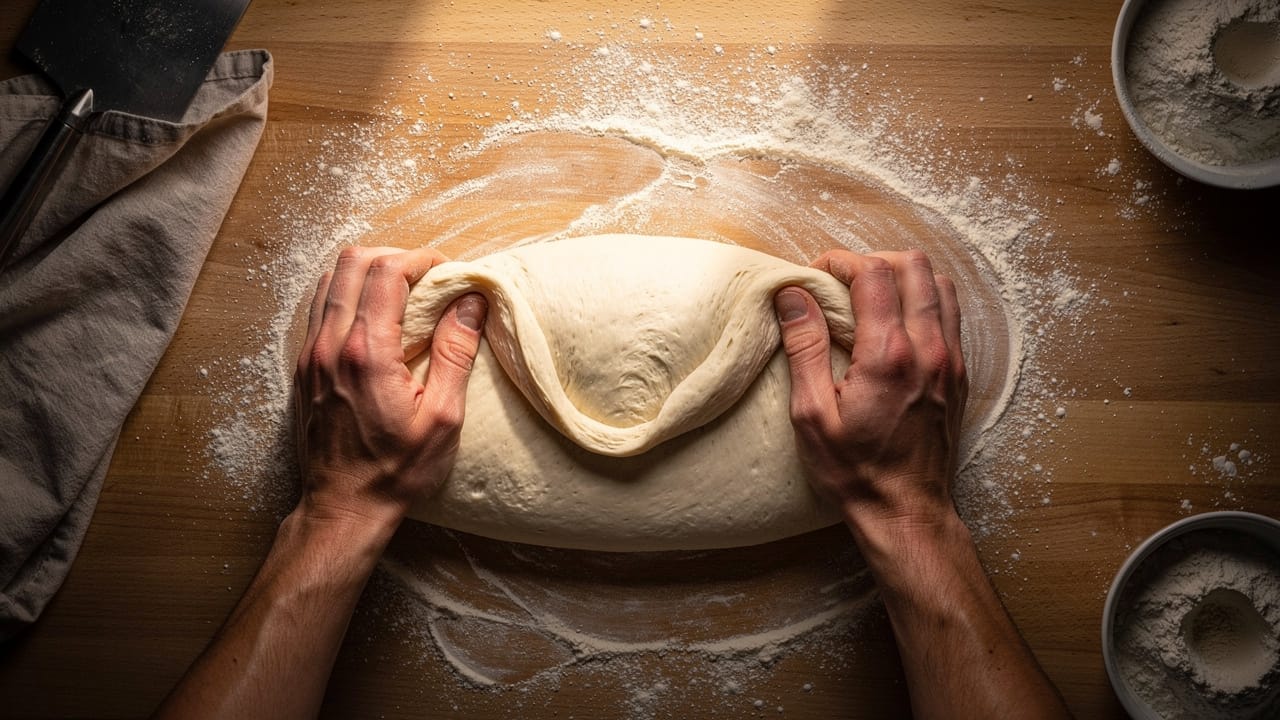
In bread baking, folding refers to a series of stretch-and-fold sets performed during bulk fermentation. This technique is particularly important for high-hydration doughs that are too wet to knead traditionally.
- Wet your hands to prevent sticking.
- Grab one side of the dough, stretch it upward as far as it goes without tearing, and fold it over to the opposite side.
- Rotate the container 90 degrees.
- Repeat for all four sides — this is one "set."
- Perform 3-6 sets spaced 30 minutes apart during the first half of bulk fermentation.
Each set builds gluten structure incrementally. After the first two sets, the dough transforms from a shaggy, sticky mass into a smooth, cohesive ball. An autolyse before adding salt and yeast gives the flour time to hydrate, making the first fold much easier.
Folding applications
| Dish/Context | What you fold | Into what | Technique | Key tip |
|---|---|---|---|---|
| Soufflé | Whipped egg whites | Flavored base | Pastry fold | Lighten base with 1/3 whites first |
| Chocolate mousse | Whipped cream | Melted chocolate ganache | Pastry fold | Chocolate must be cool (not hot) |
| Angel food cake | Sifted flour | Whipped egg whites | Pastry fold | Sift flour 3x for lightness |
| Macarons | Almond flour + sugar | Italian or French meringue | Macaronage | Count strokes; test with ribbon |
| Chiffon cake | Whipped whites | Yolk batter | Pastry fold | Fold in two additions |
| Sourdough bread | Dough onto itself | — | Stretch and fold | 4-6 sets, 30 min apart |
| High-hydration ciabatta | Dough onto itself | — | Coil fold or stretch and fold | Wet hands, gentle tension |
| Pancakes | Dry ingredients | Wet ingredients | Gentle fold | Stop while still lumpy |
Tools for folding
Large flexible spatula. The standard tool for pastry folding. Silicone holds up to heat and is easy to clean. Choose one with a thin, flexible edge — stiff spatulas push through the mixture rather than cutting.
Your hands. Traditional for bread doughs and some pastry applications. Hands give you direct feedback on the dough's texture and tension. Wet them first when working with sticky dough.
Bench scraper. Useful for coil folds and for turning very wet bread doughs.
Common folding mistakes
Stirring instead of folding. A circular stirring motion pushes air out. The folding motion — cut, sweep, turn — preserves it by gently layering rather than compressing.
Adding all the light mixture at once. The density difference between a heavy base (chocolate, batter) and whipped whites is large. Folding 1/3 of the whites in first "lightens" the base and makes the remaining fold gentler and more effective.
Overfolding. The mixture does not need to be perfectly homogeneous. A few visible streaks of white are normal and preferred over a deflated, dense result. In soufflés, overfolding is the number one cause of poor rise.
Bowl too small. Folding requires room to maneuver. Use a bowl at least 3x the volume of the mixture. A wide, shallow bowl is better than a narrow, deep one.
Ingredients at wrong temperature. When folding chocolate and cream, the chocolate should be warm (not hot — it will melt the cream) and the cream should be cold and freshly whipped. For bread, dough temperature affects fermentation rate.
Folding in Fond
Fond's Cook mode highlights folding steps in recipes with technique tips built into the instructions. Whether the recipe calls for folding egg whites into a soufflé base or performing stretch-and-fold sets during bulk fermentation, the app guides you through the motion and timing.
Frequently asked questions
What is the difference between folding and stirring?
Stirring uses a circular motion that deflates air and develops gluten. Folding uses a cut-sweep-turn motion that preserves air bubbles. Use stirring when you want a uniform mixture and do not care about air (sauces, batters before whipped ingredients are added). Use folding when air matters.
How many folds are enough for bread dough?
Most recipes call for 3-6 sets of stretch and folds, spaced 30 minutes apart. The dough is ready when it holds its shape, feels smooth, and passes a windowpane test. More folds are not better — once the gluten is developed, additional folds add no benefit.
Can I overfold macaron batter?
Yes. Macaron batter (macaronage) is a controlled deflation — you fold until the batter flows off the spatula in a thick ribbon. Too few folds and the batter is too thick to pipe smoothly. Too many and it becomes runny and the macarons spread flat. Most recipes take 40-60 strokes.
Why did my soufflé fall?
Common causes: overfolding (deflated the whites), opening the oven door (temperature drop caused collapse), underbaking (structure was not set), or the base was too heavy for the volume of whites.
Cook smarter
Join the waitlist for Fond. Recipes, meal plans, and a little AI sous-chef that learns how you cook.
Related terms
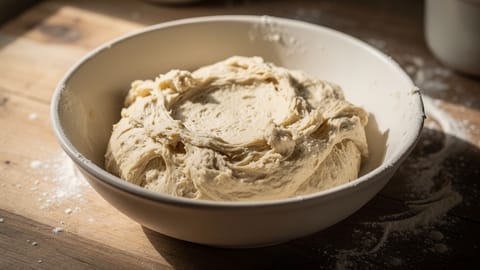
Autolyse
A bread-making technique where flour and water are mixed and rested before adding salt and leavening, allowing gluten to develop naturally.
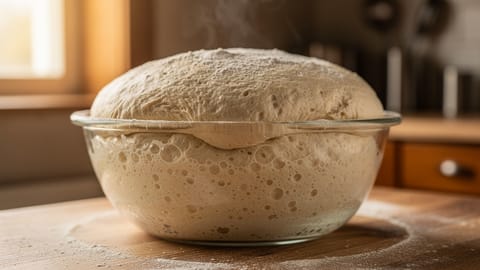
Bulk Fermentation
The primary rise of bread dough after mixing, where yeast or starter ferments the dough as a single mass before shaping.
Emulsification
Combining two liquids that normally don't mix (like oil and water) into a stable, uniform mixture.
Gluten Development
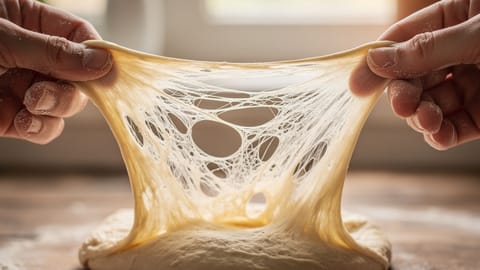
The process of building a protein network in dough through kneading, folding, or time, creating the structure that gives bread its chew and allows it to rise.
Hydration (Bread)
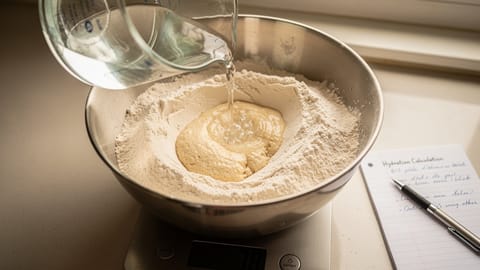
The ratio of water to flour in bread dough, expressed as a percentage. Higher hydration means wetter, more open-crumb bread.
Mise en Place
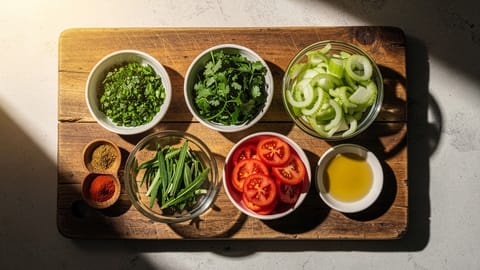
The practice of preparing and organizing all ingredients before cooking — everything in its place.