 Bastien
Gluten Development
The process of building a protein network in dough through kneading, folding, or time, creating the structure that gives bread its chew and allows it to rise.
Gluten development is what makes bread possible. When flour proteins — glutenin and gliadin — hydrate and are worked, they bond into an elastic, extensible network that traps gas from fermentation and creates the structure that gives bread its rise, chew, and crumb. Understanding how gluten forms and what affects it helps you troubleshoot dough problems and choose the right technique for every recipe.
How gluten forms
Gluten does not exist in dry flour. It only forms when flour proteins come into contact with water:
- Flour + water: Glutenin and gliadin molecules hydrate and begin linking into chains
- Mechanical action or time: Kneading, folding, or simply resting the dough aligns and cross-links these chains into a network
- Network matures: With continued work or rest, the network becomes increasingly organized — elastic (springs back) and extensible (stretches without tearing)
- Result: Dough that can trap CO2 from yeast, hold its shape, and expand during baking
Elasticity vs extensibility
Both properties matter, and well-developed dough has a balance of both:
| Property | What it does | Too much |
|---|---|---|
| Elasticity | Dough springs back when stretched | Dough snaps back, hard to shape |
| Extensibility | Dough stretches without tearing | Dough sags and does not hold shape |
The goal is a dough that stretches willingly but still has enough tension to hold its form — exactly what you test with the windowpane test.
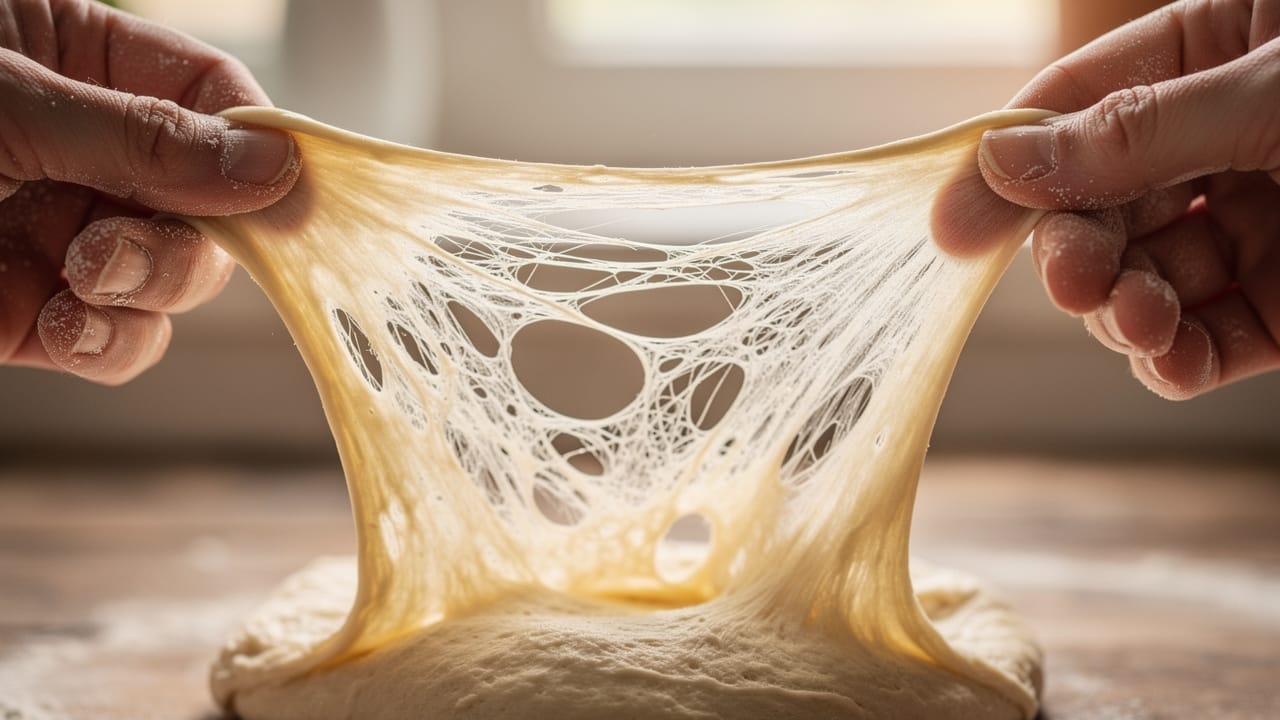
The windowpane test
The windowpane test is the standard way to check gluten development:
- Take a small piece of dough (golf ball size)
- With lightly oiled fingers, gently stretch it outward from the center
- Try to create a thin, translucent membrane
- Passes: You can see light through the membrane without it tearing
- Fails: Dough tears before becoming thin enough
| Stage | Characteristics | Windowpane result |
|---|---|---|
| Under-developed | Shaggy, rough, tears easily | Tears immediately |
| Developing | Smoother, some elasticity | Stretches but tears before becoming thin |
| Well-developed | Smooth, elastic, springs back | Thin membrane, light visible through |
| Over-developed | Tough, tight, breaks when pulled | Won't stretch, snaps |
Not every bread needs a full windowpane. Rustic loaves and high-hydration breads can produce excellent results with moderate gluten development.
Methods of developing gluten
Kneading
Traditional push-fold-rotate motion. The most direct way to develop gluten.
| Method | Time | Speed | Risk |
|---|---|---|---|
| Hand kneading | 8-12 minutes | Moderate | Hard to over-develop |
| Stand mixer (dough hook) | 5-8 minutes on medium | Fast | Can over-develop if unattended |
| Food processor | 45-60 seconds | Very fast | Easy to over-develop |
Hand kneading is forgiving — most people tire before they over-develop gluten. Machine mixing requires attention: stop as soon as the dough passes the windowpane test.
Folding
Gentle stretch-and-fold during bulk fermentation. The preferred method for high-hydration and artisan doughs.
- 4-6 sets of folds spaced 15-30 minutes apart during the first 2-3 hours of bulk
- Each set: stretch one side of the dough up and fold it over the center, rotate, repeat 4 times (north, south, east, west)
- Develops strength gradually without overworking
- Redistributes temperature and yeast for even fermentation
Folding produces dough with excellent extensibility and open crumb — ideal for ciabatta, focaccia, and sourdough.
Autolyse
Mix only flour and water, then rest 20-60 minutes before adding salt, yeast, or other ingredients. During this rest, enzymes in the flour begin breaking down starch and proteins start hydrating and linking on their own.
Benefits:
- Dough becomes smoother and more extensible with less kneading
- Better flavor development (enzymes create sugars)
- Reduced total mixing time by 30-50%
No-knead (time-based)
Very wet dough (75-80% hydration) sits 12-18 hours at room temperature with minimal yeast. Gluten develops slowly through hydration and long fermentation alone. Popularized by Jim Lahey's no-knead bread method.
- Produces an open, irregular crumb with large holes
- Minimal effort — just mix and wait
- The long fermentation also builds exceptional flavor
Flour protein and gluten potential
The protein content of flour determines how much gluten can form:
| Flour | Protein | Gluten strength | Best for |
|---|---|---|---|
| High-gluten bread flour | 13-14.5% | Very strong | Bagels, chewy pizza |
| Bread flour | 12-13% | Strong | Sandwich bread, artisan loaves |
| All-purpose | 10-12% | Medium | Versatile — bread, cookies, sauces |
| Italian 00 (tipo 00) | 11-13% | Medium-strong, extensible | Neapolitan pizza, pasta |
| Whole wheat | 13-14% | Strong but bran interferes | Dense, nutty breads |
| Pastry flour | 8-9% | Weak | Pie crusts, biscuits |
| Cake flour | 7-8% | Very weak | Cakes, delicate pastries |
| Rye flour | 5-7% | Minimal (different proteins) | Rye bread — mix with wheat flour |
Whole wheat flour has high protein but the bran particles act like tiny knives, cutting through gluten strands. This is why 100% whole wheat bread is denser — compensate with higher hydration (70-80%) and longer fermentation.
Factors that affect gluten development
| Factor | Effect on gluten | How to manage |
|---|---|---|
| Hydration | More water = more extensible, less elastic | Adjust based on desired crumb |
| Salt | Tightens gluten bonds, increases strength | Add after autolyse for best effect |
| Fat (butter, oil) | Coats gluten, slows development | Add late in mixing for enriched doughs (brioche) |
| Sugar | Competes for water, slows development | Enriched doughs need longer mixing |
| Acidity | Strengthens gluten at moderate levels | Sourdough fermentation helps |
| Temperature | Warm dough develops faster | Keep dough at 24-27°C for optimal development |
| Time | Longer rest = more passive development | Use for no-knead and high-hydration styles |
| Fermentation | Gas production strengthens and stretches network | Folding during bulk helps |
When you want less gluten
Not all baking benefits from strong gluten. Some products require minimal development for a tender texture:
| Product | Goal | Technique |
|---|---|---|
| Pie crust | Flaky, tender | Keep fat and water cold; mix until just combined |
| Biscuits | Tender, layered | Cut in cold fat; fold like a letter, handle minimally |
| Cakes | Light, tender crumb | Use cake flour (7-8% protein); do not overmix |
| Pancakes/crêpes | Tender, not chewy | Mix until just combined; lumps are fine |
| Muffins | Tender, dome shape | Mix wet and dry until barely combined |
| Shortbread | Sandy, crumbly | High fat ratio prevents gluten formation |
Troubleshooting
| Problem | Cause | Fix |
|---|---|---|
| Dough tears when shaping | Under-developed gluten | Knead longer, or let rest 15-20 min then try again |
| Dough snaps back, won't stretch | Over-developed or too elastic | Let rest 15-30 minutes to relax; avoid over-kneading |
| Dense, heavy bread | Insufficient gluten development | Knead or fold more; check flour protein content |
| Flat loaf that spreads | Weak gluten cannot hold shape | Use higher-protein flour; add more folds |
| Tough, chewy when it should be tender | Over-developed gluten in a pastry or cake | Mix less; use lower-protein flour |
| Pizza dough tears when stretching | Not enough rest or under-developed | Rest dough balls 1-2 hours at room temp before stretching; use the pizza dough calculator for correct hydration and timing |
| Whole wheat dough does not hold shape | Bran cuts gluten network | Increase hydration; mix longer; add vital wheat gluten if needed |
Tips
- Let dough rest if it fights you — 15 minutes of bench rest relaxes the gluten and makes shaping dramatically easier
- For pizza, a well-rested dough ball at room temperature stretches by its own weight with gentle hand manipulation
- Wet your hands or oil them when handling high-hydration dough — it prevents sticking without adding dry flour that toughens the surface
- If using a stand mixer, start on low speed and only increase to medium — high speed generates heat and can over-develop gluten
- Autolyse before adding salt reduces total mixing time by 30-50%
Gluten development in Fond
Fond's recipe instructions guide you through each gluten development stage — from mixing and autolyse to folding schedules during bulk fermentation. The app adjusts technique recommendations based on hydration level and flour type, so you always know whether to knead, fold, or rest.
Frequently asked questions
Can I develop gluten without kneading?
Yes. Autolyse (rest after mixing flour and water), stretch-and-fold during bulk fermentation, and long no-knead fermentation all develop gluten without traditional kneading. Time and hydration do the work instead of mechanical action.
How do I know if I have over-developed gluten?
Over-developed dough feels tight, tough, and tears rather than stretching. It snaps back aggressively when you try to shape it. This is rare with hand kneading but possible with a stand mixer or food processor. If it happens, let the dough rest 20-30 minutes — the gluten will relax.
Does salt help or hurt gluten development?
Salt strengthens gluten by tightening the protein bonds. Adding salt after an autolyse period gives you the best of both: passive development first (more extensible), then salt to tighten the structure.
Why is my high-hydration dough so sticky?
High-hydration dough (70%+) is inherently sticky. This is normal. Use wet hands, a bench scraper, and folding rather than kneading. As the gluten network develops through folds, the dough becomes more manageable even though the hydration has not changed.
Can I add gluten to improve weak flour?
Yes. Vital wheat gluten (a concentrated gluten powder) can boost the protein content of weaker flours. Add 1-2% of flour weight to all-purpose flour to approximate bread flour strength. This is common in whole wheat and multigrain recipes.
Cook smarter
Join the waitlist for Fond. Recipes, meal plans, and a little AI sous-chef that learns how you cook.
Related terms
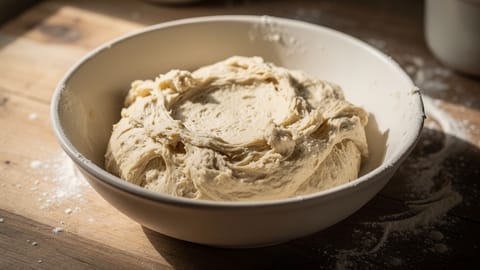
Autolyse
A bread-making technique where flour and water are mixed and rested before adding salt and leavening, allowing gluten to develop naturally.
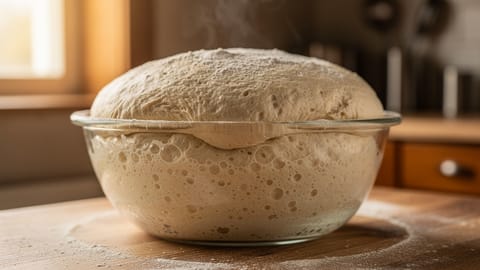
Bulk Fermentation
The primary rise of bread dough after mixing, where yeast or starter ferments the dough as a single mass before shaping.
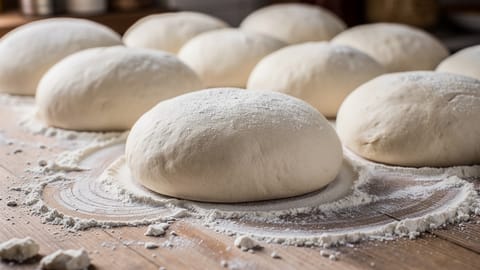
Dough Ball
An individual portion of pizza dough, shaped into a smooth sphere after bulk fermentation. Each dough ball becomes one pizza, with typical weights ranging from 200-500g depending on the style.

Fermentation
A metabolic process where microorganisms convert sugars into acids, gases, or alcohol — the basis of bread, yogurt, kimchi, and beer.
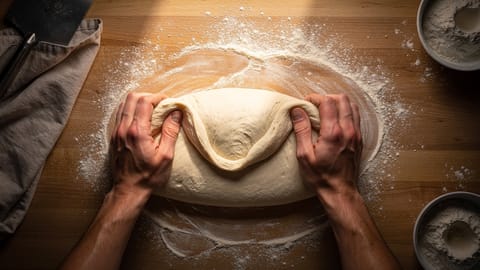
Folding
A gentle mixing technique that preserves air in delicate batters by cutting through and turning the mixture rather than stirring.
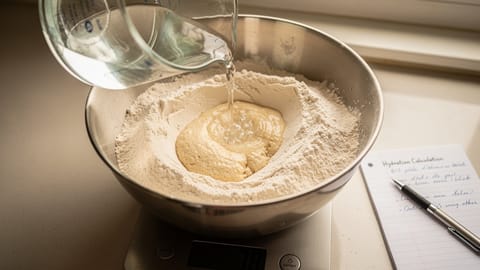
Hydration (Bread)
The ratio of water to flour in bread dough, expressed as a percentage. Higher hydration means wetter, more open-crumb bread.
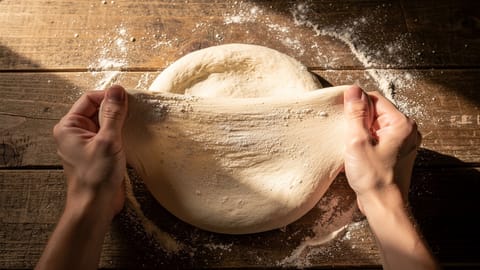
Beginner Pizza Dough
Your first homemade pizza dough, from scratch. A simple same-day recipe with 4 ingredients, plus everything you need to know about mixing, kneading, and shaping.
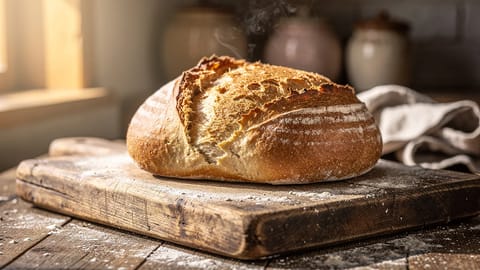
Bread baking for beginners: your first loaf, start to finish
A complete walkthrough for baking your first loaf of bread at home. Covers the four core ingredients, kneading by hand or mixer, proofing, shaping, and baking, with temperatures, times, and troubleshooting for every step.
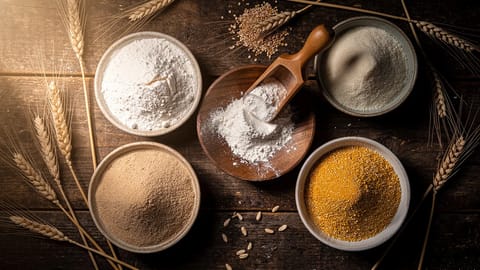
Types of flour for baking: a practical guide to 10 common flours
A breakdown of the most common types of flour used in baking, organized by protein content. Covers all-purpose, bread, cake, pastry, whole wheat, 00, semolina, rye, self-rising, and gluten-free flours — with substitution ratios and a quick-reference chart for matching flour to recipe.