 Bastien
Hydration (Bread)
The ratio of water to flour in bread dough, expressed as a percentage. Higher hydration means wetter, more open-crumb bread.
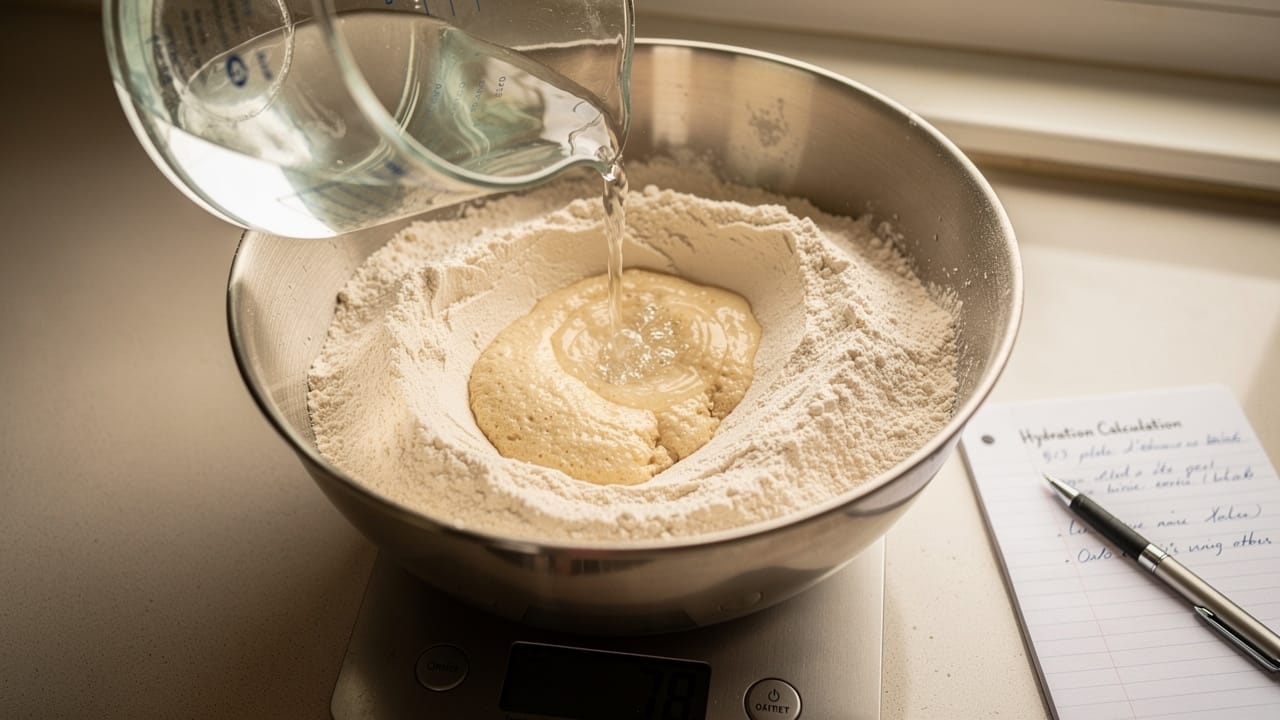
Hydration in bread baking is the ratio of water to flour expressed as a percentage. A dough made with 1,000g of flour and 700g of water is at 70% hydration. This single number tells you more about how your bread will look, feel, and taste than almost any other variable in the recipe.
Hydration is part of the baker's percentage system, where every ingredient is expressed as a percentage of total flour weight. Flour is always 100%, and everything else is relative to it. Understanding hydration is the key to reading bread formulas, adapting recipes, and troubleshooting dough behavior.
How to calculate hydration
The formula is straightforward:
Hydration % = (total water weight ÷ total flour weight) × 100
For a recipe with 500g flour and 350g water: 350 ÷ 500 × 100 = 70% hydration.
When calculating, include all sources of water and flour:
- Water in a poolish or biga counts toward total water
- Flour in the pre-ferment counts toward total flour
- Eggs are roughly 75% water and 13% protein — include their water contribution in enriched doughs
- Milk is roughly 87% water — factor it in when substituting for water
The hydration spectrum
| Hydration | Dough feel | Crumb structure | Typical breads |
|---|---|---|---|
| 50-55% | Very stiff, dense | Tight, uniform | Bagels, pretzels |
| 55-60% | Stiff, smooth | Close, even | Challah, brioche, sandwich bread |
| 60-65% | Standard, slightly tacky | Even with small holes | Dinner rolls, baguettes (traditional) |
| 65-70% | Soft, moderately sticky | Open with medium holes | French bread, country sourdough |
| 70-75% | Wet, sticky | Open, irregular holes | Ciabatta, high-hydration sourdough |
| 75-80% | Very wet, challenging | Large irregular holes | Focaccia, pan pizza |
| 80-85% | Extremely wet | Very open, almost translucent | Some artisan loaves |
| 85%+ | Batter-like, pours | Ultra-open | Specialty breads, some focaccia |
Most beginner-friendly bread recipes sit at 60-68% hydration. Once you're comfortable with dough handling, working your way up to 72-75% unlocks the open, airy crumb structure that many bakers aspire to.
How hydration affects your bread
Crumb structure
Higher hydration produces larger, more irregular holes in the crumb. Water creates steam during baking, which inflates the bubbles created during fermentation. More water means more steam, bigger bubbles, and a more open crumb. The gluten network stretches thinner around these larger bubbles, creating the translucent, slightly glossy cell walls you see in well-made ciabatta.
Crust
Wetter doughs produce crispier, more blistered crusts. The extra water at the surface creates more steam in the oven, which promotes the gelatinization of starches on the crust — the same process that makes a baguette crust shatter when you bite into it.
Flavor
Higher hydration doughs ferment slightly differently. The extra water makes sugars more accessible to yeast and bacteria, which can produce more organic acids during long fermentation. This is one reason why high-hydration sourdoughs often have more complex, tangy flavor.
Shelf life
More water in the dough means more moisture retained in the baked bread. High-hydration breads stay fresh longer than low-hydration ones, which dry out faster.
Handling difficulty
Higher hydration dough is stickier and harder to shape. This is the tradeoff: the bread you want (open crumb, crispy crust) requires dough that doesn't behave the way you'd like during handling. Technique — particularly stretch and folds during bulk fermentation — compensates for this.
Factors that change effective hydration
The same 70% hydration feels very different depending on several variables:
Flour type. Whole wheat and rye absorb significantly more water than white flour. A 70% whole wheat dough feels drier than a 70% white flour dough. When using whole grains, increase hydration by 5-10% to compensate. An autolyse gives whole grain flours time to absorb water fully before mixing.
Protein content. Higher-protein bread flour (12-14% protein) absorbs more water and produces stronger gluten than lower-protein all-purpose flour (10-12%). If your dough feels wetter than expected, your flour may have less protein than the recipe assumes.
Humidity. On humid days, flour has already absorbed moisture from the air. Your dough may feel wetter at the same hydration percentage. Some bakers hold back 2-3% of the water and add it only if the dough seems dry after mixing.
Inclusions. Seeds, nuts, dried fruit, and olives absorb water from the dough. If adding inclusions, either soak them first or increase hydration slightly to compensate.
Temperature. Warmer water makes dough feel stickier. This doesn't change the actual hydration but affects how the dough handles.
Tips for working with high-hydration dough
Wet your hands, not the dough. Keep a bowl of water nearby and dip your hands before touching the dough. Wet hands prevent sticking without adding flour, which would change the hydration.
Use stretch and folds instead of kneading. Traditional kneading doesn't work well with high-hydration doughs — the dough sticks to everything. Instead, stretch and fold the dough during bulk fermentation, every 30 minutes for the first 1-2 hours. This builds gluten structure without the mess.
Use a bench scraper. A metal bench scraper is essential for handling wet dough on the counter. Slide it under the dough rather than grabbing with your hands.
Autolyse first. Mix flour and water and let them rest 30-60 minutes before adding salt and yeast. This autolyse lets the flour hydrate fully and begins gluten development passively, making the dough easier to work with.
Shape quickly and confidently. High-hydration dough sticks more the longer you handle it. Fast, decisive movements with well-floured hands produce better results than slow, tentative shaping.
Use a cold fermentation. Refrigerating shaped dough overnight makes it firmer and much easier to score and load into the oven.
Hydration for pizza dough
Pizza dough hydration varies by style:
| Style | Hydration | Why |
|---|---|---|
| New York | 60-65% | Easy to stretch by hand, foldable slice |
| Neapolitan | 58-65% | Traditional, soft but not too wet |
| Roman al taglio | 75-85% | Light, airy, rectangular pan pizza |
| Detroit | 70-75% | Thick, focaccia-like, crispy bottom |
For detailed pizza dough hydration guides, see our pizza dough hydration guide. Use our pizza dough calculator to see exact water amounts for any hydration level and style.
Hydration in Fond
Fond's Bread Studio and Pizza Workshop calculate hydration automatically as you adjust your recipe. Add more water or change flour amounts and the hydration percentage updates in real-time. The app also suggests target hydration ranges based on the bread style you've selected, so you know whether your formula is in the right ballpark before you mix.
Frequently asked questions
What hydration should I start with as a beginner?
Start at 65% hydration with bread flour. This produces a manageable dough that still makes good bread. As you get comfortable with shaping and handling, increase by 2-3% at a time. Most bakers find their sweet spot between 70-75%.
Can I just add more water to any recipe?
You can increase hydration, but the dough will behave differently and may need technique adjustments. Higher hydration requires stronger gluten (more mixing or folds), longer bulk fermentation, and often cold fermentation for easier shaping.
Why is my high-hydration dough flat?
Two common causes: weak gluten development (not enough folds or mixing) or over-fermentation (the gluten structure broke down). Build more structure through folds during bulk fermentation, and watch for signs of over-proofing.
Does hydration include oil, butter, or eggs?
Traditionally, hydration refers only to water. However, eggs and milk contain water that contributes to the dough's effective hydration. Oil and butter don't contribute to hydration in the baker's percentage system, but they do affect dough texture and feel.
Cook smarter
Join the waitlist for Fond. Recipes, meal plans, and a little AI sous-chef that learns how you cook.
Related terms
Autolyse
A bread-making technique where flour and water are mixed and rested before adding salt and leavening, allowing gluten to develop naturally.
Baker's Percentage
A method of expressing bread recipe ingredients as percentages relative to the total flour weight, making recipes infinitely scalable.
Biga
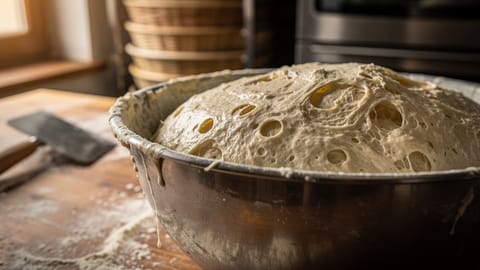
A stiff Italian pre-ferment with 50-60% hydration, used to add structure, flavor complexity, and a nuttier taste to bread and pizza doughs.
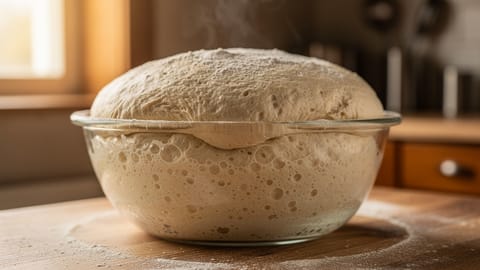
Bulk Fermentation
The primary rise of bread dough after mixing, where yeast or starter ferments the dough as a single mass before shaping.
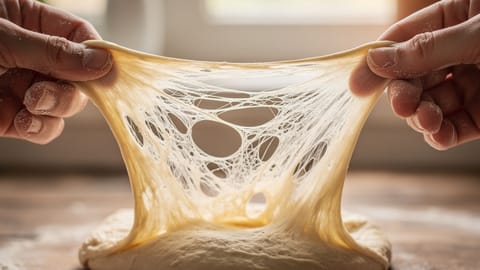
Gluten Development
The process of building a protein network in dough through kneading, folding, or time, creating the structure that gives bread its chew and allows it to rise.
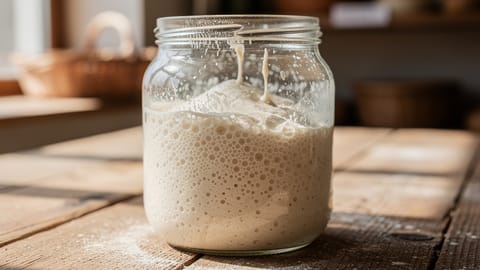
Poolish
A wet pre-ferment made with equal parts flour and water plus a small amount of yeast, fermented 8-16 hours to develop flavor and improve dough extensibility.
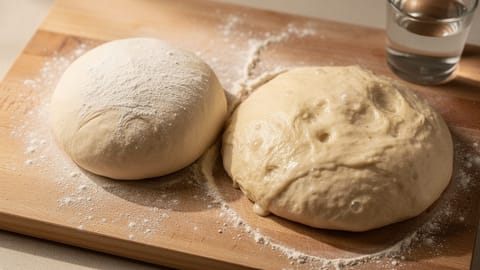
Pizza dough hydration: complete guide to water ratios
How the water-to-flour ratio shapes your crust. 60% gives you a stiff, easy-to-handle dough; 75%+ gives you open, airy crumb but requires more technique. Includes baker's percentages by style, a decision framework, bassinage technique, and fermentation interaction.
ToolPizza Dough Calculator
Calculate precise ingredient quantities for any pizza style.