 Bastien
Kitchen Scale
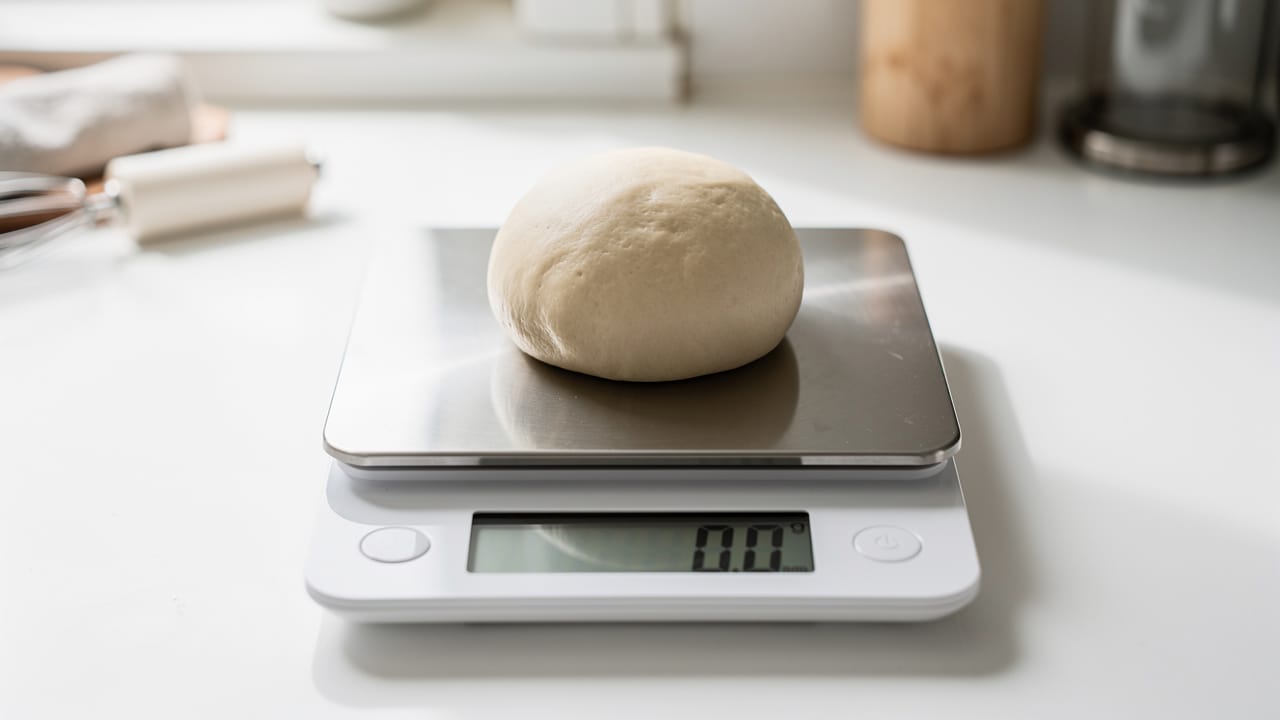
A digital scale for measuring ingredients by weight — far more accurate than cups and spoons, especially in baking.
A kitchen scale is the single most impactful upgrade for consistent cooking and baking results. Measuring ingredients by weight instead of volume eliminates the guesswork that causes recipes to fail — a "cup of flour" can vary by 30% depending on how you scoop it, but 120g of flour is always 120g of flour.
Professional bakers, pastry chefs, and bread bakers all work by weight. Once you start weighing, you will wonder how you ever managed with measuring cups.
Why weight beats volume
| Factor | Weight (scale) | Volume (cups and spoons) |
|---|---|---|
| Accuracy | Exact — 100g is 100g | Variable — packing, scooping, settling change amounts |
| Consistency | Same results every time | Results vary batch to batch |
| Recipe scaling | Simple multiplication | Awkward fractions (3/4 cup × 1.5?) |
| Cleanup | One bowl with tare | Multiple measuring cups and spoons |
| Speed | Pour until the number is right | Level off, scrape, re-measure |
| International recipes | Universal (grams) | Confusing (US cups ≠ metric cups ≠ imperial cups) |
The difference is most dramatic with dry ingredients. A cup of flour measured by scooping straight from the bag can weigh 140–180g. The same cup measured by the spoon-and-level method weighs about 120–130g. That 30–50% difference is enough to turn a tender cake into a dense brick.
How a kitchen scale works
Modern kitchen scales use strain gauge sensors or electromagnetic force restoration to detect mass. For cooking, the key features are:
The tare function
The most important button on your scale. Tare resets the display to zero with the current weight on it. This lets you:
- Place a bowl on the scale and press tare — display reads 0g
- Add flour until it reads 250g
- Press tare again — display reads 0g
- Add sugar until it reads 100g
- Continue for every ingredient
You can measure an entire recipe into one bowl without dirtying a single measuring cup. Have your mise en place organized and the process becomes fast and clean.
Units
Most scales toggle between grams, ounces, pounds, and milliliters. Grams are the standard for cooking and baking because they are precise and universal. Use ounces only when following older American recipes that specify them.
What to look for when buying
| Feature | Recommended | Why |
|---|---|---|
| Capacity | 5 kg / 11 lb minimum | Handles bread dough, large batches, heavy bowls |
| Precision | 1g increments | Accurate enough for cooking and baking |
| 0.1g precision | Optional — for coffee and spices | Needed for brew ratios and precise seasoning |
| Tare button | Required | Measure multiple ingredients in one bowl |
| Platform size | Large enough for mixing bowls | Small platforms tip over with big bowls |
| Power | USB rechargeable or battery | Rechargeable saves on batteries long-term |
| Auto-off delay | Long or adjustable | Cheap scales turn off mid-recipe, losing your count |
| Water resistance | Preferred | Kitchens are messy; spills happen |
Avoid scales that auto-off after 30–60 seconds — this is the most frustrating flaw in budget scales. You step away to crack eggs and the scale shuts down, losing your tare reference.
When a kitchen scale matters most
Baking
Baking is chemistry. Ratios of flour to liquid to fat to leavener must be precise, or the texture, rise, and structure change. Professional baking formulas use baker's percentages, which express every ingredient as a percentage of flour weight. This system only works if you measure by weight.
Bread baking is especially sensitive. The hydration of a dough — the ratio of water to flour — determines whether you get an open, airy crumb or a dense, tight one. A 65% hydration dough and a 75% hydration dough feel and behave completely differently. You cannot hit these targets reliably with cups.
Coffee
Specialty coffee uses precise brew ratios — typically 1:15 to 1:17 coffee to water by weight. A scale with 0.1g precision lets you dose coffee beans accurately and pour water to the gram, producing consistent cups every time.
Recipe scaling
When you need to halve or double a recipe, weight makes recipe scaling trivial. Half of 250g is 125g. Half of "1 and 3/4 cups" requires mental math and rounding that introduces error.
Meal prep
Weighing portions during meal prep ensures consistent serving sizes. If you are tracking macros or cooking for a specific number of servings, a scale removes the guesswork.
Seasoning
Professional kitchens weigh salt for consistency. A teaspoon of fine salt weighs about 6g; a teaspoon of kosher salt weighs about 3g. Measuring salt by weight instead of volume eliminates the crystal-size variable entirely.
Common weight references
| Ingredient | 1 US cup (approx.) | Why it varies |
|---|---|---|
| All-purpose flour | 120–150g | Scooping vs. spooning, humidity |
| Granulated sugar | 200g | Fairly consistent (uniform crystals) |
| Brown sugar | 200–220g | Packing density |
| Butter | 227g (2 sticks) | Consistent — sold by weight |
| Water | 237g | Consistent — 1 ml ≈ 1g |
| Rolled oats | 80–100g | Very variable (flake size differs) |
| Cocoa powder | 85–100g | Sifted vs. packed |
| Kosher salt (Diamond Crystal) | 135g | Very different from fine salt (~280g/cup) |
These ranges show why volume measurements produce inconsistent results. A scale sidesteps the problem entirely.
Tips for using your kitchen scale
Always use grams. Grams give you more precision than ounces (1 oz = 28.35g). For baking, the extra granularity matters.
Tare between every ingredient. Build the habit of pressing tare after each addition. It is faster than mental subtraction.
Weigh liquids too. Water, milk, oil — all are more accurate by weight than by volume. Water is easy: 1 ml = 1g. Oil is slightly lighter (~0.92g per ml).
Keep it on the counter. If your scale lives in a drawer, you will not use it. Give it a permanent home next to your cutting board and bench scraper.
Calibrate occasionally. Most home scales do not need frequent calibration, but if results feel off, check with a known weight (a new, sealed nickel weighs exactly 5g).
Kitchen scale in Fond
Fond supports weight-based measurements in all recipes. When you view a recipe in Fond, ingredients are shown in grams by default, making it easy to measure with a scale. The recipe scaling feature recalculates all weights automatically when you change the serving count.
Frequently asked questions
Do I really need a kitchen scale for everyday cooking?
For everyday cooking (soups, stir-fries, stews), you can get by with volume. But if you bake, make bread, brew coffee, or want consistent results from any recipe, a scale pays for itself immediately. Most cooks who start weighing never go back.
What is the best kitchen scale for home baking?
Look for at least 5 kg capacity, 1g precision, a responsive tare button, and a long auto-off timer. Rechargeable USB models are convenient. You do not need to spend more than $25–30 for an excellent home scale.
Can I use a kitchen scale for coffee?
For drip or French press, a 1g-precision scale works. For espresso, you want 0.1g precision because espresso doses are small (14–20g) and small changes make a big difference. Dedicated coffee scales often include a built-in timer.
Why do professional bakers always use weight?
Because baker's percentages — the standard formula system in professional baking — are based on weight. Every ingredient is expressed as a percentage of flour weight. This makes recipe scaling trivial and ensures consistency across batches, ovens, and kitchens.
Cook smarter
Join the waitlist for Fond. Recipes, meal plans, and a little AI sous-chef that learns how you cook.
Related terms
Baker's Percentage
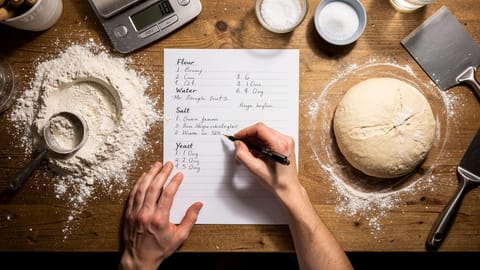
A method of expressing bread recipe ingredients as percentages relative to the total flour weight, making recipes infinitely scalable.
Brew Ratio
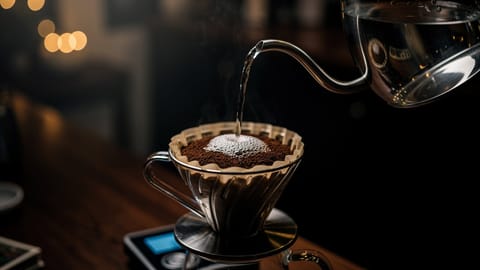
The ratio of coffee grounds to water used when brewing, typically expressed as 1:15 to 1:18 for filter coffee. The single most important variable for consistent, great-tasting coffee.
Hydration (Bread)
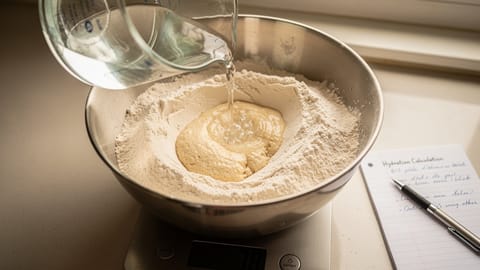
The ratio of water to flour in bread dough, expressed as a percentage. Higher hydration means wetter, more open-crumb bread.
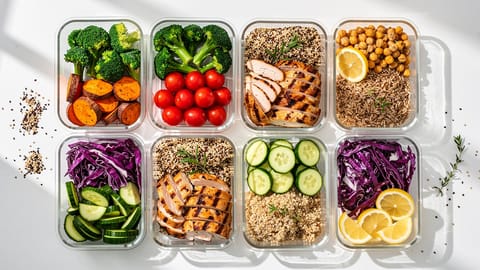
Meal Prep
Preparing meals or meal components in advance, typically for the week ahead, to save time and reduce daily cooking effort.
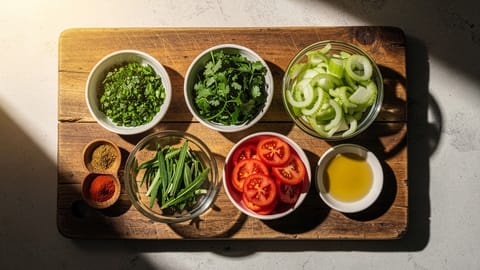
Mise en Place
The practice of preparing and organizing all ingredients before cooking — everything in its place.
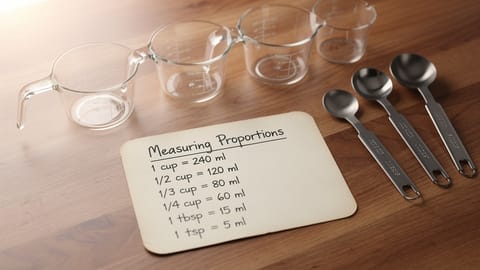
Recipe Scaling
Adjusting ingredient quantities in a recipe to serve more or fewer people while maintaining correct proportions.
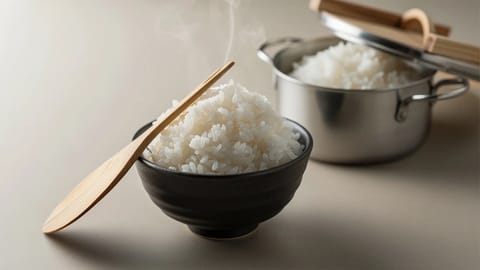
How to cook rice perfectly every time
Rice is the most consumed grain on the planet, yet it trips up even confident home cooks. Too sticky, too mushy, burned on the bottom. The failures are predictable, and so are the fixes. Learning how to cook rice well comes down to the right water ratio, proper heat control, and leaving it alone while it cooks.
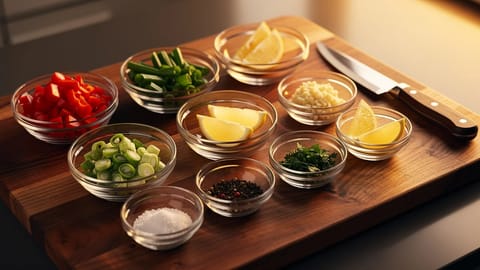
What is mise en place and why it matters
Mise en place is the practice of preparing and organizing every ingredient and tool before you start cooking. It's the single habit that separates chaotic, stressful cooking from calm, confident meals, and it works just as well in a home kitchen as it does in a professional one.
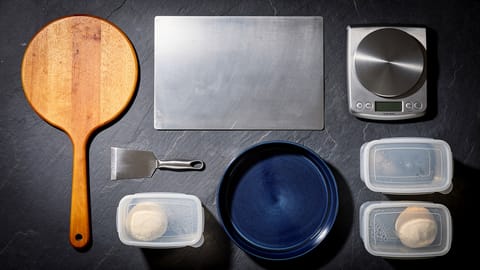
Essential Pizza Equipment: What You Actually Need
Stop wasting money on gadgets. A baking steel, a digital scale, and an infrared thermometer are the upgrades that actually matter. Everything else is a bonus.