 Bastien
Kosher Salt
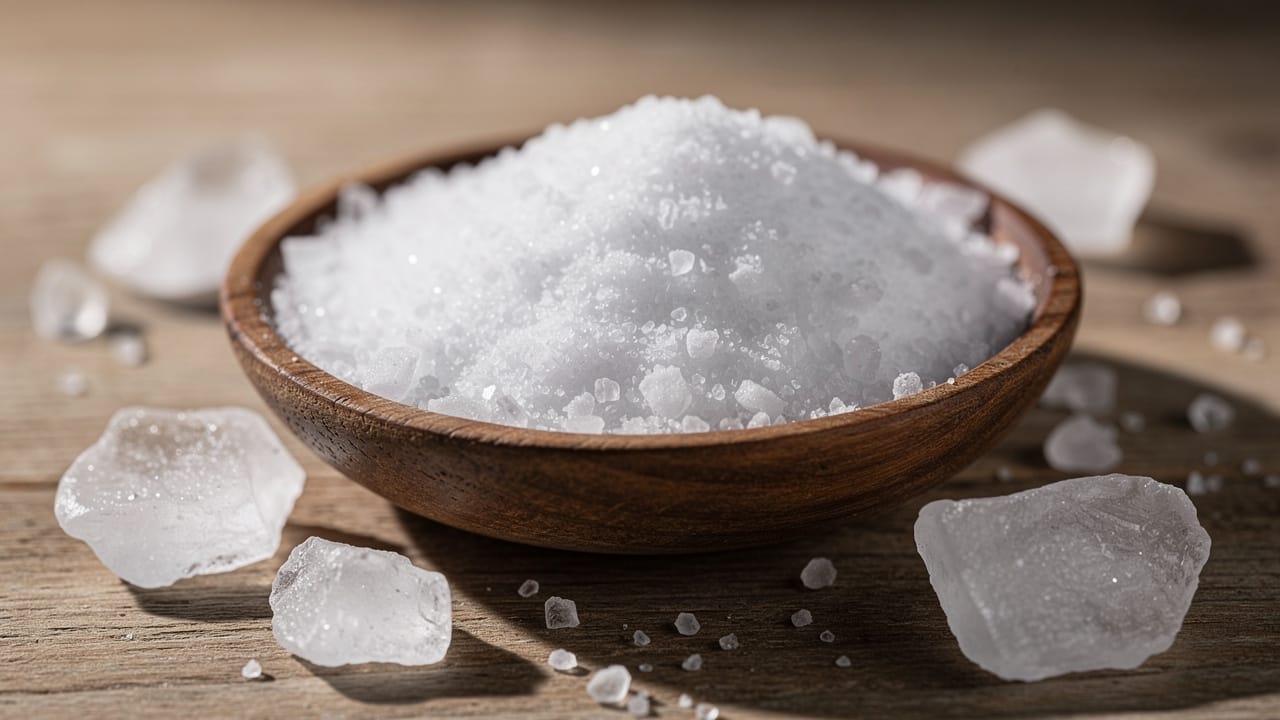
A coarse-grained salt with large, flat crystals that's preferred by chefs for seasoning because it's easy to pinch, dissolves well, and has no additives.
Kosher salt is a coarse-grained salt with large, flat crystals that has become the default seasoning salt in professional kitchens and serious home cooking. Its name comes from its traditional use in koshering meat — the large crystals draw blood from the surface effectively — not from the salt itself being certified kosher.
What makes kosher salt the preferred choice over table salt or sea salt is its crystal structure. The large, irregularly shaped flakes are easy to pinch, distribute evenly across food, and dissolve cleanly without the metallic aftertaste that iodized table salt can leave. For recipes that measure salt by weight rather than volume, see our guide to baker's percentages.
Why chefs prefer kosher salt
Professional cooks reach for kosher salt for practical reasons that affect every dish:
- Easy to pinch and control — the large flakes sit between your fingers, letting you feel exactly how much you're adding. This tactile feedback is why mise en place setups almost always include a small bowl of kosher salt
- Even distribution — flat crystals adhere to food surfaces better than fine granules, creating more uniform seasoning when searing meat or roasting vegetables
- No additives — kosher salt contains no iodine or anti-caking agents. Iodine can impart a faintly metallic or chemical taste, especially noticeable in delicate dishes
- Forgiving — the larger crystal size makes it harder to accidentally over-salt. A pinch of kosher salt contains less sodium than the same pinch of table salt
- Dissolves cleanly — no chalky residue or off-flavors from additives
Kosher salt vs table salt
The key difference between kosher salt and table salt is density. A teaspoon of table salt weighs roughly 6g, while a teaspoon of kosher salt weighs 3-5g depending on brand. This means substituting one for the other by volume will give you very different results.
| Property | Kosher salt | Table salt | Sea salt |
|---|---|---|---|
| Crystal size | Large, flat flakes | Small, uniform cubes | Varies widely |
| Weight per tsp | 3-5g | 6g | 5g |
| Additives | None | Iodine, anti-caking agents | Usually none |
| Taste | Clean, pure | Can taste metallic | Mineral notes |
| Best for | Cooking, seasoning | Baking (precise), pasta water | Finishing |
| Texture | Coarse, pinchable | Fine, pourable | Varies |
When to use table salt instead: Baking recipes that call for salt by volume assume table salt's consistent density. Using kosher salt in baking without adjusting quantities can lead to under-seasoned results. For precise baking, a kitchen scale eliminates this problem entirely — weigh your salt regardless of type.
Diamond Crystal vs Morton: the conversion that matters
This is the most important thing to understand about kosher salt: the two dominant brands — Diamond Crystal and Morton — are not interchangeable by volume. They use different manufacturing processes that produce very different crystal structures.
Diamond Crystal uses a patented Alberger process that creates hollow, pyramid-shaped flakes. These flakes trap air, making the salt less dense by volume. Most professional kitchens and cookbook authors default to Diamond Crystal.
Morton uses a rolled process that creates flat, compact flakes. These pack more tightly, making Morton roughly 1.5-1.6x saltier than Diamond Crystal by volume.
| Measurement | Diamond Crystal | Morton | Table salt |
|---|---|---|---|
| 1 tsp | 3g | 4.8g | 6g |
| 1 tbsp | 9g | 14.4g | 18g |
| 1/4 cup | 36g | 57g | 72g |
How to convert between brands
- Recipe says Diamond Crystal, you have Morton: use about 2/3 the volume (or weigh it)
- Recipe says Morton, you have Diamond Crystal: use about 1.5x the volume (or weigh it)
- Recipe doesn't specify a brand: assume Diamond Crystal if the author is American. When in doubt, start with less and taste
The safest approach is always to measure salt by weight. A kitchen scale removes all brand confusion — 10g of kosher salt is 10g regardless of the brand.
How to season with kosher salt
Good seasoning is the single biggest difference between restaurant food and home cooking. These techniques apply whether you're searing a steak or roasting vegetables.
Season from height. Hold your hand 10-12 inches above the food and let the salt rain down. The extra distance allows crystals to spread across the surface rather than landing in a concentrated pile.
Season in layers. Add salt at multiple stages — when sweating onions, when adding liquid, and again before serving. Layered seasoning builds depth that a single addition at the end cannot match.
Taste as you go. There is no formula for the "right" amount of salt. It depends on the ingredient, the cooking method, and personal preference. Taste after each addition and stop when the food tastes vibrant and balanced.
Season before searing. Salt meat 45 minutes to 24 hours before cooking. The salt initially draws moisture out, then the brine reabsorbs, seasoning the meat throughout and improving the Maillard reaction on the surface.
Compensate for other salt sources. If using soy sauce, fish sauce, Parmesan, anchovies, or salted butter, reduce added kosher salt accordingly.
Kosher salt in baking
Baking is the one area where salt type genuinely matters for accuracy. Most baking recipes assume table salt unless they specify otherwise, because its fine, uniform crystals measure consistently by volume.
If a baking recipe calls for "1 tsp salt" without specifying type:
- Use 1 tsp table salt (what the recipe likely means)
- Or 1.5 tsp Morton kosher salt
- Or 2 tsp Diamond Crystal kosher salt
- Or just weigh 6g of whatever salt you have
For bread baking specifically, salt is usually calculated as a baker's percentage of flour weight — typically 1.8-2.2%. At that level of precision, weighing salt is essential.
Storing kosher salt
Kosher salt doesn't expire and doesn't need special storage. Keep it in a small, open bowl or a salt cellar near the stove for easy access during cooking. The open container makes pinching fast and natural.
Avoid storing kosher salt in a salt grinder — the crystals are already the right size for cooking. Grinding them defeats the purpose of choosing kosher salt in the first place.
If your kosher salt clumps in humid conditions, break it apart with your fingers. Unlike table salt, it contains no anti-caking agents, so minor clumping is normal and harmless.
Kosher salt in Fond
When a recipe in Fond specifies salt, the ingredient list distinguishes between kosher salt and table salt. Fond's recipe scaling adjusts salt quantities by weight, so you get accurate amounts regardless of which brand of kosher salt you use.
Frequently asked questions
Is kosher salt healthier than table salt?
Chemically, all salt is sodium chloride. Kosher salt has no iodine, so if you rely on iodized salt for dietary iodine, switching entirely to kosher salt means getting iodine from other sources (seafood, dairy, eggs). In terms of sodium per gram, they're identical.
Can I use kosher salt for everything?
For most cooking, yes. The main exception is baking, where table salt's finer grains dissolve more evenly in batters and doughs. You can use kosher salt in baking if you weigh it on a kitchen scale rather than measuring by volume.
Why do recipes say "kosher salt to taste"?
Because the right amount of salt depends on your ingredients, your palate, and your brand of kosher salt. "To taste" is more accurate than a fixed measurement — it acknowledges that seasoning is a judgment call, not a formula.
What if I can't find kosher salt?
Outside the US, kosher salt is less common. Coarse sea salt is the closest substitute — look for additive-free varieties with a similar flake size. Avoid fine sea salt as a direct substitute; its density is closer to table salt.
Cook smarter
Join the waitlist for Fond. Recipes, meal plans, and a little AI sous-chef that learns how you cook.
Related terms

Baker's Percentage
A method of expressing bread recipe ingredients as percentages relative to the total flour weight, making recipes infinitely scalable.
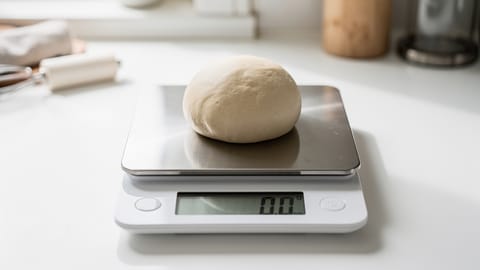
Kitchen Scale
A digital scale for measuring ingredients by weight — far more accurate than cups and spoons, especially in baking.
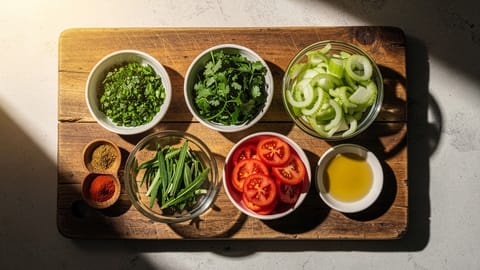
Mise en Place
The practice of preparing and organizing all ingredients before cooking — everything in its place.
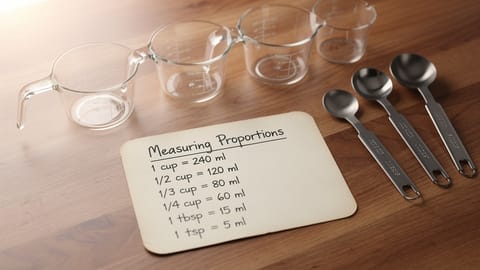
Recipe Scaling
Adjusting ingredient quantities in a recipe to serve more or fewer people while maintaining correct proportions.
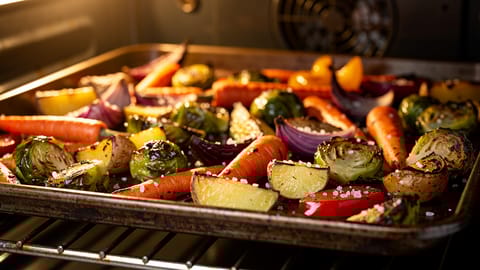
Roasting
Dry-heat oven cooking method that caramelizes the exterior while keeping the interior moist and tender.
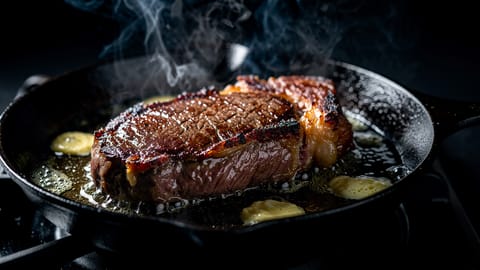
Searing
High-heat browning technique that creates a flavorful Maillard crust on meat, fish, or vegetables.
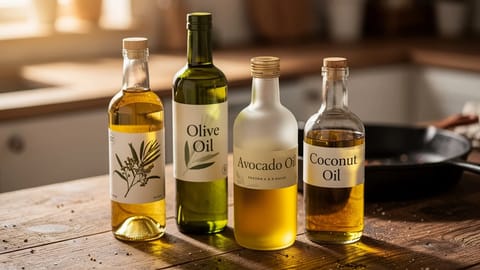
Cooking oil smoke points: the complete guide for every cooking method
Every cooking oil has a temperature limit. Push past it and you get bitter flavors, acrid smoke, and potentially harmful compounds filling your kitchen. That temperature limit is called the smoke point, and knowing it is the difference between a perfect sear and a smoking disaster.
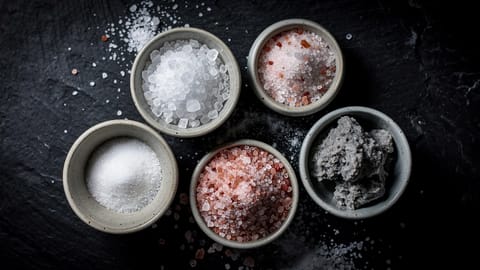
Types of salt for cooking: a practical guide to every salt in your kitchen
Not all salt is the same. A teaspoon of table salt contains almost twice as much sodium as a teaspoon of Diamond Crystal kosher salt. Crystal size, shape, and mineral content change how salt dissolves, how it sticks to food, and how much you actually need. This guide covers every common cooking salt and when to use each one.