 Bastien
Olive Oil
A versatile cooking fat pressed from olives, available in grades from extra virgin (best for finishing) to refined (best for high-heat cooking).
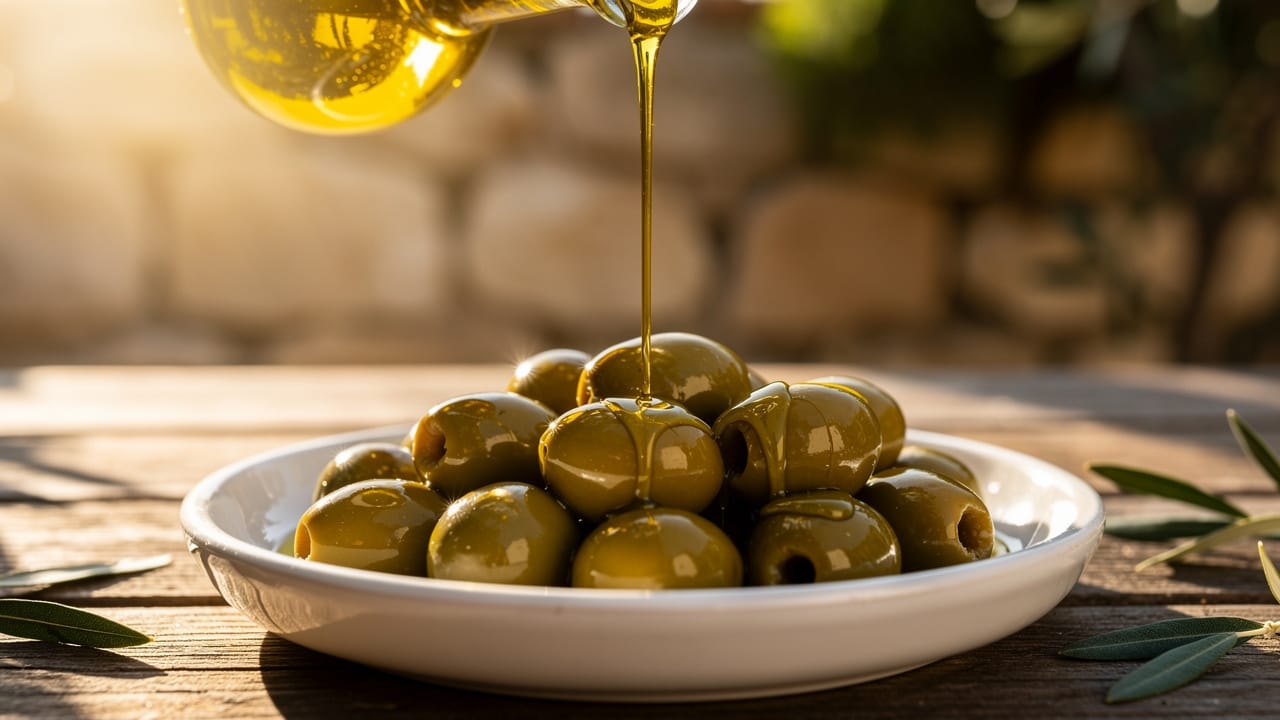
Olive oil is a cooking fat pressed from the fruit of olive trees, used in kitchens worldwide for sautéing, searing, dressing, finishing, and baking. What separates olive oil from other cooking oils is its range of grades — from peppery, complex extra virgin to neutral refined — each suited to different cooking tasks and temperatures.
Olive oil has been a foundation of Mediterranean cooking for over 4,000 years. Today it remains one of the most studied cooking fats, with well-documented health benefits tied to its monounsaturated fats and polyphenol antioxidants. For a comparison with other cooking fats, see our guide to cooking oil smoke points and butter vs oil.
Olive oil grades explained
The grade of an olive oil tells you how it was extracted, how much it was processed, and what it tastes like. Here's what each grade means for cooking:
| Grade | Smoke point | Flavor | Best for |
|---|---|---|---|
| Extra virgin (EVOO) | 375-405°F (190-207°C) | Fruity, peppery, grassy | Finishing, dressings, dipping, medium-heat cooking |
| Virgin | 390°F (200°C) | Milder than EVOO | Everyday cooking, sautéing |
| Pure/regular | 465°F (240°C) | Neutral | High-heat cooking, pan-frying |
| Light/extra light | 470°F (245°C) | Very neutral | Baking, deep frying |
Extra virgin olive oil (EVOO) is the highest quality. It's extracted mechanically (pressed or centrifuged) without chemicals or excessive heat. To qualify as extra virgin, the oil must have free acidity below 0.8% and pass a sensory panel for defects. The flavor varies widely by olive variety and region — Tuscan oils tend to be peppery and assertive, while Spanish Arbequina oils are milder and buttery.
Virgin olive oil is also mechanically extracted but has slightly higher acidity (up to 2%) and may have minor flavor defects. It's less common in stores than EVOO.
Pure or regular olive oil is a blend of refined olive oil (chemically processed to remove flavor defects) and a small amount of virgin oil for color and taste. The refining process raises the smoke point significantly, making it better for high-heat cooking.
Light olive oil is the most refined grade. "Light" refers to flavor intensity, not calories — all olive oil has the same calorie count (120 per tablespoon). Light olive oil is functionally neutral, like vegetable oil, and handles high temperatures well.
When to use each olive oil type
Use EVOO when flavor matters. Drizzle it over finished pasta, into soups before serving, over grilled vegetables, or as a dip for bread. The fruity, peppery notes are the point — cooking destroys them.
Use EVOO for medium-heat cooking too. Despite the myth, EVOO handles sautéing, roasting vegetables at 400°F (200°C), and gentle pan-frying without problems. Its smoke point of 375-405°F is well above typical sauté temperatures (250-350°F / 120-175°C).
Use regular olive oil for high heat. Searing in a cast iron skillet, deep frying, or any technique above 425°F (220°C). The neutral flavor means you're using it for its cooking properties, not its taste.
Use light olive oil for baking. When a recipe calls for vegetable oil or a neutral fat, light olive oil is a direct substitute with a slightly better fat profile.
Olive oil smoke point
The smoke point is the temperature where oil begins to break down, producing visible smoke and off-flavors. For olive oil:
| Type | Smoke point | Safe cooking methods |
|---|---|---|
| Extra virgin | 375-405°F (190-207°C) | Sautéing, roasting up to 400°F, gentle frying |
| Virgin | 390°F (200°C) | Sautéing, roasting |
| Pure/regular | 465°F (240°C) | Pan-frying, deep frying, searing |
| Light/refined | 470°F (245°C) | Deep frying, high-heat searing |
A common concern is that heating EVOO past its smoke point creates harmful compounds. While any oil produces some undesirable byproducts when overheated, research shows that EVOO's high polyphenol content actually makes it more stable than many refined oils at moderate cooking temperatures. The polyphenols act as antioxidants that resist oxidation.
How to store olive oil
Olive oil degrades through three enemies: light, heat, and oxygen.
- Store in a cool, dark place — a pantry or cabinet away from the stove. Heat accelerates oxidation
- Use dark glass or tin containers — clear bottles let light degrade the oil. Transfer to a dark bottle if needed
- Seal tightly after each use — oxygen is the biggest freshness killer
- Use within 6-12 months of opening — olive oil doesn't improve with age. Unlike wine, fresher is always better
- Look for the harvest date on the bottle, not just the "best by" date. Oil pressed in November that you buy in March is five months old; oil with just an expiration date could be from any harvest
- Refrigeration is optional — the oil will solidify and turn cloudy, but this is harmless and reverses at room temperature
How to read olive oil labels
"First cold press" — A marketing term. All genuine extra virgin olive oil is extracted without heat or chemicals. If it says "first cold press," that's what you'd expect anyway.
"Product of Italy" (or Spain, Greece, etc.) — This means the oil was bottled in that country, but the olives may have been grown elsewhere. For guaranteed origin, look for DOP/PDO (Protected Designation of Origin) or single-estate labels.
Harvest date — The most useful quality indicator. Olive oil is best within 12-18 months of harvest. A bottle without a harvest date is a yellow flag.
Acidity level — EVOO must be below 0.8% free acidity. Lower acidity (0.2-0.4%) generally indicates higher quality olives and gentler processing.
Awards and certifications — Competition medals (NYIOOC, Mario Solinas) and IOC certification indicate the oil has been independently evaluated.
Olive oil in emulsions
Olive oil is the base of many classic emulsions: vinaigrettes, aioli, and herb sauces. When whisked vigorously with an acid (lemon juice, vinegar) and an emulsifier (mustard, egg yolk), olive oil suspends in tiny droplets that create a creamy, stable dressing. EVOO works best here because its flavor carries the dressing — neutral oils taste flat by comparison.
Olive oil in Fond
When a recipe in Fond specifies a type of olive oil, the ingredient list distinguishes between EVOO and regular olive oil so you use the right grade. For recipes that call for a neutral cooking oil, Fond suggests substitutions based on smoke point and flavor profile.
Frequently asked questions
Can you fry with extra virgin olive oil?
Yes. EVOO's smoke point (375-405°F / 190-207°C) is above typical frying temperatures. You'll lose the delicate flavor compounds, so it's not the most economical choice for deep frying, but it's safe and produces good results for pan-frying and shallow frying.
What's the healthiest olive oil?
Extra virgin, by a wide margin. It retains the most polyphenols, vitamin E, and monounsaturated fats because it's the least processed. The refining process that creates "light" and "pure" olive oil strips out most of the beneficial compounds.
Does olive oil go bad?
Yes, and faster than most people realize. Once opened, olive oil starts oxidizing. Rancid olive oil smells like crayons or old nuts and tastes flat or slightly bitter. If your EVOO has lost its peppery kick, it's past its prime. Use within 6-12 months of opening.
Is olive oil better than butter for cooking?
It depends on the dish. Olive oil has a higher smoke point and better fat profile for heart health. Butter adds richness, browning, and flavor that olive oil can't replicate. Many dishes benefit from both — sear in olive oil, finish with butter.
Cook smarter
Join the waitlist for Fond. Recipes, meal plans, and a little AI sous-chef that learns how you cook.
Related terms
Cast Iron Skillet
A heavy, durable pan made from molten iron that excels at heat retention and develops a natural non-stick surface over time.
Deglazing
Adding liquid to a hot pan to dissolve the caramelized bits stuck to the bottom, creating a flavorful base for sauces.
Emulsification
Combining two liquids that normally don't mix (like oil and water) into a stable, uniform mixture.
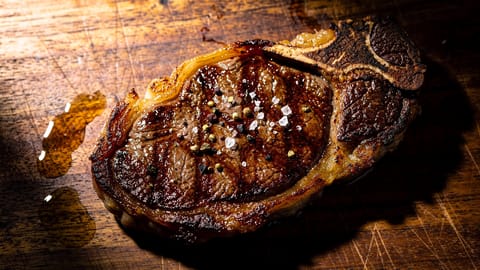
Maillard Reaction
The chemical reaction between amino acids and sugars that occurs when food is heated, creating the brown color and complex flavors of seared meat, toasted bread, and roasted coffee.
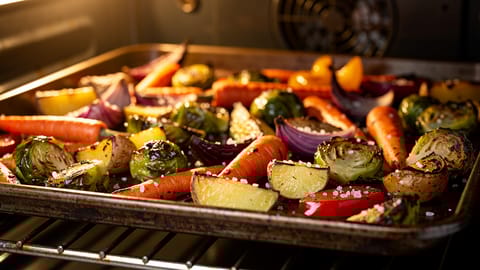
Roasting
Dry-heat oven cooking method that caramelizes the exterior while keeping the interior moist and tender.
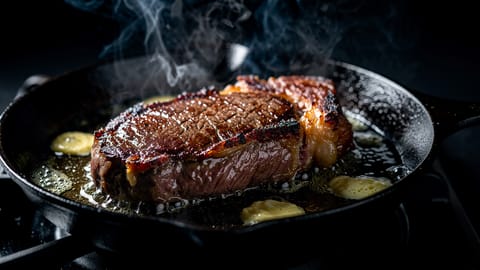
Searing
High-heat browning technique that creates a flavorful Maillard crust on meat, fish, or vegetables.
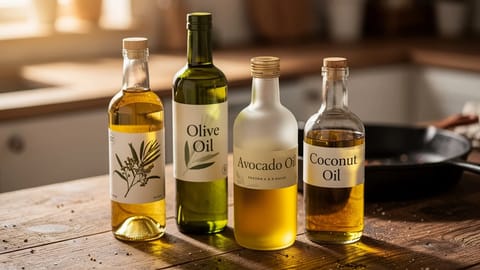
Cooking oil smoke points: the complete guide for every cooking method
Every cooking oil has a temperature limit. Push past it and you get bitter flavors, acrid smoke, and potentially harmful compounds filling your kitchen. That temperature limit is called the smoke point, and knowing it is the difference between a perfect sear and a smoking disaster.
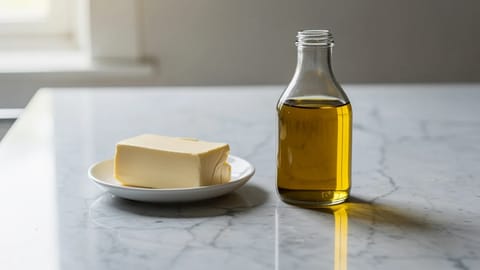
Butter vs oil: when to use each in cooking and baking
Butter and oil each have strengths in the kitchen. Butter brings flavor, browning, and flaky pastry. Oil brings higher heat tolerance, moisture, and a longer shelf life. Knowing when to reach for each — and when to combine them — makes every dish better.