 Bastien
Poolish
A wet pre-ferment made with equal parts flour and water plus a small amount of yeast, fermented 8-16 hours to develop flavor and improve dough extensibility.
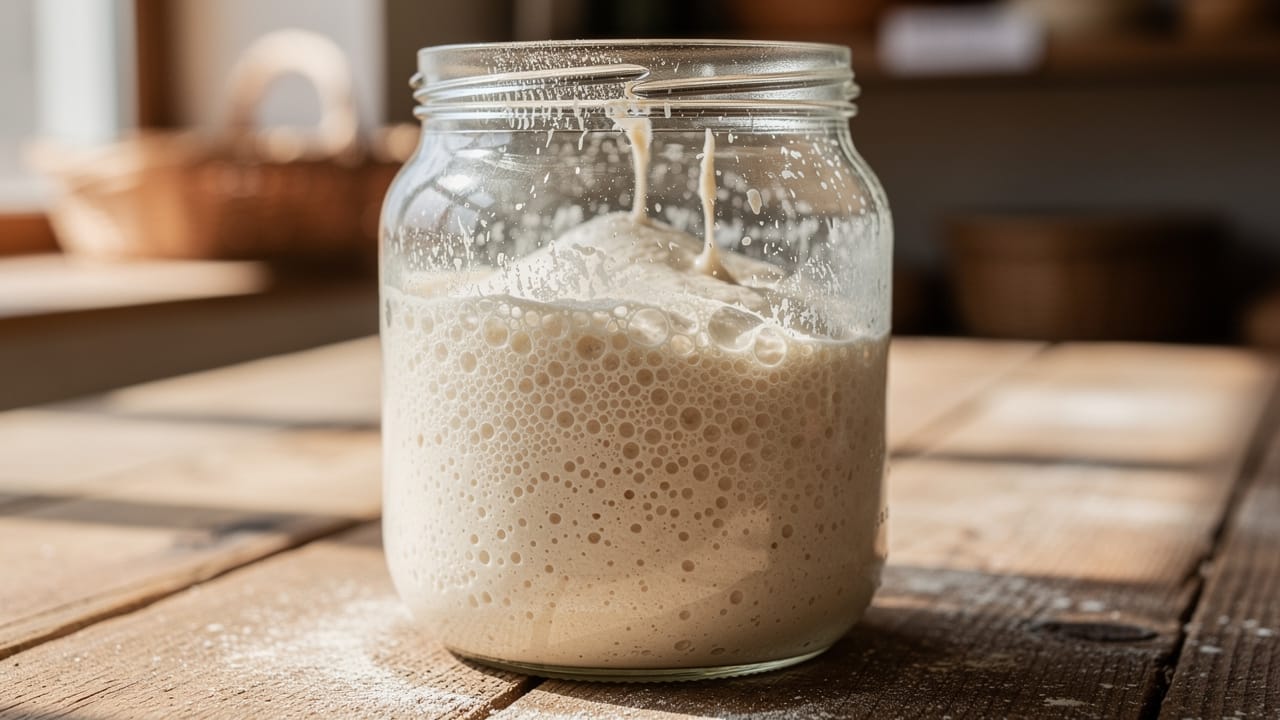
A poolish is a wet pre-ferment made with equal weights of flour and water plus a tiny amount of yeast, fermented for 8 to 16 hours before being mixed into the final dough. Its 100% hydration gives it a batter-like consistency — thinner than a biga but thicker than water.
Poolish originated in Polish baking traditions (hence the name) and was adopted by French bakers in the 19th century. It became the standard pre-ferment for Parisian baguettes and remains one of the most widely used preferments in both bread baking and pizza making.
Why use a poolish
Pre-fermenting a portion of the flour and water before mixing the final dough changes the bread in measurable ways:
| Benefit | What happens | Why it matters |
|---|---|---|
| Flavor complexity | Extended fermentation produces organic acids, alcohols, and aromatic esters | Bread tastes more complex, with mild tang and wheaty sweetness |
| Extensibility | Long hydration and enzymatic activity relax gluten | Dough stretches more easily without tearing — ideal for pizza and ciabatta |
| Open crumb | Weakened gluten network traps gas in larger, irregular pockets | Produces the airy interior of baguettes and focaccia |
| Longer freshness | Acids slow starch retrogradation (staling) | Bread stays soft a day longer than straight-dough bread |
| Reduced mixing | Pre-fermented flour needs less mechanical development | Less time in the mixer, lower risk of over-mixing |
The trade-off is time. A poolish adds 8 to 16 hours of planning. But most of that time is hands-off — the yeast does the work while you sleep.
Poolish formula
The standard poolish uses equal weights of flour and water with a very small amount of yeast. The yeast quantity controls fermentation speed:
| Fermentation time | Flour | Water | Instant yeast | Temperature |
|---|---|---|---|---|
| 8 hours | 100g | 100g | 0.3g | 20-22°C |
| 12 hours | 100g | 100g | 0.1g | 20-22°C |
| 16 hours | 100g | 100g | 0.05g | 20-22°C |
Less yeast means slower fermentation and more flavor development. For overnight poolish (the most common approach), 0.1g of instant yeast per 100g of flour is the sweet spot — mix it before bed, use it in the morning.
How much flour to pre-ferment
Most recipes pre-ferment 20-40% of the total flour weight as poolish. The percentage affects the final dough:
| Poolish % | Effect on dough | Best for |
|---|---|---|
| 15-20% | Subtle flavor boost, minimal structure change | Enriched breads, soft rolls |
| 25-35% | Noticeable flavor, improved extensibility | Baguettes, pizza, ciabatta |
| 40-50% | Strong fermentation flavor, very extensible dough | Roman-style pizza, high-hydration breads |
Use baker's percentages to calculate how much flour goes into the poolish versus the final mix. Fond's Pizza Workshop handles this split automatically.
How to make a poolish
Mixing
- Weigh flour and water in equal amounts into a clean container (use a kitchen scale — volume measurements are not accurate enough)
- Add yeast and stir until no dry flour remains — about 30 seconds
- Cover loosely (the poolish produces gas and needs room to expand)
- Leave at room temperature (20-22°C) for the target fermentation time
The container should be at least 3 times the volume of the poolish — it will expand significantly.
Reading ripeness
A poolish goes through distinct stages:
| Stage | Appearance | Smell | Status |
|---|---|---|---|
| Just mixed | Thick paste, no bubbles | Raw flour | Not ready |
| 4-6 hours | Small bubbles forming, rising | Mildly yeasty | Under-ripe |
| 8-12 hours | Very bubbly, domed surface, expanded 2-3x | Pleasant, slightly sweet, fruity | Ripe — use now |
| 14-16+ hours | Surface beginning to flatten or cave in | Stronger tang, alcohol notes | Past peak — still usable but flavor shifts |
| 20+ hours | Collapsed, watery, concave | Strong sour, harsh alcohol | Over-fermented — discard |
The ideal moment is when the surface is covered in bubbles and has just begun to flatten from its peak dome. At this point the yeast has produced maximum gas and flavor without exhausting its food supply.
Slowing down fermentation
If you are not ready to use the poolish when it ripens, refrigerate it. Cold slows fermentation dramatically. A ripe poolish holds in the refrigerator for up to 24 hours. Bring it back to room temperature for 30-60 minutes before mixing into the final dough.
Mixing poolish into the final dough
When the poolish is ripe, combine it with the remaining flour, water, salt, and yeast for the final dough:
- Pour the poolish into the mixing bowl
- Add the remaining water and dissolve the poolish into it
- Add the remaining flour and any additional yeast
- Mix until combined, then add salt
- Proceed to bulk fermentation
The final dough will feel different from a straight dough — more extensible and slightly sticky. This is normal. The pre-fermented flour has already developed gluten, so the dough needs less mixing.
Poolish vs biga
These are the two most common yeasted pre-ferments. The key difference is hydration:
| Property | Poolish | Biga |
|---|---|---|
| Hydration | 100% (equal flour and water) | 50-60% (stiff dough) |
| Consistency | Batter, pourable | Firm ball, not pourable |
| Fermentation time | 8-16 hours | 12-24 hours |
| Flavor profile | Mild, wheaty, slightly sweet | Nuttier, more complex, stronger |
| Dough effect | More extensibility, open crumb | More strength, tighter crumb |
| Best for | Baguettes, ciabatta, pizza | Ciabatta, Italian breads, pizza |
| Mixing ease | Pours and dissolves quickly | Needs to be torn and dissolved |
Neither is better — they are tools for different results. Many bakers use poolish when they want maximum extensibility (pizza dough that stretches thin) and biga when they want more structure (bread that holds its shape). For a detailed comparison with biga, see our poolish vs biga guide.
Common uses
Pizza
Poolish is especially popular for pizza dough. Pre-fermenting 25-30% of the flour improves stretch, flavor, and browning. Roman-style pizza al taglio traditionally uses poolish, and many Neapolitan-style bakers have adopted it for longer cold fermentation schedules. Try the pizza dough calculator to get precise poolish and final dough quantities for any pizza style.
Baguettes
The poolish method is the traditional approach for Parisian baguettes. It gives the crumb its characteristic open, irregular holes and the crust its golden color and thin crackle.
Ciabatta and focaccia
Both high-hydration breads benefit from poolish. The pre-ferment weakens the gluten just enough to create the large, irregular holes that define these breads.
Troubleshooting
| Problem | Cause | Fix |
|---|---|---|
| Poolish did not rise | Too little yeast or too cold | Use slightly more yeast or find a warmer spot (22-24°C) |
| Over-fermented (collapsed) | Too much yeast, too warm, or too long | Reduce yeast, lower temperature, or shorten time |
| Dough too slack after adding poolish | High poolish percentage or too much water | Reduce poolish to 20-25% of total flour; adjust final water |
| Flat, dense bread | Under-ripe poolish (not enough fermentation) | Wait until surface is fully bubbly and domed before using |
| Strong sour taste | Over-fermented poolish | Use at peak (bubbly, just beginning to recede) |
Tips for better poolish
Use a clear container. Glass or clear plastic lets you see bubble development and rise without opening the lid. Mark the starting level with a rubber band to track expansion.
Weigh your yeast. At 0.1g, eyeballing is unreliable. A precision scale that reads to 0.1g makes consistent poolish possible. Alternatively, dissolve 1g of yeast in 100g of water and use 10g of that solution.
Control temperature. Fermentation speed doubles with every 5°C increase. If your kitchen is warm (25°C+), use less yeast or refrigerate after 4 hours to slow things down.
Do not add salt. Salt inhibits yeast activity. The poolish ferments without salt — salt is added only to the final dough.
Plan backward. Decide when you want to mix your dough, then count backward 8-16 hours to determine when to mix the poolish. For morning baking, mix the poolish the evening before.
Poolish in Fond
Fond's Pizza Workshop lets you choose poolish or biga as your pre-ferment with one tap. Set the flour percentage and Fond splits everything between pre-ferment and main dough using baker's percentages. The app calculates yeast amounts based on your target fermentation time and kitchen temperature, and adds all ingredients to your shopping list automatically.
Frequently asked questions
Can I use active dry yeast instead of instant?
Yes. Active dry yeast works the same way — just dissolve it in the poolish water before adding flour. Use the same weight as instant yeast. See yeast types for more on the differences.
Can I make a poolish with whole wheat flour?
Yes, but whole wheat absorbs more water, so the poolish will be thicker. You can increase water to 110-120% of flour weight to maintain a batter consistency. Whole wheat poolish also ferments faster due to more enzymatic activity.
How do I scale a poolish recipe?
Use baker's percentages. If your recipe calls for 500g total flour and you want 30% as poolish, that is 150g flour + 150g water + a pinch of yeast for the poolish, and 350g flour in the final mix. Fond's recipe scaling handles this automatically.
Is poolish the same as a sourdough starter?
No. Poolish uses commercial yeast and ferments for hours. A sourdough starter uses wild yeast and bacteria, takes days to establish, and produces a more sour flavor. Poolish is predictable and consistent; sourdough is more variable and complex.
Cook smarter
Join the waitlist for Fond. Recipes, meal plans, and a little AI sous-chef that learns how you cook.
Related terms
Baker's Percentage
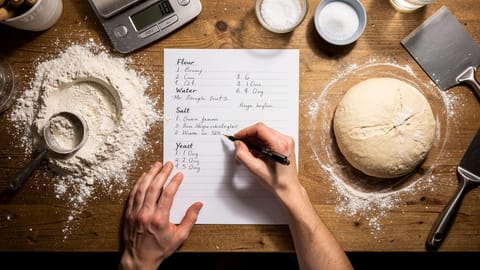
A method of expressing bread recipe ingredients as percentages relative to the total flour weight, making recipes infinitely scalable.
Biga
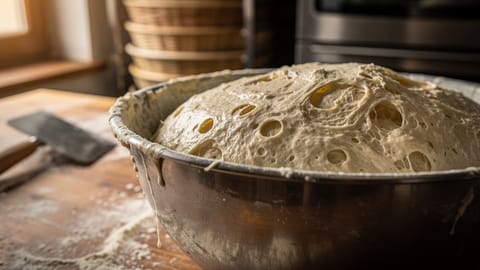
A stiff Italian pre-ferment with 50-60% hydration, used to add structure, flavor complexity, and a nuttier taste to bread and pizza doughs.
Bulk Fermentation
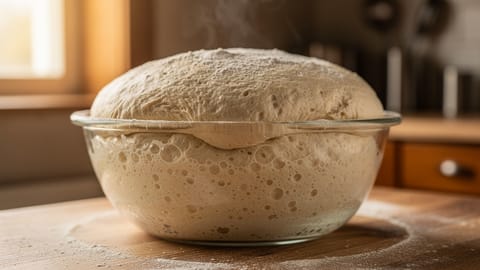
The primary rise of bread dough after mixing, where yeast or starter ferments the dough as a single mass before shaping.

Fermentation
A metabolic process where microorganisms convert sugars into acids, gases, or alcohol — the basis of bread, yogurt, kimchi, and beer.
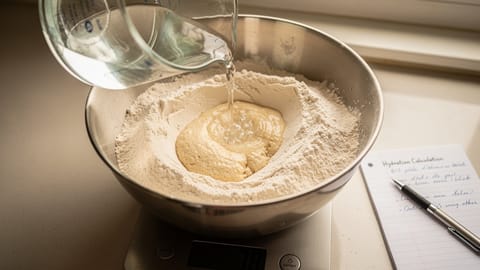
Hydration (Bread)
The ratio of water to flour in bread dough, expressed as a percentage. Higher hydration means wetter, more open-crumb bread.
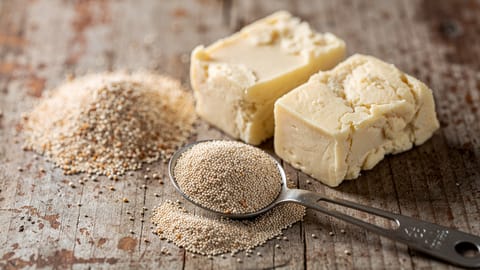
Yeast Types
The three main bread yeasts — active dry, instant, and fresh — differ in how they're processed and used, but can be converted between each other.
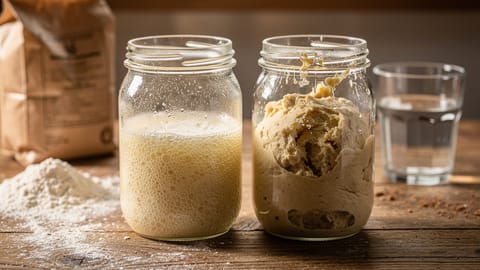
Poolish vs Biga: Complete Guide to Pizza Pre-Ferments
Two Italian pre-ferments, very different results. Poolish (liquid, 100% hydration) makes airy, extensible dough. Biga (stiff, 50-60%) makes chewy, structured crumb. Which one you pick depends on your pizza style.