 Bastien
Recipe Scaling
Adjusting ingredient quantities in a recipe to serve more or fewer people while maintaining correct proportions.
Recipe scaling is the process of adjusting all ingredient quantities in a recipe to produce a different number of servings. It sounds simple — just multiply everything — but certain ingredients, cooking times, and equipment constraints do not scale linearly. Understanding which parts of a recipe scale proportionally and which need adjustment is the key to consistently good results at any batch size.
The basic math
The simplest approach: multiply each ingredient by a scaling factor.
Scaling factor = desired servings ÷ original servings
A recipe for 4 scaled to 6: scaling factor = 6 ÷ 4 = 1.5. Multiply every ingredient by 1.5.
| Ingredient | Original (4 servings) | Scaled (6 servings) |
|---|---|---|
| Chicken breast | 600g | 900g |
| Olive oil | 2 tbsp | 3 tbsp |
| Garlic | 3 cloves | 4-5 cloves |
| Salt | 1 tsp | 1.5 tsp |
| Lemon juice | 2 tbsp | 3 tbsp |
This works for most ingredients. The complications come from the exceptions.
What does not scale linearly
| Category | What happens | How to adjust |
|---|---|---|
| Spices and dried herbs | Flavor compounds concentrate; doubling can overpower | Scale at 1.5× when doubling; taste and adjust |
| Fresh herbs | Less concentration risk | Scale proportionally, close to 1:1 |
| Salt | Perception depends on surface area and volume | Scale at 75-80% when doubling; always taste |
| Garlic and onion | Aromatic intensity compounds | Scale at 80-90% when doubling |
| Fat for sautéing | Only need enough to coat the pan | Increase by surface area, not proportionally |
| Leavening (baking powder/soda) | Too much causes bitter taste, collapse | Scale at 80-90% when doubling; test carefully beyond 2× |
| Yeast | More yeast means faster fermentation, less flavor | Use baker's percentage to keep ratios consistent |
| Cooking liquid (soups, braises) | Volume depends on vessel, not just servings | Add enough to cover ingredients; do not blindly multiply |
| Eggs | Cannot easily split an egg | Round to nearest whole egg; adjust liquid slightly |
| Gelatin | Non-linear relationship with volume | Follow manufacturer ratios by liquid volume |
The 75% rule for seasonings
When doubling a recipe, start with 75% more seasoning (1.75× instead of 2×). Taste and adjust. When halving, use 60% of the original (slightly more than half). Seasonings are easier to add than to remove.
Scaling by weight vs volume
Weight-based recipes scale more accurately than volume-based ones. A kitchen scale eliminates the guesswork with fractions of cups and tablespoons.
| Measurement type | Scaling accuracy | Best for |
|---|---|---|
| Weight (grams) | Excellent — direct multiplication | Baking, bread, any precision cooking |
| Volume (cups, tbsp) | Good for liquids, unreliable for dry goods | Quick cooking, liquids |
| Count (2 eggs, 3 cloves) | Requires rounding | Items that cannot be divided |
| Descriptive (pinch, drizzle) | Cannot scale mathematically | Finishing touches — use judgment |
For bread and pastry, always scale by weight using baker's percentages. This system makes any recipe infinitely scalable by expressing every ingredient relative to flour weight.
Common scaling scenarios
Halving (scaling down)
Halving is the most common adjustment for cooking solo or for two.
| Challenge | Solution |
|---|---|
| Odd numbers (3 eggs → 1.5) | Use 1 egg plus 1 yolk, or 2 small eggs |
| Small spice amounts hard to measure | Use a kitchen scale for sub-teaspoon quantities |
| Pan too large for halved quantity | Use a smaller pan to maintain proper depth and searing contact |
| Cooking time unchanged | Reduce slightly — less mass means faster cooking |
| Sauce too thin | Reduce liquid more aggressively; surface-area-to-volume ratio changes |
Doubling (scaling up)
| Challenge | Solution |
|---|---|
| Pan overcrowding | Cook in batches or use a larger pan; crowding prevents browning |
| Oven space | Rotate pans halfway; add 5-10 minutes for two sheets |
| Seasonings too strong | Use the 75% rule, taste, then adjust |
| Longer cooking time | Thicker layers and more mass mean 10-20% longer cook time |
| Uneven results | Mix batter/dough more thoroughly to distribute leavening |
Large batch (4× or more)
Scaling beyond 2× introduces significant challenges:
- Equipment limits: Home ovens, pans, and mixers may not handle the volume
- Leavening failure: Baking powder and soda become unreliable above 3× — test with a single batch first
- Temperature management: Large pots take longer to heat and cool, affecting timing
- Fermentation timing: More dough in a container ferments differently due to heat retention — adjust yeast or temperature
- Prep time: Vegetable prep scales linearly but cooking time does not; plan accordingly
For meal prep at 4× or more, consider cooking the base recipe multiple times rather than one massive batch.
Scaling bread and pizza dough
Bread and pizza recipes scale best using baker's percentages rather than simple multiplication. Set your target number of dough balls and weight per ball, then calculate flour and all other ingredients from the percentages.
| Parameter | How to scale |
|---|---|
| Flour | Set total based on target dough weight |
| Water (hydration) | Maintain the same percentage of flour |
| Salt | Maintain percentage (typically 2%) |
| Yeast | Maintain percentage — do not increase proportionally for large batches |
| Pre-ferment | Scale proportionally as a percentage of total flour |
| Bulk fermentation time | May need adjustment — larger dough mass retains heat |
When switching yeast types during scaling (e.g., from fresh to instant), apply the conversion factor: instant = active dry × 0.7, fresh = active dry × 3.
Scaling cooking times
Cooking time does not scale proportionally with ingredient quantity. It depends on thickness, not weight.
| Scenario | Time adjustment |
|---|---|
| Doubled soup/stew | +10-15 minutes to reach temperature |
| Doubled casserole (deeper pan) | +15-25% cooking time |
| Doubled casserole (same depth, wider pan) | Same cooking time |
| Halved recipe (smaller pan) | -10-15% cooking time |
| More items on a baking sheet | +5-10 minutes |
| Thicker piece of meat | Significant increase — use a thermometer |
Always verify doneness with an instant-read thermometer rather than relying on time alone.
Tips
- Use a kitchen scale — scaling by weight is dramatically more accurate than scaling by volume
- Write down the scaled quantities before starting — mental math while cooking leads to mistakes
- Season conservatively when scaling up, then taste and adjust at the end
- For baking, measure leavening agents precisely — even small errors compound at scale
- Keep notes on what worked when you scale a recipe for the first time — your future self will thank you
- When scaling soups and braises, adjust liquid to cover the ingredients, not by multiplying the recipe amount
Recipe scaling in Fond
Fond's recipe scaling adjusts all ingredient quantities when you change the serving count or dough ball number. For bread and pizza, it works in baker's percentages so ratios stay consistent at any batch size. When you switch yeast types — say from fresh to instant — the app converts the amount automatically. All scaled ingredients sync to your shopping list with the correct quantities for your batch.
Frequently asked questions
Can I just double everything in a recipe?
For most main ingredients (protein, vegetables, grains), yes. For seasonings, salt, fat for sautéing, and leavening agents, scale more conservatively — start at 75-80% and taste. Liquids for soups and braises should be added to cover, not blindly doubled.
Why does my doubled cake recipe turn out flat?
Leavening agents (baking powder, baking soda) do not scale linearly. Use 80-90% when doubling and ensure thorough mixing. Beyond 2×, test with a single batch first. Oven temperature and pan size also affect rise.
How do I scale a recipe from metric to imperial or vice versa?
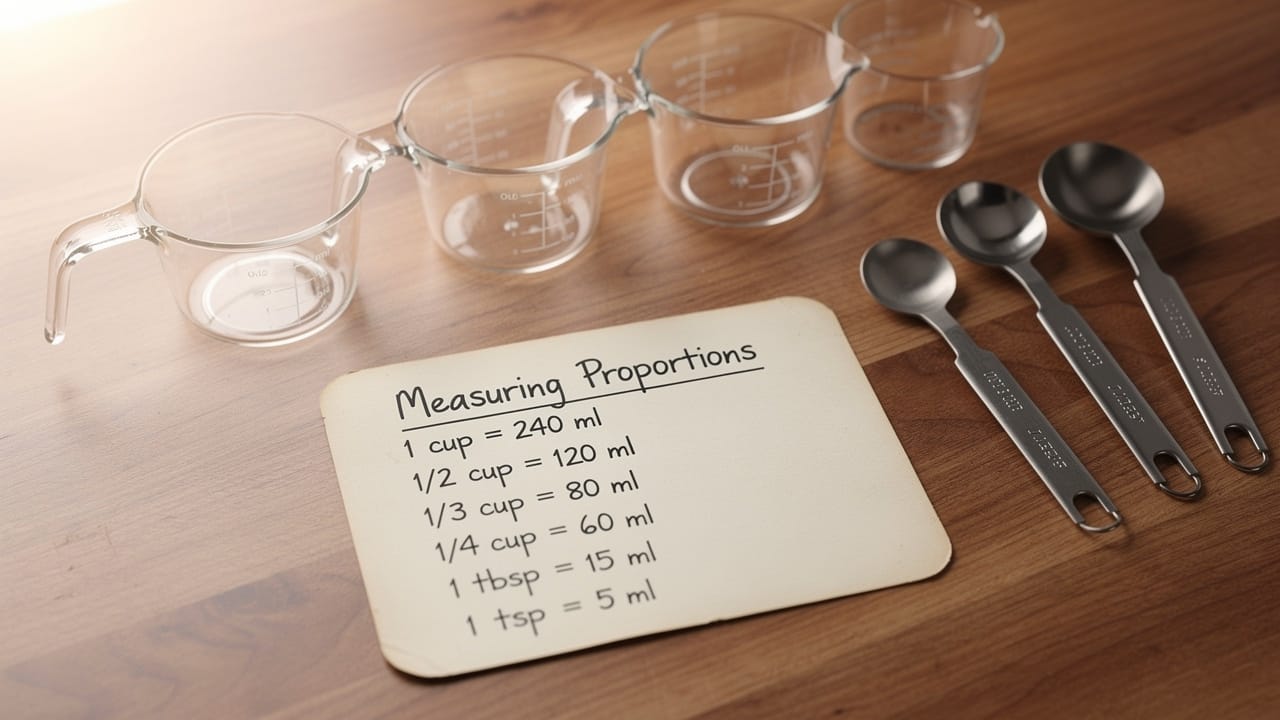
Convert all measurements to one system first, then scale. Or better yet, convert everything to grams using a kitchen scale — grams scale cleanly with simple multiplication.
What about scaling fermented foods?
Fermentation timing changes with batch size because larger dough masses retain heat and ferment faster at the center. Keep yeast or starter percentages the same, but monitor the dough visually rather than relying on time alone.
Is there a limit to how much I can scale up?
Practically, yes. Home equipment limits batch size. Flavors, textures, and cooking chemistry behave differently at very large scales. For most recipes, 4× is a practical maximum in a home kitchen. Beyond that, cook multiple batches.
Cook smarter
Join the waitlist for Fond. Recipes, meal plans, and a little AI sous-chef that learns how you cook.
Related terms
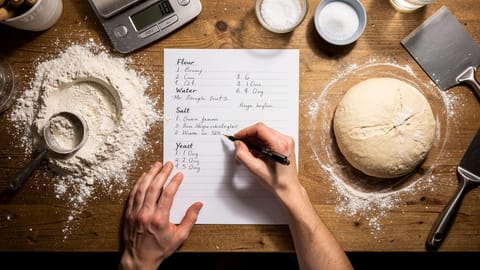
Baker's Percentage
A method of expressing bread recipe ingredients as percentages relative to the total flour weight, making recipes infinitely scalable.
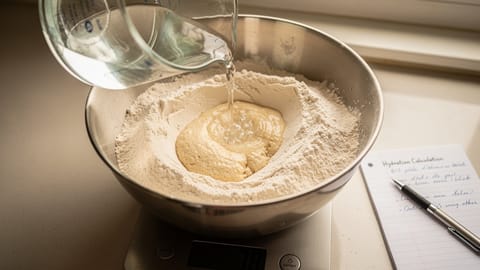
Hydration (Bread)
The ratio of water to flour in bread dough, expressed as a percentage. Higher hydration means wetter, more open-crumb bread.
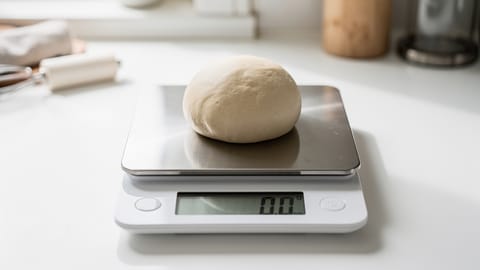
Kitchen Scale
A digital scale for measuring ingredients by weight — far more accurate than cups and spoons, especially in baking.
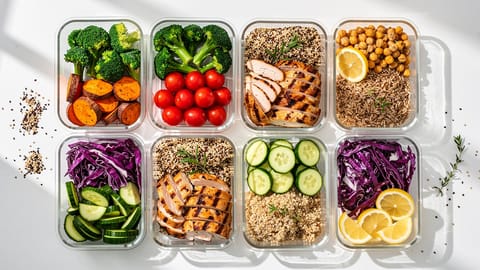
Meal Prep
Preparing meals or meal components in advance, typically for the week ahead, to save time and reduce daily cooking effort.
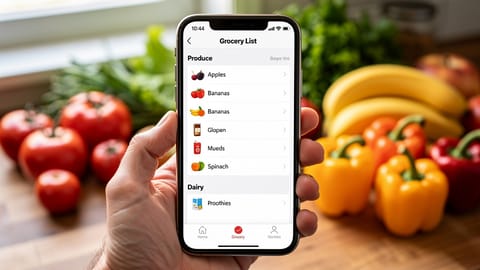
Smart Shopping List
An automatically generated grocery list that combines ingredients from multiple recipes, merges duplicates, and organizes by store aisle.
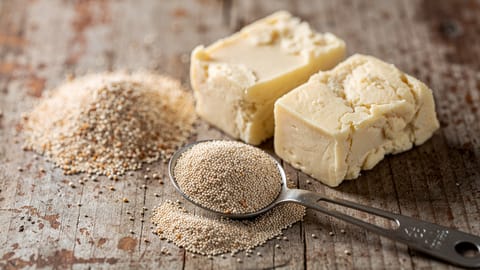
Yeast Types
The three main bread yeasts — active dry, instant, and fresh — differ in how they're processed and used, but can be converted between each other.
ToolCooking Unit Converter
Convert between metric, imperial, and volume measurements.