 Bastien
Sourdough Starter
A live culture of wild yeast and bacteria maintained with regular feedings of flour and water, used to leaven bread.
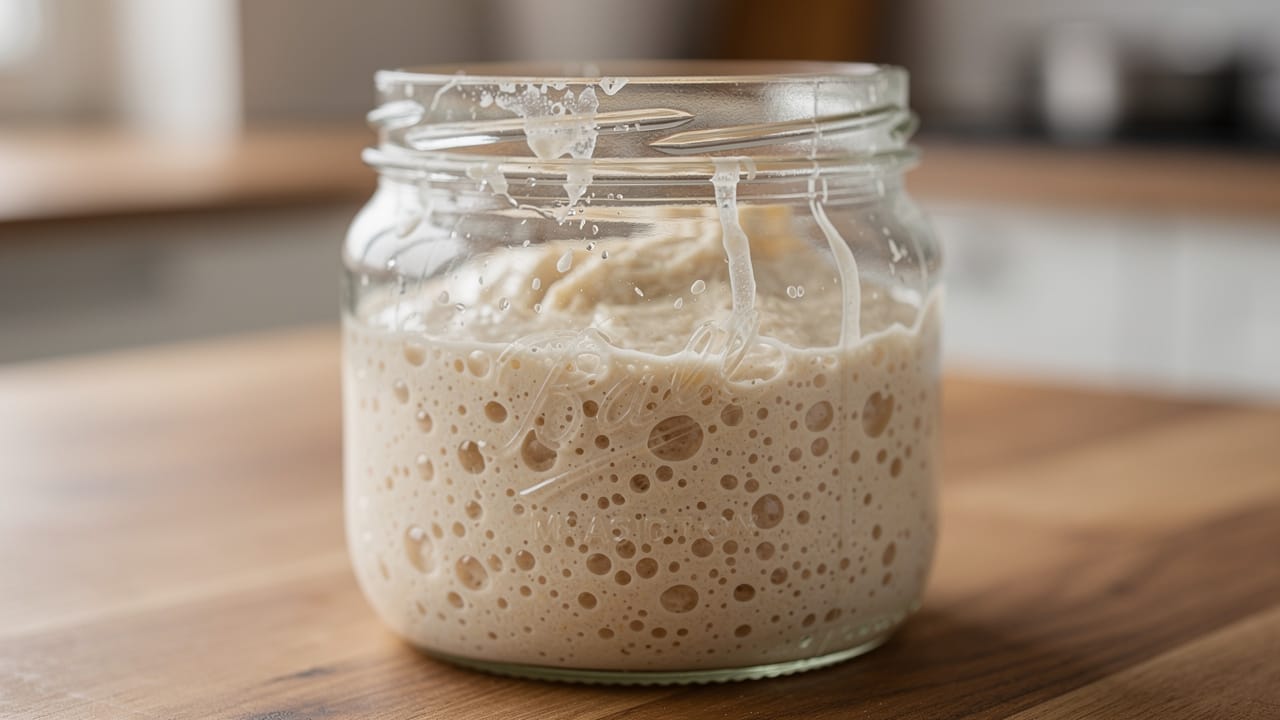
A sourdough starter is a living culture of wild yeast and lactic acid bacteria maintained with regular feedings of flour and water. Instead of commercial yeast, bakers use a sourdough starter to leaven bread — producing the tangy flavor, chewy crumb, and crisp crust that define sourdough baking.
Some sourdough starters have been kept alive for over a century, passed down through generations. The Boudin Bakery starter in San Francisco dates to 1849. A well-maintained starter can outlive the baker who created it.
How a sourdough starter works
When you mix flour and water and leave the mixture at room temperature, wild yeast and bacteria already present in the flour begin to colonize the mixture. Over 5-14 days of regular feedings, two groups of microorganisms establish a stable ecosystem:
- Wild yeast (primarily Saccharomyces and Kazachstania species) produces carbon dioxide gas. This is what makes the dough rise.
- Lactic acid bacteria (primarily Lactobacillus) produce lactic and acetic acids. These acids give sourdough its characteristic tang and also act as natural preservatives — sourdough bread stays fresh longer than commercially yeasted bread.
The two groups work together. The acids produced by bacteria create an environment too acidic for most competing organisms, while the yeast thrives in it. This symbiosis is why a healthy starter is remarkably stable and resistant to contamination.
How to feed a sourdough starter
Feeding means discarding part of the culture and adding fresh flour and water. This replenishes the food supply for the yeast and bacteria.
Standard feeding ratio: 1:1:1 by weight — equal parts starter, flour, and water. For example, keep 50g of starter, add 50g flour and 50g water. Use a kitchen scale for accuracy — volume measurements are too imprecise for consistent results.
Feeding schedule:
| Storage method | Feeding frequency | Best for |
|---|---|---|
| Room temperature (70-78°F / 21-26°C) | Once or twice daily | Active bakers who bake multiple times per week |
| Refrigerator (38-40°F / 3-4°C) | Once every 5-7 days | Occasional bakers who bake once a week or less |
Flour choice matters. Unbleached all-purpose or bread flour works well for maintenance. Whole wheat or rye flour accelerates fermentation because it contains more nutrients and wild microorganisms. Many bakers use a mix — 80% white flour, 20% whole wheat — for a balance of activity and mild flavor.
Signs of a healthy sourdough starter
A mature, healthy starter shows predictable behavior:
- Doubles in size within 4-8 hours after feeding at room temperature
- Smells pleasantly tangy — like yogurt or mild vinegar, not nail polish remover
- Has visible bubbles throughout the culture, not just on the surface
- Passes the float test — a spoonful dropped in water floats when the starter is at peak activity
- Rebounds predictably — rises and falls on a consistent schedule after each feeding
It takes 7-14 days to establish a new sourdough starter from scratch, and another 2-4 weeks before it's strong enough to reliably leaven bread. Patience during this initial phase is the single biggest factor in success.
Sourdough starter troubleshooting
| Problem | Cause | Fix |
|---|---|---|
| Not rising | Too cold, or culture is still young | Move to warmer spot (75-80°F / 24-27°C), feed more frequently |
| Hooch (dark liquid on top) | Hungry — food supply exhausted | Pour off hooch, feed immediately, increase feeding frequency |
| Pink or orange streaks | Contamination by harmful bacteria | Discard entirely and start fresh |
| Strong acetone smell | Severely underfed | Feed twice daily for 2-3 days until smell normalizes |
| Rises then collapses quickly | Over-ripe — peaked too fast | Use less starter in the feeding (try 1:2:2 ratio) or use cooler water |
| Slow to rise in winter | Ambient temperature too low | Find a warmer spot — on top of the fridge, in a turned-off oven with the light on, or near a radiator |
Sourdough starter vs. commercial yeast
Both leaven bread, but they produce different results:
- Flavor. Sourdough starter produces complex, tangy flavor through lactic and acetic acid. Commercial yeast produces a neutral, wheaty flavor.
- Rise time. Sourdough fermentation takes 4-12 hours (or longer with cold fermentation). Commercial yeast rises dough in 1-2 hours.
- Shelf life. The acids in sourdough act as natural preservatives. Sourdough bread stays fresh 4-5 days; commercial yeast bread goes stale in 2-3.
- Digestibility. The long fermentation process breaks down phytic acid and some gluten proteins, making sourdough easier to digest for many people.
What to do with sourdough discard
Every feeding produces discard — the portion of starter you remove before adding fresh flour and water. Throwing it away feels wasteful, and it doesn't have to be. Sourdough discard works in:
- Pancakes and waffles — adds tang and tenderness
- Crackers — thin, crisp, and deeply flavored
- Pizza dough — discard replaces some of the flour and water in a standard recipe
- Quick breads and muffins — adds complexity without long fermentation
- Flatbreads — naan, tortillas, and pita all benefit from discard
Discard doesn't have enough leavening power to rise bread on its own, but it adds flavor and acidity to anything that uses baking soda or baking powder as the primary leavener.
Sourdough starter in Fond
Fond's Bread Studio includes a sourdough starter tracker. Log each feeding, set reminders on your preferred schedule, and track your starter's rise-and-fall pattern over time. When you're ready to bake, Bread Studio calculates the right amount of starter for your recipe based on baker's percentages — so you always know how much to pull and how much to keep.
Frequently asked questions
Is a sourdough starter alive?
Yes. A sourdough starter is a living colony of wild yeast and bacteria. As long as you feed it regularly, the microorganisms stay alive and active. Neglect it long enough and they die — but a refrigerated starter can often be revived after weeks of neglect with a few days of consistent feeding.
Can you buy a sourdough starter?
You can. Bakeries, online retailers, and even some grocery stores sell dehydrated or fresh starters. You can also get a piece from a friend's existing starter. Either way, the culture adapts to your local flour and environment within a few feeding cycles.
What does sourdough starter smell like?
A healthy starter smells pleasantly sour — like yogurt, mild vinegar, or ripe fruit. A strong acetone or nail polish remover smell means it's very hungry and needs immediate feeding. If it smells putrid or develops colored mold, discard it and start over.
How long does it take to make a sourdough starter?
From scratch, expect 7-14 days before the starter shows consistent rising and falling. It may take another 2-4 weeks of regular feeding before it's strong enough to reliably leaven a loaf of bread. The timeline depends on flour type, ambient temperature, and feeding consistency.
Cook smarter
Join the waitlist for Fond. Recipes, meal plans, and a little AI sous-chef that learns how you cook.
Related terms
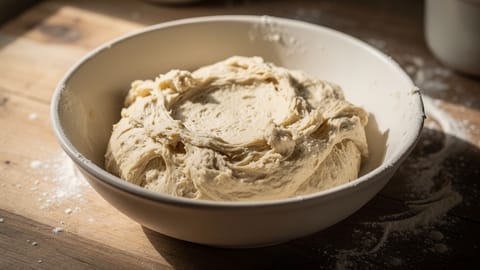
Autolyse
A bread-making technique where flour and water are mixed and rested before adding salt and leavening, allowing gluten to develop naturally.
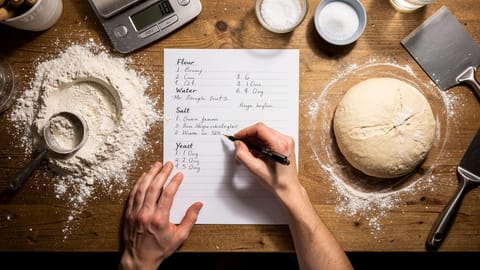
Baker's Percentage
A method of expressing bread recipe ingredients as percentages relative to the total flour weight, making recipes infinitely scalable.
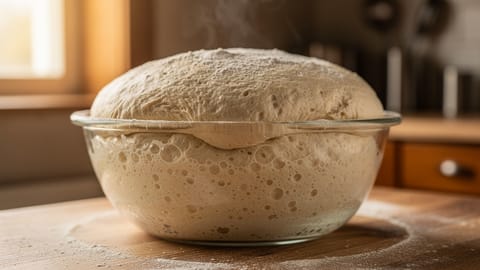
Bulk Fermentation
The primary rise of bread dough after mixing, where yeast or starter ferments the dough as a single mass before shaping.

Fermentation
A metabolic process where microorganisms convert sugars into acids, gases, or alcohol — the basis of bread, yogurt, kimchi, and beer.
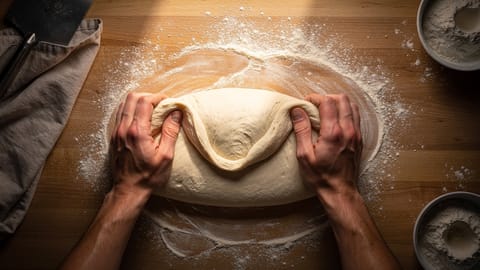
Folding
A gentle mixing technique that preserves air in delicate batters by cutting through and turning the mixture rather than stirring.
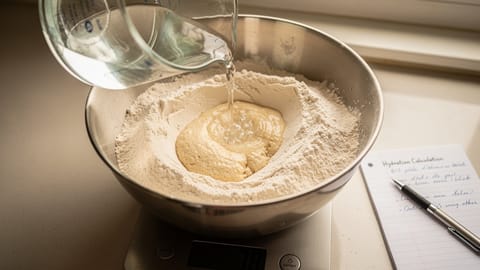
Hydration (Bread)
The ratio of water to flour in bread dough, expressed as a percentage. Higher hydration means wetter, more open-crumb bread.
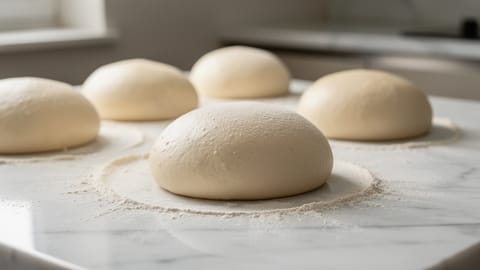
Sourdough Pizza Dough
Make pizza with your sourdough starter for a crust with real complexity: mild tang, open crumb, and excellent browning. Plan for 8-72 hours of fermentation depending on your schedule.

How to make a sourdough starter from scratch
A day-by-day guide to creating and maintaining a sourdough starter at home using just flour and water. Covers feeding schedules, signs of activity, troubleshooting slow starters, and how to know when it is ready to bake with.