 Bastien
Tempering
Gradually adjusting the temperature of a sensitive ingredient to prevent curdling (eggs) or seizing (chocolate).
Tempering is the technique of gradually changing an ingredient's temperature to prevent unwanted reactions. The word applies to two distinct processes in the kitchen: tempering eggs (to prevent curdling when adding them to hot liquids) and tempering chocolate (to control cocoa butter crystal formation for a glossy, snappy result).
Both techniques share the same principle — slow, controlled temperature change prevents damage that rapid change would cause. Mastering tempering is what separates scrambled custard from a silky crème anglaise, and dull, streaky chocolate from a professional-looking bonbon.
Tempering eggs
When raw eggs meet hot liquid too quickly, the proteins coagulate instantly — you get scrambled bits floating in your sauce or custard. Tempering solves this by gradually raising the eggs' temperature so the proteins set smoothly and evenly.
Step-by-step egg tempering
- Whisk eggs (or yolks) in a separate heatproof bowl until smooth. Have your mise en place ready.
- Ladle a small amount (about 60-120 ml) of the hot liquid into the eggs while whisking constantly. This raises their temperature without shocking them.
- Continue adding hot liquid in a steady stream, whisking throughout, until the egg mixture feels warm to the touch — about half the hot liquid total.
- Pour the tempered egg mixture back into the pot with the remaining hot liquid, stirring continuously.
- Cook gently over medium-low heat, stirring, until the mixture reaches target temperature. Use an instant-read thermometer — most custards set between 77-85°C (170-185°F).
Egg tempering applications
| Dish | What is tempered | Target temperature | Key tip |
|---|---|---|---|
| Crème anglaise | Egg yolks + hot cream | 82-85°C (180-185°F) | Strain through a fine sieve |
| Pastry cream | Egg yolks + hot milk/starch | 85°C (185°F) | Starch prevents curdling at higher temps |
| Ice cream base | Egg yolks + hot cream | 77-82°C (170-180°F) | Chill immediately in an ice bath |
| Carbonara | Whole eggs + yolks + pasta water | ~70°C (160°F) off heat | Use residual heat only, not direct flame |
| Avgolemono | Eggs + lemon juice + hot broth | ~77°C (170°F) | Acid from lemon lowers curdling threshold |
| Hollandaise | Egg yolks + melted butter | ~65°C (150°F) | An emulsification — butter is added slowly |
Common mistakes when tempering eggs
- Adding hot liquid too fast. The first splash matters most — go slowly.
- Not whisking continuously. Stop whisking and you get pockets of overheated egg.
- Too much heat after combining. Once eggs are back in the pot, keep heat gentle. The mixture will curdle above 85°C for most preparations.
- Skipping the strainer. Even well-tempered custards benefit from straining to catch any small bits.
Tempering chocolate
Chocolate tempering is a completely different process that happens to share the same name. Here, you are controlling which type of cocoa butter crystal forms as the chocolate solidifies. Cocoa butter can crystallize in six different forms (I through VI). Only Form V produces the properties you want.
Why temper chocolate?
| Property | Tempered | Untempered |
|---|---|---|
| Appearance | Glossy, uniform sheen | Dull, matte, streaky |
| Texture | Firm, clean snap | Soft, crumbly, bendy |
| Surface | Smooth | Bloom (white streaks or spots) |
| Unmolding | Contracts, releases cleanly | Sticks to molds |
| Shelf life | Weeks at room temperature | Degrades quickly |
The white streaks on old or poorly stored chocolate (fat bloom) are cocoa butter that has migrated to the surface and recrystallized in an unstable form. Proper tempering prevents this.
Chocolate tempering temperatures
Use an instant-read thermometer — temperature control is critical.
| Chocolate type | Melt to | Cool to | Working temperature |
|---|---|---|---|
| Dark (55-70% cacao) | 50-55°C (122-131°F) | 27-28°C (80-82°F) | 31-32°C (88-90°F) |
| Milk | 45-50°C (113-122°F) | 26-27°C (79-81°F) | 29-30°C (84-86°F) |
| White | 40-45°C (104-113°F) | 25-26°C (77-79°F) | 27-28°C (80-82°F) |
The seeding method (recommended for home cooks)
The seeding method is the most practical technique for home chocolate work. It uses already-tempered chocolate (from a bar) to "seed" the melted chocolate with stable Form V crystals.
- Chop the chocolate finely and set aside one-third as seed.
- Melt two-thirds in a double boiler or microwave in 15-second intervals until it reaches the melt temperature for your chocolate type. This destroys all existing crystal structures.
- Remove from heat and add the reserved seed chocolate in small handfuls, stirring constantly.
- Stir until all seed has melted and the temperature drops to the working range. The seed introduces Form V crystals that serve as templates.
- Test by dipping a knife tip — it should set glossy within 3-5 minutes at room temperature.
The tabling method (traditional)
- Melt all the chocolate to the melt temperature.
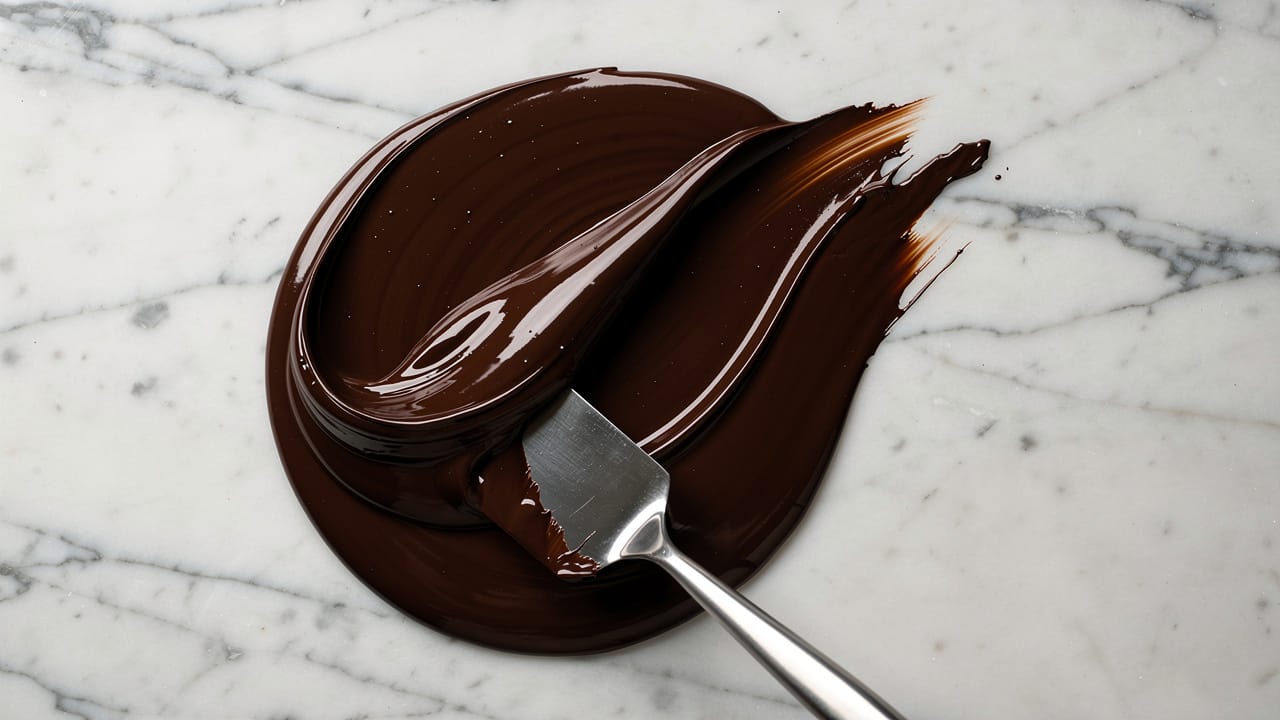
- Pour two-thirds onto a clean marble or granite surface.
- Work the chocolate with an offset spatula and bench scraper, spreading and gathering repeatedly. This agitation promotes Form V crystallization as the chocolate cools.
- When it reaches the cool temperature, scrape it back into the remaining warm chocolate.
- Stir to combine and bring to working temperature.
This method is faster for large batches and gives experienced chocolatiers more control, but requires a marble slab and practice.
Testing tempered chocolate
Dip a knife blade or offset spatula and let it sit at room temperature for 3-5 minutes. Properly tempered chocolate will:
- Set within 5 minutes (not still wet or tacky)
- Have a uniform glossy surface
- Release cleanly from the tool without sticking
- Snap cleanly when broken (not bend)
If the test fails, you can re-temper by reheating above the melt temperature and starting the process again. Chocolate can be tempered repeatedly without damage.
Tempering in Fond
Fond's Cook mode walks you through tempering steps with built-in timers and temperature targets. Whether you are making custard, chocolate truffles, or carbonara, the app guides the temperature transitions so you get consistent results.
Frequently asked questions
Can I temper eggs in a microwave?
Not recommended. Microwaves heat unevenly, creating hot spots that curdle eggs before the rest has warmed. Stovetop tempering with constant whisking gives far better control.
What happens if my tempered chocolate gets too hot?
If the working chocolate exceeds 33°C (91°F) for dark or 31°C (88°F) for milk, the Form V crystals melt and you lose temper. You need to re-seed or re-table from scratch.
Do I need to temper chocolate for brownies or ganache?
No. Tempering only matters when chocolate is the final coating or shape — molded bonbons, dipped truffles, chocolate bark. For baking and ganache, just melt and use.
Why does my custard sometimes have a cooked-egg taste?
The egg mixture got too hot too fast. Stay below 85°C and use gentle heat. Straining removes any overcooked bits but cannot fix an overall off-flavor from overheating.
Cook smarter
Join the waitlist for Fond. Recipes, meal plans, and a little AI sous-chef that learns how you cook.
Related terms
Carryover Cooking
The phenomenon where food continues to cook after being removed from heat, as residual thermal energy from the exterior migrates to the cooler interior.
Emulsification
Combining two liquids that normally don't mix (like oil and water) into a stable, uniform mixture.
Instant-Read Thermometer
A kitchen thermometer that gives accurate temperature readings in seconds — the most reliable way to check doneness.

Kosher Salt
A coarse-grained salt with large, flat crystals that's preferred by chefs for seasoning because it's easy to pinch, dissolves well, and has no additives.
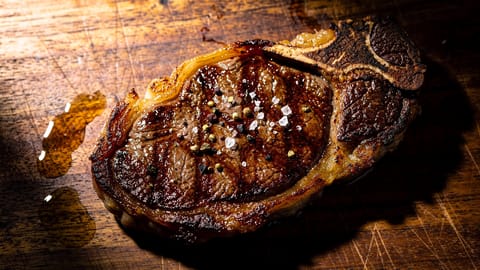
Maillard Reaction
The chemical reaction between amino acids and sugars that occurs when food is heated, creating the brown color and complex flavors of seared meat, toasted bread, and roasted coffee.
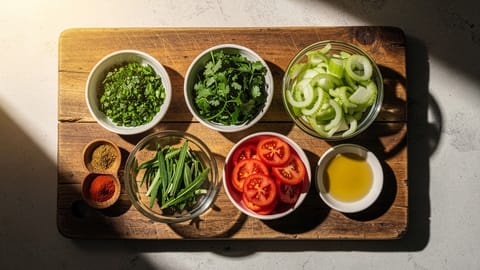
Mise en Place
The practice of preparing and organizing all ingredients before cooking — everything in its place.