 Bastien
Yeast Types
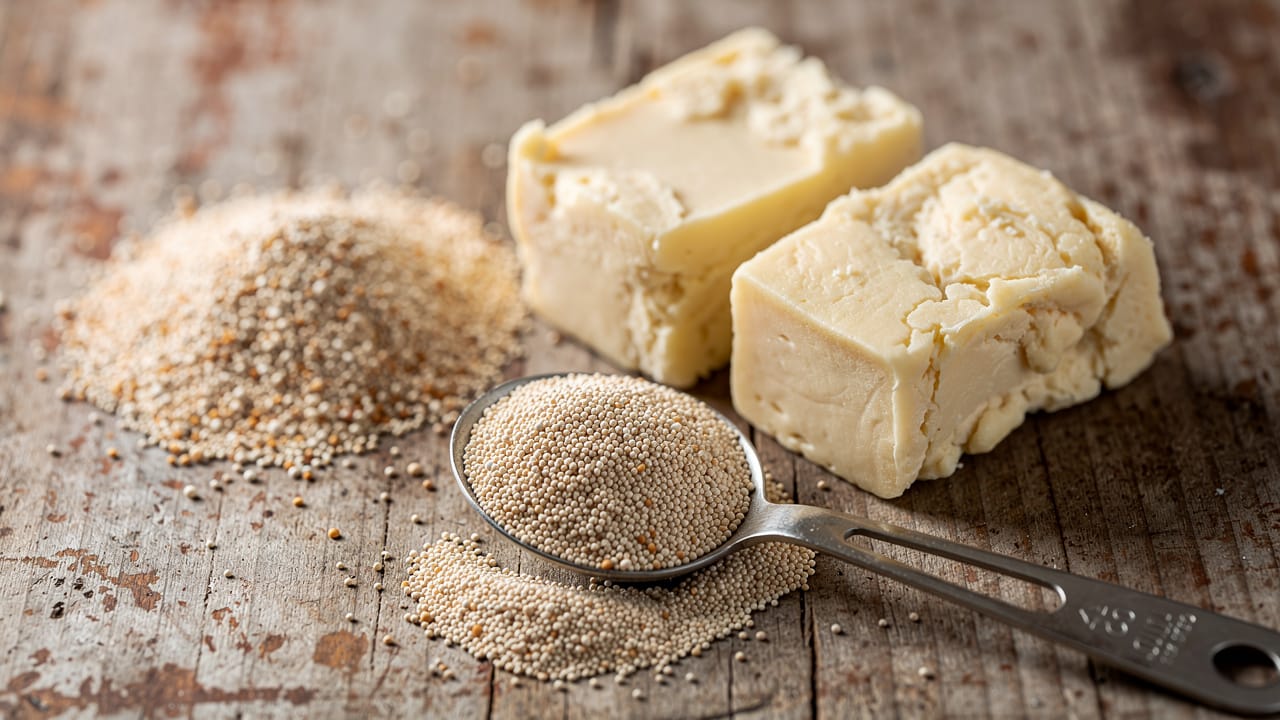
The three main bread yeasts — active dry, instant, and fresh — differ in how they're processed and used, but can be converted between each other.
Understanding yeast types helps you substitute confidently, troubleshoot bread problems, and choose the right yeast for your recipe. All bread yeasts are the same organism — Saccharomyces cerevisiae — just processed and dried differently. The differences matter for activation, speed, and flavor.
The three main types
Active dry yeast
Active dry yeast is the most traditional form. The yeast cells are dried at high temperature, creating granules with a layer of dead cells on the outside protecting live cells on the inside.
| Property | Detail |
|---|---|
| Form | Coarse, sand-like granules |
| Activation | Must be dissolved in warm water (38-43°C / 100-110°F) before use |
| Rise time | Standard — the baseline other types are compared to |
| Shelf life | 1-2 years unopened; 4-6 months refrigerated after opening |
| Flavor | Slightly more yeasty flavor due to dead cell content |
| Best for | Traditional recipes, when you want to verify yeast is alive before committing |
Why dissolve first? The dead outer cells need to hydrate and dissolve before the live inner cells can activate. Adding active dry directly to flour without dissolving can leave pockets of undissolved yeast that produce uneven rising.
Instant yeast (rapid rise / bread machine yeast)
Instant yeast is dried at lower temperatures, preserving more live cells. The granules are smaller and more porous, allowing them to absorb moisture directly from the dough without pre-dissolving.
| Property | Detail |
|---|---|
| Form | Fine, powder-like granules |
| Activation | Mix directly with dry ingredients — no dissolving needed |
| Rise time | About 50% faster than active dry |
| Shelf life | 1-2 years unopened; 4-6 months refrigerated after opening |
| Flavor | Cleaner, less yeasty than active dry |
| Best for | Pre-ferments (poolish, biga), pizza dough, bread machines, any recipe |
Instant yeast is the most versatile type and the one most professional bakers use. It works in every application — you can dissolve it if a recipe calls for it, or add it dry. SAF Red is the most widely available brand.
Note on "rapid rise" and "bread machine" labels: These are marketing names for instant yeast. Some rapid-rise products contain additional enzymes (like ascorbic acid) that accelerate rising, but the base yeast is the same.
Fresh yeast (cake yeast / compressed yeast)
Fresh yeast is sold in soft, crumbly blocks and has not been dried at all. It contains about 70% moisture compared to 8% in dry yeasts.
| Property | Detail |
|---|---|
| Form | Moist, clay-like blocks (typically 42g cubes) |
| Activation | Crumble directly into lukewarm liquid or into the flour |
| Rise time | Fastest — more live cells per gram since nothing is dead or dormant |
| Shelf life | 2-3 weeks refrigerated; does not freeze well |
| Flavor | Mildest, cleanest fermentation flavor |
| Best for | Professional bakeries, enriched doughs (brioche, panettone), European recipes |
Fresh yeast is the professional standard but impractical for most home bakers due to its short shelf life. If a European recipe specifies fresh yeast, convert to instant using the chart below.
Conversion chart
Converting between yeast types is straightforward by weight. Use a kitchen scale for accuracy — volume measurements are unreliable with yeast.
| If recipe calls for | Active dry | Instant | Fresh |
|---|---|---|---|
| 7g active dry | 7g | 5g | 21g |
| 5g instant | 7g | 5g | 15g |
| 21g fresh | 7g | 5g | 21g |
Quick conversion rules
- Instant = active dry × 0.7 (use 30% less instant than active dry)
- Fresh = active dry × 3 (use 3 times as much fresh as active dry)
- Fresh = instant × 3 (use 3 times as much fresh as instant)
These ratios work reliably for all bread and pizza recipes. When a recipe says "1 packet of yeast," that is 7g of active dry or 5g of instant.
Converting in baker's percentages
For pizza and bread recipes using baker's percentages:
| Yeast type | Typical range (% of flour) |
|---|---|
| Instant yeast | 0.1-1.0% |
| Active dry yeast | 0.15-1.3% |
| Fresh yeast | 0.5-3.0% |
For poolish and long-fermented doughs, use the lower end (0.1-0.3% instant). For same-day bread, use the higher end (0.5-1.0% instant).
Which yeast for which recipe
| Recipe | Best yeast | Why |
|---|---|---|
| Poolish / biga | Instant | Tiny amounts (0.1g) are easier to measure; no dissolving needed |
| Same-day pizza | Instant or active dry | Either works; instant is faster |
| Cold-fermented pizza | Instant | Low yeast amounts work best with instant |
| Artisan bread (sourdough-hybrid) | Instant | Clean flavor that does not compete with sourdough tang |
| Brioche / enriched dough | Fresh or instant | Fresh gives the mildest flavor; instant is a close second |
| Bread machine | Instant | Designed for dry-mix-and-go |
| Quick dinner rolls | Instant | Fastest rise |
For most home bakers, a single jar of instant yeast handles every recipe. Active dry is fine too — just dissolve it first and use slightly more.
Proofing active dry yeast
Proofing (testing) active dry yeast before adding it to your dough confirms it is alive:
- Warm water to 38-43°C (100-110°F) — like a warm bath, comfortable to touch
- Add a pinch of sugar — this feeds the yeast and speeds up the test
- Sprinkle yeast over the water surface — do not stir yet
- Wait 5-10 minutes — the yeast should foam and bubble
- Evaluate: foamy surface = alive and active. No foam = dead yeast, discard and use a fresh packet
Temperature matters. Water above 50°C (120°F) kills yeast. Water below 30°C (86°F) activates it too slowly to foam in 10 minutes. Use a thermometer or aim for "warm but comfortable to touch."
You do not need to proof instant yeast — it activates on contact with moisture. But if you are unsure whether your instant yeast is still alive, you can proof it the same way.
How yeast affects fermentation
The amount of yeast determines how fast your dough ferments:
| Yeast amount (instant) | Bulk fermentation time at 24°C | Flavor |
|---|---|---|
| 0.1% of flour (1g per 1kg flour) | 8-16 hours | Maximum complexity |
| 0.3% of flour (3g per 1kg flour) | 4-6 hours | Good balance of speed and flavor |
| 0.5% of flour (5g per 1kg flour) | 2-3 hours | Moderate flavor |
| 1.0% of flour (10g per 1kg flour) | 1-1.5 hours | Minimal flavor development |
Less yeast + more time = better flavor. This is why pizza and artisan bread recipes use tiny amounts of yeast with long fermentation schedules (often including cold fermentation in the fridge).
Troubleshooting yeast problems
| Problem | Likely cause | Fix |
|---|---|---|
| Dough will not rise | Dead yeast, water too hot (killed it), or too cold (not activated) | Test yeast by proofing; check water temperature |
| Very slow rise | Old yeast losing potency, kitchen too cold, or salt touching yeast directly | Use fresh yeast, warm environment (24-26°C), add salt after initial mix |
| Dough rose and collapsed | Too much yeast or too long bulk fermentation | Reduce yeast amount, shorten bulk, or use cold fermentation |
| Dense, heavy bread | Not enough yeast, under-proofed, or over-kneaded | Increase yeast, extend proof time, or knead less |
| Strong yeasty smell/taste | Too much yeast relative to fermentation time | Reduce yeast and extend bulk for better balance |
| Uneven rising (some spots rise, others flat) | Active dry yeast not fully dissolved | Dissolve completely before adding, or switch to instant |
Storage
| Yeast type | Unopened | Opened | Freezer |
|---|---|---|---|
| Active dry | 2 years (cool, dark) | 4-6 months refrigerated, airtight | 1+ years |
| Instant | 2 years (cool, dark) | 4-6 months refrigerated, airtight | 1+ years |
| Fresh | N/A — always refrigerated | 2-3 weeks max | Not recommended (loses potency) |
After opening, squeeze out air and seal the package in a zip-lock bag or airtight container. Moisture is the enemy — it activates the yeast prematurely, causing it to exhaust its food supply and die.
For bulk buying, instant and active dry yeast freeze excellently. Measure what you need directly from the freezer — no thawing required. The yeast activates as it warms in the dough.
Yeast types in Fond
Fond's recipe scaling automatically converts between yeast types. If a recipe calls for fresh yeast but you have instant, Fond adjusts the amount using the correct conversion ratio. The app also adjusts yeast quantities when you change the number of servings or dough balls, keeping the baker's percentages consistent. All ingredients, including yeast, are added to your shopping list automatically.
Frequently asked questions
Can I use active dry and instant yeast interchangeably?
Yes, with two adjustments: use 30% less instant than active dry (or 30% more active dry than instant), and dissolve active dry in warm water first. Instant can go directly into dry ingredients.
Does the brand of yeast matter?
For instant yeast, SAF Red is the professional standard and widely recommended. For active dry, Fleischmann's and Red Star are reliable. The organism is the same — quality differences are about processing consistency and freshness.
How can I tell if my yeast is still good?
Proof it: dissolve in warm water (38-43°C) with a pinch of sugar. If it foams within 10 minutes, it is alive. If nothing happens, it is dead. This works for both active dry and instant yeast.
Why do pizza recipes use so little yeast?
Less yeast means slower fermentation, which means more time for flavor compounds to develop. A pizza dough with 0.1% yeast fermented for 24 hours in the fridge has dramatically more flavor than the same dough with 1% yeast fermented for 2 hours at room temperature. The yeast amount is a flavor dial. Try different yeast amounts in the pizza dough calculator to see how they affect your recipe.
Is osmotolerant yeast different?
Osmotolerant yeast (like SAF Gold) is a variant of instant yeast bred to perform in high-sugar doughs (brioche, panettone, cinnamon rolls). Standard yeast struggles in doughs above 10% sugar because sugar draws water away from the yeast cells. Use osmotolerant yeast when your recipe has more than 10% sugar relative to flour weight.
Cook smarter
Join the waitlist for Fond. Recipes, meal plans, and a little AI sous-chef that learns how you cook.
Related terms
Biga
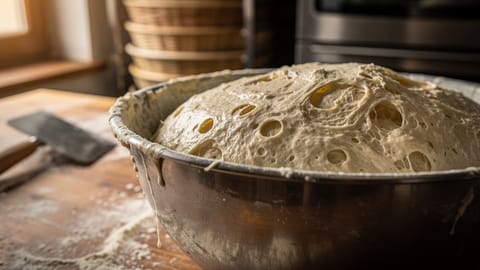
A stiff Italian pre-ferment with 50-60% hydration, used to add structure, flavor complexity, and a nuttier taste to bread and pizza doughs.
Bulk Fermentation
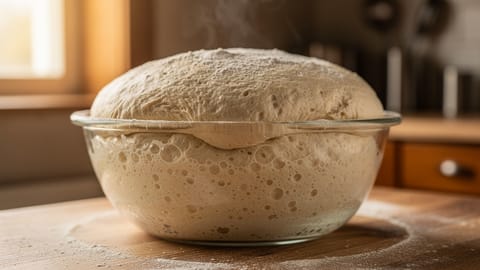
The primary rise of bread dough after mixing, where yeast or starter ferments the dough as a single mass before shaping.
Cold Fermentation
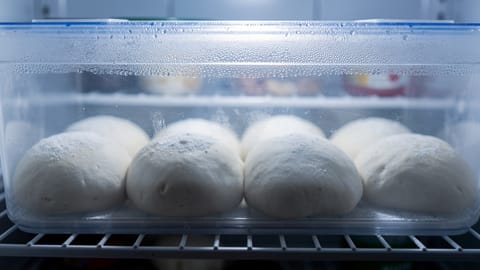
A technique of retarding dough in the refrigerator (2-5°C) for 24-72 hours, slowing yeast activity while allowing enzymes to develop deeper flavors and better texture.
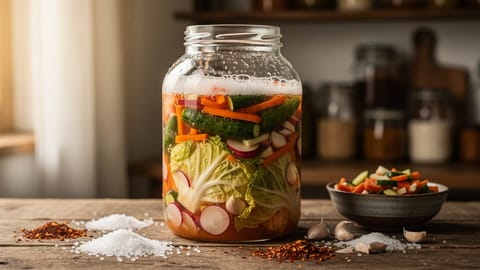
Fermentation
A metabolic process where microorganisms convert sugars into acids, gases, or alcohol — the basis of bread, yogurt, kimchi, and beer.
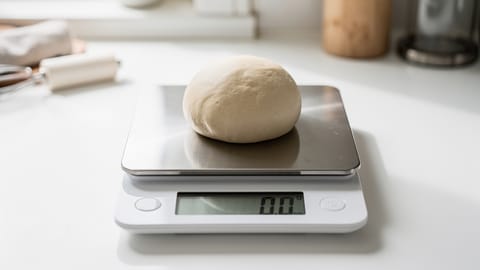
Kitchen Scale
A digital scale for measuring ingredients by weight — far more accurate than cups and spoons, especially in baking.
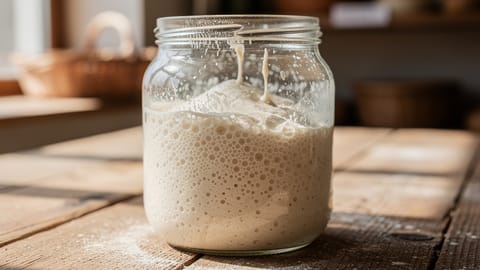
Poolish
A wet pre-ferment made with equal parts flour and water plus a small amount of yeast, fermented 8-16 hours to develop flavor and improve dough extensibility.
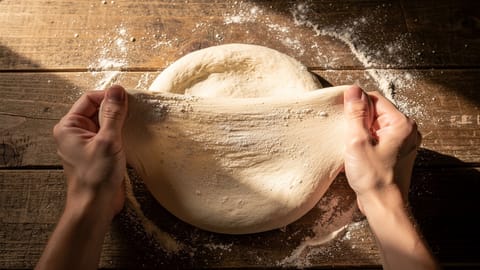
Beginner Pizza Dough
Your first homemade pizza dough, from scratch. A simple same-day recipe with 4 ingredients, plus everything you need to know about mixing, kneading, and shaping.