 Bastien
Cold Fermentation Pizza Dough Guide
Slow-rise your dough in the fridge for 24, 48, or 72 hours. The longer it sits, the more complex the flavor gets. Most home bakers hit the sweet spot at 48 hours with 0.1% fresh yeast.
TL;DR: Cold fermented pizza dough rises slowly in the fridge (38-42°F / 3-6°C) for 24-72 hours. Most home bakers land on 48 hours with 0.1% fresh yeast. The payoff: deeper flavor, better texture, easier stretching, and a more digestible crust, all with minimal hands-on time.
After years of tweaking same-day doughs, switching to cold fermentation was the single biggest upgrade to my homemade pizza. Nothing else (flour, oven) made as dramatic a difference in flavor and crust quality.
What is cold fermented pizza dough?
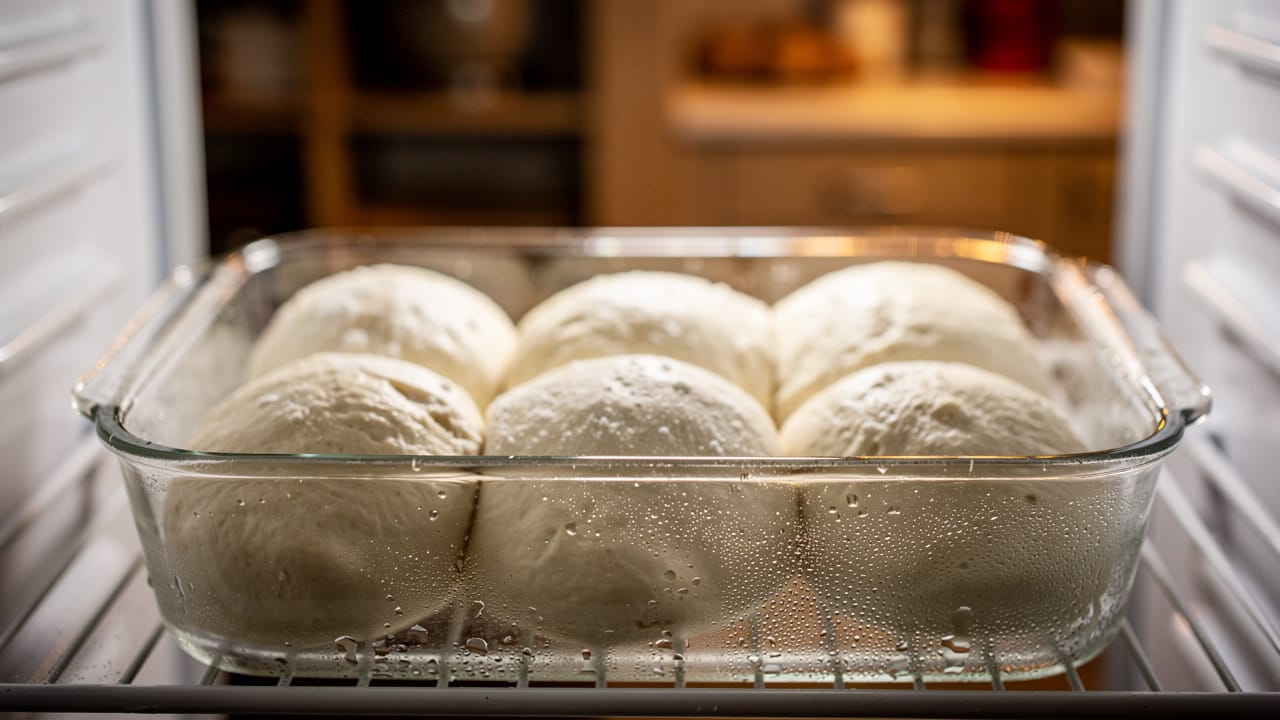
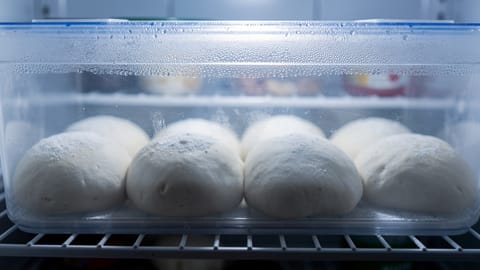
Cold fermentation (also called cold proofing or retarding) means letting pizza dough ferment slowly in the fridge at 38-42°F (3-6°C), typically for 24 to 72 hours. Some cold fermented pizza dough recipes push even longer.
Where a room-temperature rise finishes in a few hours, the fridge slows yeast way down while enzymes keep working. That gap between yeast speed and enzyme speed is where all the good flavor comes from. If you want to cold ferment pizza dough at home, the process is straightforward. You just need the right yeast amount and a reliable fridge.
The science behind cold fermenting pizza dough
Knowing what's happening inside your dough at fridge temperature explains why a 48-hour cold ferment tastes so different from a 2-hour room-temp rise.
Enzymatic activity
Flour contains amylase and protease enzymes that break starches into sugars and proteins into amino acids. At room temperature, yeast eats these sugars almost as fast as they appear. In the fridge, yeast slows to a crawl while enzymatic breakdown continues, so free sugars and amino acids pile up. That stockpile is what gives cold-fermented dough its flavor and browning.
Maillard reaction precursors
Those accumulated sugars and amino acids feed the Maillard reaction, the same chemistry that gives bread its golden crust and toasty aroma. Cold-fermented dough has far more Maillard precursors available, so it browns more evenly and tastes deeper even at lower baking temperatures.
Organic acid development
Lactic acid bacteria (naturally present in flour) produce lactic acid and acetic acid throughout the cold ferment, just slowly. These acids give cold-fermented crust its subtle tanginess. The ratio between lactic acid (mild, yogurt-like) and acetic acid (sharper, vinegar-like) shifts with temperature and time.
Why cold specifically helps
At 38-42°F (3-6°C), yeast metabolism drops to roughly 10-15% of its room-temperature rate, but enzyme activity only drops to about 50-60%. That mismatch is the whole trick: enzymes keep producing flavor compounds faster than yeast can consume them. You end up with dough that tastes better and stretches easier.
Why cold ferment pizza dough?
More flavor
The long ferment gives enzymes time to break down starches and proteins in the flour, building up a wider range of flavor compounds. You'll taste a subtle tanginess and deeper wheat notes that same-day dough can't match.
Better digestibility
Extended fermentation breaks down gluten proteins and reduces phytic acid, making the dough easier on your stomach. People with mild wheat sensitivity often tolerate cold-fermented dough better.
Better texture
Cold fermentation builds the gluten network gradually. The dough becomes easier to stretch and more elastic, baking into a crust with better chew and a more open bubble structure.
Schedule flexibility
The practical upside: cold fermentation works around your life. Mix dough in the evening, stick it in the fridge, and it's ready when you are. No need to babysit a rise or time things down to the minute.
Hydration interaction
Cold fermentation lets you push hydration 2-5% higher than you would with a same-day dough. The slow, cold rise gives gluten more time to fully hydrate and organize, so the dough holds extra water without becoming unmanageable. If you've been stuck at 62-63% with room-temperature recipes, try 65-67% with a 48-hour cold ferment. The difference in crumb openness is noticeable.
Reference recipe: 48-hour cold ferment
A reliable starting point for most home ovens. Adjust hydration and bake time for your setup.
 376g
Water
cold, 60°F/15°C
376g
Water
cold, 60°F/15°C
 17g
Salt
17g
Salt
Note: 0.6g of instant dry yeast is a small pinch. If using fresh yeast, use about 1.8g (the size of a pea). A digital scale with 0.1g precision is essential for these quantities.
I landed on these exact ratios after dozens of batches. Small adjustments to yeast and hydration at this scale make a surprisingly big difference in the finished crust.
Cold fermentation pizza dough schedules
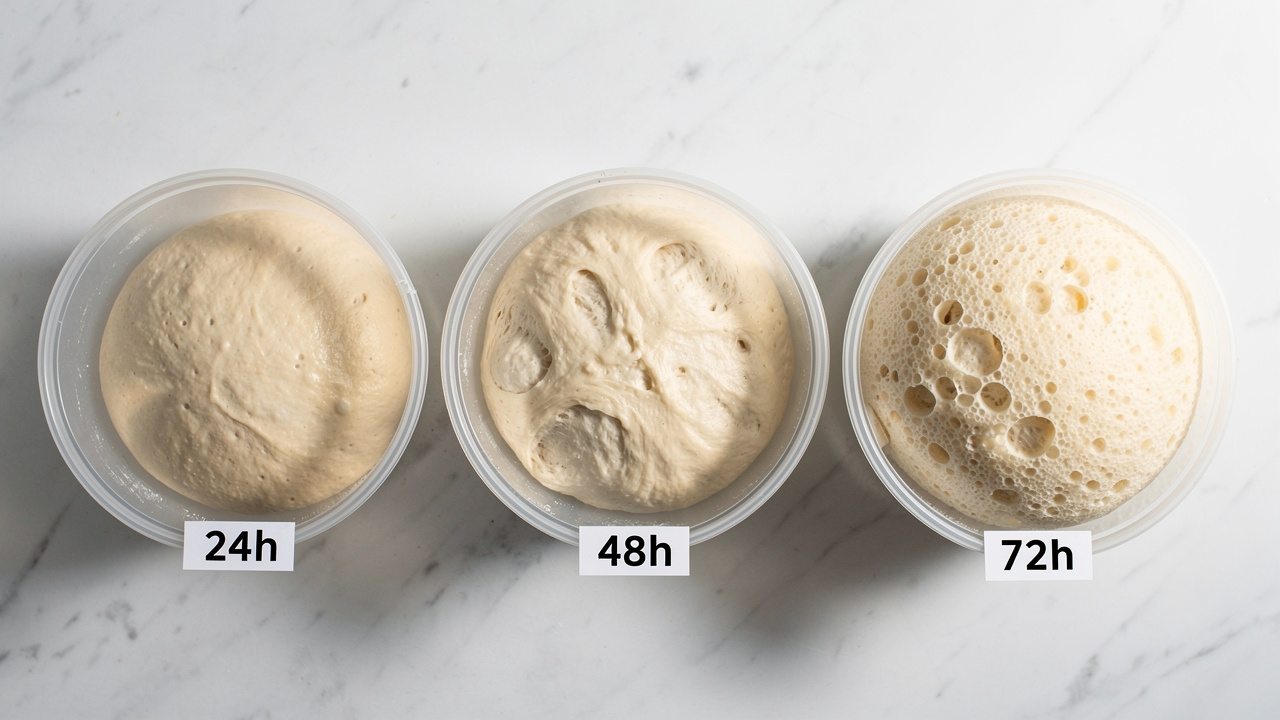
The right schedule depends on how much time you have and how deep you want the flavor. Here's a quick comparison of the three main timelines:
| Feature | 24 Hours | 48 Hours | 72 Hours |
|---|---|---|---|
| Yeast (fresh) | 0.2-0.3% | 0.1-0.15% | 0.05-0.1% |
| Yeast (instant) | 0.07-0.1% | 0.03-0.05% | 0.02-0.03% |
| Bulk RT | 1-2 hours | 30-60 min | 15-30 min |
| Temper time | 1-2 hours | 2-3 hours | 3-4 hours |
| Flavor | Mild | Pronounced | Complex |
| Difficulty | Easy | Moderate | Advanced |
Best for: Weekend pizza nights, Neapolitan-style pizzas, optimal flavor balance
48 hours is the sweet spot for most people. The flavor is pronounced but not overpowering, and the dough handles well. Most professional pizzaiolos settle on this schedule.
Tip: If you can only manage 24 hours, compensate by using a starter (poolish or biga) in your recipe. A poolish made the night before and mixed into a 24-hour cold ferment will get you surprisingly close to 48-hour flavor depth.
Best for: Busy weeknights, first-time cold fermenters, high-hydration doughs. A 24 hour fermentation pizza dough is the easiest entry point.
You'll get noticeably better flavor than same-day dough, and the process stays simple and predictable. Expect slight tanginess and good extensibility. For an even simpler approach, check out our overnight pizza dough guide.
Double cold-rest method (for doughs WITHOUT a starter)
If you're working with a straight dough (no poolish, biga, or sourdough starter), you can pull more flavor from a 24-hour schedule with the double cold-rest method:
The first rest builds organic acids and flavor precursors; the second deepens the complexity. More work than a single cold rest, but the difference in the finished crust is hard to miss.
Best for: Maximum flavor, artisan-style crusts, planned weekend projects
A 72 hour cold ferment pizza dough delivers genuinely complex flavor: pronounced tanginess, almost sourdough-like character. The dough is highly extensible and needs careful handling. You have to cut the yeast way back to prevent over-fermentation.
Warning: Beyond 72 hours, the margin for error shrinks significantly. Unless you're experienced with micro-yeast quantities and have a fridge that holds a rock-steady temperature, stick to the 48-72 hour range.
Temperature management for cold fermented dough
Ideal fridge temperature
Tip: Place a cheap fridge thermometer on the shelf where you keep your dough. Built-in fridge displays can be off by several degrees. Knowing your actual fridge temperature is the single most useful thing you can do to get consistent results.
Placement matters
Keep dough balls in the main compartment, not the door. Don't put them right against the back wall, where temps can dip below freezing. Middle shelves are the most stable spot. I learned the back-wall lesson the hard way: woke up to a batch of partially frozen dough balls that never recovered properly.
Containers
Use airtight containers or wrap dough balls tightly in plastic brushed with olive oil. You want to prevent a dry skin from forming while allowing some gas exchange. Leave room for expansion, since dough typically grows 50-100% during cold fermentation.
Freezing and storing dough for later
Here's a trick worth knowing: you can freeze dough balls after balling and a 24-hour fridge rest. That means you can batch-prep a bunch and have pizza-ready dough on hand for weeks.
How to freeze
- After balling your dough and completing a 24-hour cold ferment, place each dough ball in an individual bag lightly coated with olive oil
- Press out excess air and seal the bag
- Freeze immediately -- dough will keep for up to 2 months in the freezer without noticeable quality loss
Spend one session making a large batch, freeze most of it, and you've got weeks of pizza nights sorted.
Thawing: the water-bath method
The best way to defrost frozen dough is the water-bath method:
- Fill a bowl or basin with warm water at approximately 80°F (27°C)
- Place the frozen dough ball (still in its sealed bag) into the water bath
- Let it sit for 15 minutes -- this rapidly and evenly defrosts the outer layers while keeping the core cool
- Remove from water and let the dough sit at room temperature for 1.5 to 2 hours before stretching
Tip: The water bath keeps moisture distribution even, which means a higher rise and crispier bake compared to air thawing. Air thawing dries the surface while the core stays frozen, giving you uneven texture.
What NOT to do
Don't thaw dough in the microwave or near a heat source. Uneven heating kills yeast in some spots while leaving other areas cold. You end up with dense, lifeless patches in the crust next to areas that rose properly. The water-bath method takes a bit of patience, but it's worth it.
Handling cold fermented pizza dough
Tempering
Don't try to stretch dough straight from the fridge. Pull the balls out and let them come to room temperature:
- 24-hour dough: 1-2 hours
- 48-hour dough: 2-3 hours
- 72-hour dough: 3-4 hours
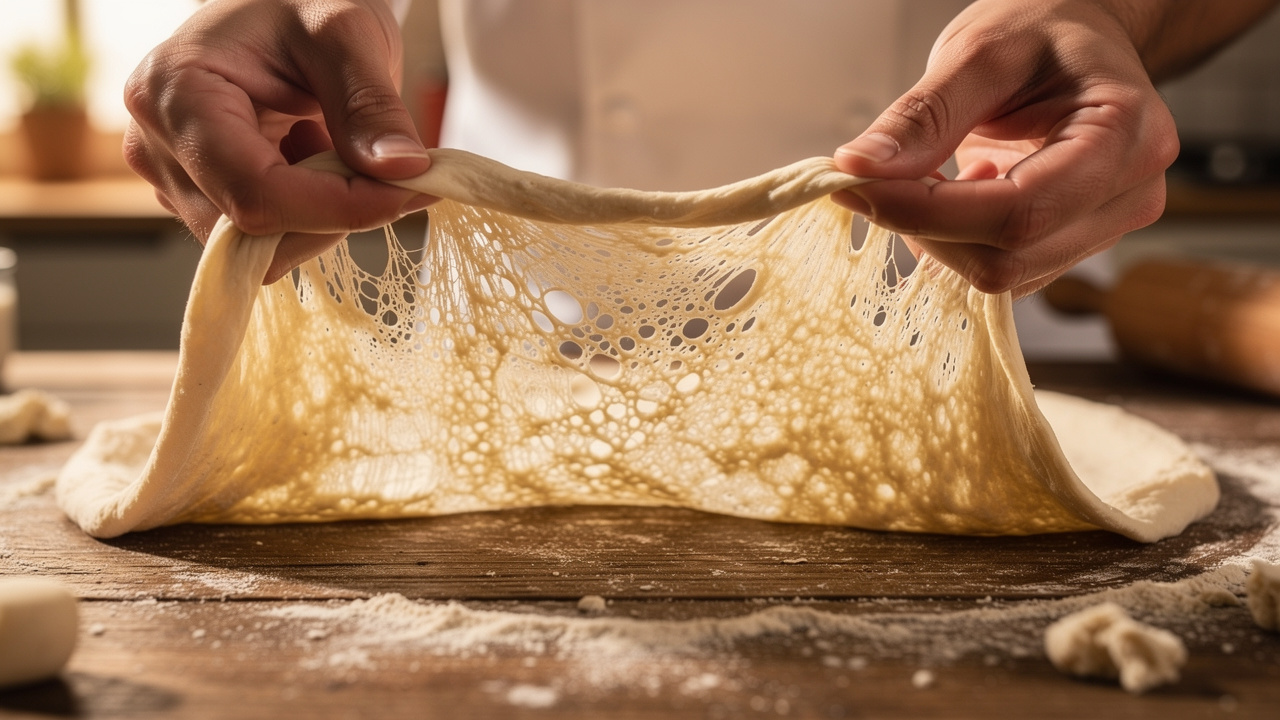
The dough should feel soft and supple, not firm or cold. When you press it gently, it should relax rather than snap back.
Tip: If your dough springs back aggressively when you try to stretch it, it needs more tempering time. Cover it and wait another 20-30 minutes before trying again.
Gentle handling
Cold-fermented dough has a delicate gluten structure. Stretch gently and let gravity do most of the work. Rough handling will deflate the gas structure you spent two days building.
Signs your cold fermented dough is ready
What to look for
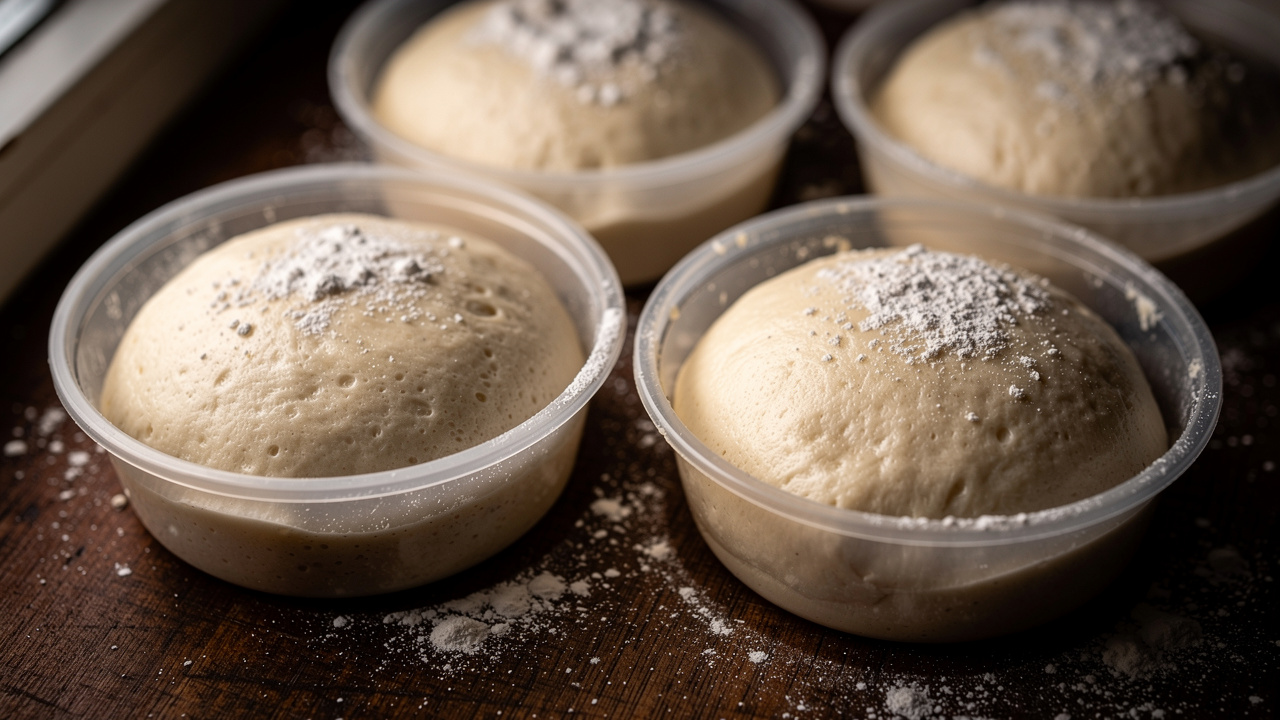
- Dough has visibly increased in size (1.5-2x original volume)
- Surface appears smooth and slightly domed
- Small bubbles visible just beneath the surface
- Dough springs back slowly when gently pressed
How it should feel
- Light and airy when you pick it up
- Jiggles slightly when you shake the container
- Releases easily from container walls
- Stretches smoothly without tearing
The smell test
Good dough smells pleasantly yeasty with mild sweet and tangy notes. If it smells sharply sour, boozy, or like nail polish remover, it's gone too far.
Troubleshooting cold fermented pizza dough
For a full rundown on common dough problems, see our pizza dough troubleshooting guide.
Cause: Over-fermentation. Yeast has consumed all available sugars and is producing excess ethanol and acetic acid.
Fix: Use it immediately if it's not too far gone. Degas gently, re-ball, and bake within an hour. For future batches, reduce yeast by 25-50% or shorten the cold ferment.
Cause: Extended enzymatic breakdown has weakened the gluten network beyond recovery. Common with ferments over 48 hours using weak flour.
Fix: Blend 50/50 with freshly made dough to restore structure. For prevention, use flour with 12%+ protein and reduce yeast for longer ferments.
I once left a 48-hour batch in the fridge for nearly four days by accident. The dough was slack and boozy, unusable on its own. The 50/50 blend with a quick fresh batch saved the night; you'd never have known it was a rescue job.
Cause: Severe over-fermentation. The dough has likely passed the point of no return for quality pizza.
Fix: You can still use it for flatbreads or focaccia where structure matters less. For pizza, start a fresh batch. To prevent: monitor fridge temp closely and don't push beyond 72 hours without expert-level yeast adjustment.
Cause: Yeast was killed (water too hot during mixing), fridge is too cold (below 36°F/2°C), or yeast amount was too low.
Fix: Check your fridge temperature with a thermometer. Verify water temp was below 70°F (21°C) during mixing. For cold ferments, use cold water (60°F/15°C) but not ice-cold. If the yeast is dead, there's no recovery. Start over.
Cause: Container wasn't sealed properly, allowing moisture to escape.
Fix: Peel off the dry skin and use the dough underneath; it's usually fine. For prevention, use airtight containers or brush dough with olive oil before wrapping tightly with plastic wrap. Leave expansion room but minimize air exposure.
Cause: Ferment time was too short, fridge was too cold (stalling fermentation), or too much yeast consumed the flavor compounds too quickly.
Fix: Extend the next ferment by 12-24 hours or slightly reduce yeast. Verify your fridge is in the 38-40°F (3-4°C) range. Using a poolish or biga as a pre-ferment adds flavor complexity even with shorter cold ferments.
Prevention checklist
- Reduce yeast by 25-50% for fermentations over 48 hours
- Use colder water (60-65°F/15-18°C) in your initial mix
- Minimize room temperature fermentation before refrigeration
- Monitor refrigerator temperature consistency
- Don't push beyond 72 hours without expert-level yeast adjustment

When NOT to cold ferment
Cold fermentation isn't always the move. Skip it when:
- You need dough in under 6 hours. Use a same-day recipe with more yeast and a warm bulk ferment. Cold fermentation requires planning ahead.
- Your fridge runs warm (above 45°F / 7°C). Warm fridges speed up fermentation unpredictably. Fix the fridge or stick to same-day dough.
- You're doing high-volume, fast-turnover pizza. Some pizzerias pushing hundreds of pies daily use same-day doughs for practical reasons. Cold fermentation is a quality technique, not a speed technique.
- Your flour has less than 10% protein. Weak flours don't build enough gluten to survive 48+ hours of enzymatic breakdown. Use bread flour or a strong 00 for cold ferments.
Baking cold fermented dough in different ovens
Cold-fermented dough's extra residual sugars affect browning differently depending on your oven:
- Home oven (475-550°F / 245-290°C): The higher sugar content means you'll get better browning than same-day dough even at these moderate temperatures. Use a preheated baking stone or sheet and bake on the lowest rack for the best bottom char.
- Pizza steel (550°F+ / 290°C+): A steel's superior heat transfer pairs perfectly with cold-fermented dough. Expect deep leopard-spotting on the bottom and faster bake times (5-7 minutes vs. 8-10 on a stone). Watch closely, because the extra sugars can tip from golden to burnt quickly.
- Dedicated pizza oven (800-950°F / 425-510°C): At Neapolitan temperatures, cold-fermented dough produces dramatic charring and puffing in 60-90 seconds. The Maillard precursors built up during fermentation give the crust a complexity that same-day dough simply can't match at these speeds.
Essential equipment for cold fermentation
You don't need much, but a few items make a big difference:
The digital scale is non-negotiable. When you're measuring 0.6g of yeast, eyeballing is the difference between perfect dough and over-fermented soup.
Final tips for cold fermentation pizza dough
Cold fermentation is one of the simplest ways to get dramatically better pizza at home. Whether you cold ferment pizza dough for 24 hours or push to a full 72, here's what matters most:
Tip: If you're new to cold fermented pizza dough, start with the 48-hour reference recipe above before pushing to longer ferments or lower yeast amounts.
Frequently Asked Questions
Yes, but it requires significant yeast reduction (0.02% fresh yeast or less) and a fridge that holds a steady 38°F (3°C). Beyond 72 hours, the dough becomes increasingly fragile and acidic. Most home bakers get better results in the 48-72 hour range — pushing to 5 days is an expert-level technique with diminishing returns.
For a 48-hour cold ferment, use 0.1-0.15% fresh yeast (or 0.03-0.05% instant dry yeast) relative to flour weight. For 24 hours, increase to 0.2-0.3% fresh. For 72 hours, reduce to 0.05-0.1% fresh. These are much smaller amounts than same-day recipes — a digital scale with 0.1g precision is essential.
Yes, and the combination is excellent. Replace commercial yeast entirely with 15-20% sourdough starter (relative to flour weight). The timeline extends — expect 36-48 hours for results comparable to a 24-hour yeasted cold ferment. The flavor complexity is hard to beat: sourdough tang layered with cold fermentation depth.
Yes. Lightly oil the inside of the bag, place the dough ball inside, press out excess air, and tie loosely — the dough needs room to expand. Bags take up less fridge space than containers, which is a real advantage when making large batches. Just handle gently when removing the dough to avoid degassing.
They're the same thing — different names for the same technique. "Cold fermentation," "cold proofing," "cold retarding," and "retarding" all refer to fermenting dough at refrigerator temperatures (38-42°F / 3-6°C) over an extended period. The terminology varies by tradition and region.
Cold fermented dough is more digestible thanks to longer gluten and phytic acid breakdown, and some people with mild wheat sensitivity tolerate it better. However, calling it "healthier" overstates the case — it's still pizza dough made from the same ingredients. The real benefits are flavor and digestibility, not nutritional superiority.
Yes, and most recipes call for it. A short room-temperature bulk ferment (30-60 minutes for 48-hour schedules, 1-2 hours for 24-hour) kickstarts yeast activity before the cold slows it down. This initial period helps build gluten structure and distributes the yeast evenly. Just don't overdo it — too much room-temp time front-loads fermentation and can lead to over-proofing in the fridge.
A strong flour with 12-14% protein is ideal. Italian Tipo 00 (like Caputo Pizzeria) is the gold standard for Neapolitan-style cold ferments. Bread flour (12-13%) works well for home ovens. Avoid all-purpose flour for ferments longer than 24 hours — its lower protein content (10-11%) can't maintain gluten structure over extended enzymatic breakdown. Whatever you choose, consistency matters more than brand.
Over-proofed dough shows several clear signs: it smells sharply sour or like alcohol (not the pleasant yeasty aroma of well-fermented dough), feels extremely slack and sticky rather than soft and supple, spreads flat rather than holding a dome shape, and may have a grayish tint on the surface. If you catch it early, you can still use it — degas gently, re-ball, and bake within an hour.
Absolutely — it's one of the best combinations. A poolish (equal parts flour and water with a tiny amount of yeast, fermented 8-16 hours) adds its own layer of flavor complexity on top of the cold ferment. Use the poolish as 30-40% of your total flour, reduce the yeast in the final dough accordingly, and shorten the cold ferment by 12-24 hours. A 12-hour poolish plus a 24-hour cold ferment can rival a straight 48-hour cold ferment in flavor.
Sources
Cook smarter
Join the waitlist for Fond. Recipes, meal plans, and a little AI sous-chef that learns how you cook.
Related guides

New York Style Pizza Dough
Big, foldable slices with a crispy bottom and chewy bite. NY-style dough uses high-gluten flour, a touch of oil and sugar, and a 48-hour cold ferment for that classic slice-shop flavor.
Overnight Pizza Dough
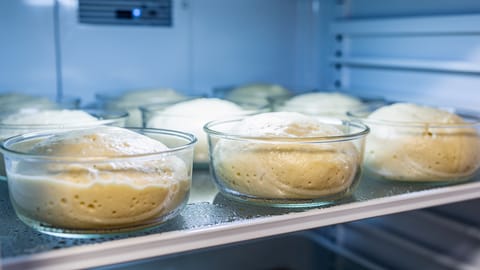
Mix the dough before bed, refrigerate it, bake pizza the next day. 10 minutes of work the night before, and you get better flavor than same-day dough with zero extra effort.
Pizza Dough Fermentation: Room Temperature vs Cold Fermentation
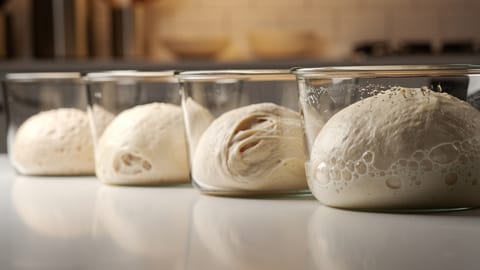
Room temp vs. fridge, 4 hours vs. 72 hours, and how to tell when your dough is actually ready. The time-temperature relationship is the single biggest lever for better-tasting pizza.
Pizza dough hydration: complete guide to water ratios
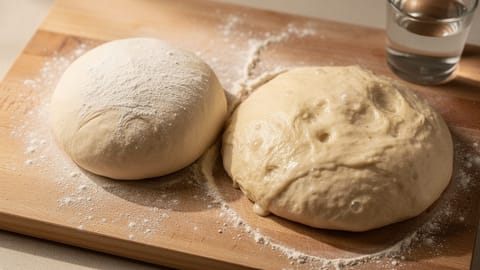
How the water-to-flour ratio shapes your crust. 60% gives you a stiff, easy-to-handle dough; 75%+ gives you open, airy crumb but requires more technique. Includes baker's percentages by style, a decision framework, bassinage technique, and fermentation interaction.

Pizza Dough Troubleshooting: Common Problems & Fixes
Dough too sticky? Won't stretch? Bland crust? Tearing during shaping? This guide covers the most common headaches and what's actually going wrong, with quick fixes you can try right now.
Cold Fermentation
A technique of retarding dough in the refrigerator (2-5°C) for 24-72 hours, slowing yeast activity while allowing enzymes to develop deeper flavors and better texture.

Fermentation
A metabolic process where microorganisms convert sugars into acids, gases, or alcohol — the basis of bread, yogurt, kimchi, and beer.