 Bastien
Overnight Pizza Dough
Mix the dough before bed, refrigerate it, bake pizza the next day. 10 minutes of work the night before, and you get better flavor than same-day dough with zero extra effort.
TL;DR: Mix pizza dough before bed (10 minutes of work), refrigerate it overnight, and have ready-to-bake dough the next day. Use 1-2g of yeast for a cold overnight rise, or 3-5g for a room temperature overnight rise. The fridge method gives you a 12-24 hour window to bake, so there's no pressure on exact timing.
Why overnight pizza dough is the way
Overnight pizza dough is more convenient and it makes a better crust than any same-day quick recipe.
Better flavor. During the long fermentation, enzymes break down starches and proteins into sugars and amino acids. These fuel the Maillard reaction during baking, giving you a deeper-tasting crust.
Better texture. Slow fermentation develops gluten gradually and evenly, so you get a crust that's tender inside and crispy outside. The dough becomes easier to stretch and more forgiving to work with.
Better schedule. Ten minutes of work the night before, and you have pizza-ready dough whenever you want it the next day. No racing against the clock, no afternoon spent babysitting dough.
Two overnight pizza dough methods
There are two different approaches to overnight pizza dough, each with its own strengths:
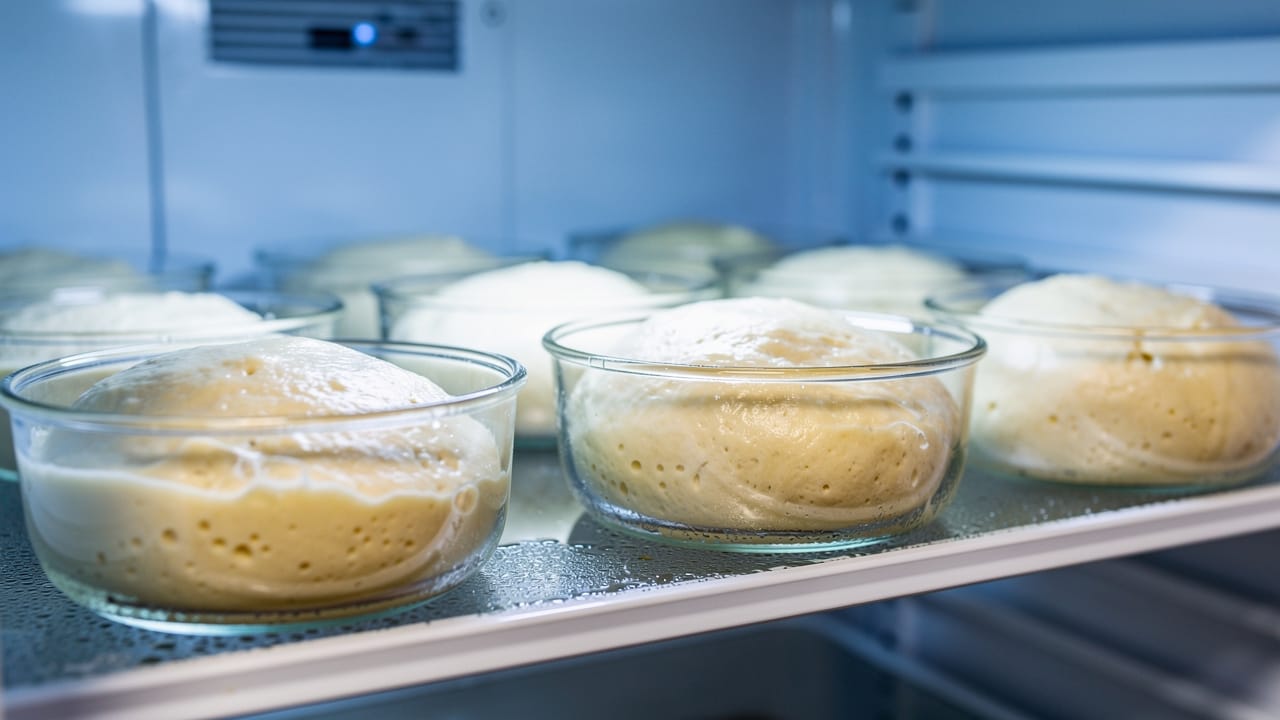
The recommended method. Mix the dough, give it a short room temperature rest, then refrigerate overnight.
Why cold is better for most people
The fridge gives you a wide window to use your dough. A cold-fermented dough is usable from about 14 hours all the way up to 24+ hours, so you don't need to time anything precisely. It also develops more complex flavor than a room temperature rise.
Recipe (4 dough balls, ~250g each)
 390g
Water
cold, 60-65°F / 15-18°C
390g
Water
cold, 60-65°F / 15-18°C
 12g
Olive oil
optional
12g
Olive oil
optional
Schedule
Tip: If life gets in the way and you can't bake the next day, the dough will hold in the fridge for up to 48 hours total. Just reduce the yeast to 1g if you know you'll need the extra time.
For warmer kitchens or when you want to bake early. Mix the dough, leave it on the counter overnight, and bake the next morning or afternoon.
When to use this method
- Your kitchen stays between 60-68°F (15-20°C) overnight
- You want to bake early the next day (lunch rather than dinner)
- You don't have fridge space for dough containers
Recipe (4 dough balls, ~250g each)
 600g
Bread flour
12-13% protein
390g
Water
room temperature
12g
Olive oil
optional
600g
Bread flour
12-13% protein
390g
Water
room temperature
12g
Olive oil
optional
Warning: The yeast amount is critical here. At room temperature, the dough ferments much faster, so you need far less yeast. If your kitchen is above 72°F (22°C), this method is risky — the dough may over-ferment by morning.
Schedule
Tip: The warm overnight method is less forgiving than the cold method. Room temperature fluctuates more than a fridge, so results can vary night to night. If you're new to overnight dough, start with the cold method.
Adjusting for your schedule
Overnight dough adapts to almost any schedule. Here's how to adjust the recipe for different timelines:
| Scenario | Yeast (instant) | Method | Mix Time | Bake Time |
|---|---|---|---|---|
| 12-hour cold | 2g | Fridge | 9 PM | 12 PM next day |
| 18-hour cold | 1.5g | Fridge | 9 PM | 6 PM next day |
| 24-hour cold | 1g | Fridge | 9 PM | 9 PM next day |
| 48-hour cold | 0.5g | Fridge | 2 days before | Anytime day 2 |
| 10-hour warm | 0.5g | Counter (cool kitchen) | 9 PM | 8 AM next day |
| 14-hour warm | 0.3g | Counter (cool kitchen) | 9 PM | 12 PM next day |
The rule is simple: more time = less yeast. Cold temperatures also slow fermentation, so fridge doughs use more yeast than counter doughs for the same duration.
The science behind overnight pizza dough
What happens while you sleep
During the 12-18 hours your dough sits overnight, several processes transform it:
Enzymatic breakdown. Flour enzymes (amylase and protease) work continuously, converting starches to sugars and proteins to amino acids. These contribute to flavor, browning, and a more tender crumb.
Yeast activity. Even at fridge temperatures, yeast doesn't stop completely. It just slows to about 10-15% of its room temperature rate. This slow activity produces CO₂ for lift, plus ethanol and organic acids for flavor. The sugars released by enzymatic activity also fuel the Maillard reaction during baking, which gives you that deep golden crust.
Gluten relaxation. Long rest periods let the gluten network relax, making the dough much more extensible. This is why overnight dough stretches so much more easily than freshly made dough.
Flavor compound buildup. Lactic acid bacteria produce lactic and acetic acids that give cold-fermented dough its characteristic subtle tang. See our cold fermentation guide for the full science.
For even more flavor development, you can add a pre-ferment like poolish or biga to your overnight dough. Our poolish vs biga guide explains how each one affects flavor and texture.
Tips for consistent overnight pizza dough
Water temperature
Use cold water (60-65°F / 15-18°C) for the fridge method. This keeps the dough from fermenting too fast during the initial room temperature rest. For the counter method, room temperature water is fine since you're using less yeast.
Container choice
Use containers that are at least twice the volume of each dough ball. The dough will expand 50-100% overnight. Clear containers are ideal because you can check fermentation progress without opening the lid.
Fridge placement
Put your dough containers on a middle shelf, not in the door or against the back wall. The door is too warm (opens frequently), and the back wall can freeze dough that touches it. A steady 38-40°F (3-4°C) is ideal.
Tip: If you're serious about consistency, put a cheap fridge thermometer on the shelf where you store dough. Built-in fridge displays can be off by 3-5 degrees.
Salt timing
Always dissolve or mix salt with the flour before adding yeast. Direct contact between salt and yeast can slow fermentation. In an overnight dough, where yeast quantities are already tiny, even slight inhibition can leave you with under-fermented dough.
Overnight dough for different pizza styles
The overnight technique works with any pizza style. Just adjust the hydration and additions using baker's percentages:
| Style | Hydration | Additions | Notes |
|---|---|---|---|
| Neapolitan | 60-62% | None | Use Tipo 00 flour; no oil |
| New York | 63-65% | Oil 2%, sugar 1% | Bread flour; small amount of sugar for browning |
| Detroit | 70-72% | Oil 3% | Press into oiled pan; no shaping needed |
| Roman al taglio | 75-80% | Oil 3% | Very high hydration; use stretch-and-folds |
| Sheet pan | 68-72% | Oil 2% | Press into oiled sheet pan |
Troubleshooting overnight dough
Dough hasn't risen much by morning (cold method). This is usually fine. Cold dough rises more subtly than room temperature dough. Look for small bubbles beneath the surface, a slight increase in volume, and a softer texture. It will rise more during the 2-3 hour tempering at room temperature.
Dough has overflowed the container (warm method). Your kitchen was warmer than expected, or you used too much yeast. Next time, use less yeast or switch to the cold method. The dough is probably over-fermented but can still make decent pizza if you use it right away.
Dough is very sticky after overnight. Normal for higher hydration doughs. Don't add more flour. Use a well-floured surface and a bench scraper for handling. The stickiness means the gluten is well hydrated, which is a good thing.
Dough has a strong sour or alcoholic smell. Over-fermented. For the cold method, shorten the initial room temperature rest or use less yeast. For the warm method, reduce yeast or find a cooler spot. You can still use the dough, but expect a more sour flavor and weaker structure.
Dough is hard to stretch and keeps snapping back. It needs more time at room temperature. Cold dough has tight, contracted gluten. Give it another 30-60 minutes covered on the counter. If it still resists, the dough may be under-fermented. Try a bit more yeast next time.
Scaling up for parties
Overnight dough is great for feeding a crowd. The hands-off fermentation means you're not spending more time in the kitchen, just using more containers.
| Pizzas | Flour | Water | Salt | Yeast (instant) | Balls |
|---|---|---|---|---|---|
| 4 | 600g | 390g | 18g | 1.5g | 4 × 250g |
| 8 | 1200g | 780g | 36g | 2.5g | 8 × 250g |
| 12 | 1800g | 1170g | 54g | 3.5g | 12 × 250g |
Note: Yeast doesn't scale linearly. Use slightly less per kg of flour in larger batches because the bigger dough mass holds more heat, which speeds up fermentation. Use the pizza dough calculator for precise scaling.
Freezing overnight dough
Made too much? Overnight dough freezes well:
This means you can do one big batch session and have pizza dough ready for weeks. See our cold fermentation guide for the optimal water-bath thawing method.
The bottom line
Overnight pizza dough hits the right balance between effort and quality. Ten minutes of work, a noticeably better crust than any quick recipe, and it fits right into your evening routine. Mix it tonight, bake it tomorrow.
Frequently Asked Questions
Yes, but you need to use very little yeast (0.3-0.5g instant dry yeast per 600g flour) and your kitchen should be cool (60-68°F / 15-20°C). In warm kitchens above 72°F (22°C), the dough will likely over-ferment by morning. The safer and more reliable approach is the cold overnight method: refrigerate the dough after a short room temperature rest.
With the standard recipe (1.5g instant yeast per 600g flour), the dough is at its best between 14-24 hours in the fridge. It remains usable up to 48 hours. For longer storage, reduce the yeast to 0.5-1g. Beyond 48 hours with standard yeast amounts, the dough becomes increasingly acidic and the gluten weakens. For longer storage, freeze the dough balls instead.
For a cold overnight rise (fridge), use 1-2g instant dry yeast per 600g flour, about 1/4 to 1/2 teaspoon. For a warm overnight rise (counter in a cool kitchen), use just 0.3-0.5g — a small pinch. The key rule: more time and warmer temperatures require less yeast. Using too much yeast is the most common mistake with overnight dough.
No — avoid punching down pizza dough. Those gas bubbles are what create the light, airy texture in your crust. When dividing and shaping, handle the dough gently to preserve as much air as possible. Simply turn the dough out onto a floured surface, divide with a bench scraper, and shape into balls using gentle folding motions.
Yes, overnight pizza dough freezes excellently. After the cold overnight fermentation, wrap each dough ball tightly in plastic and freeze for up to 2 months. To use, thaw in the fridge overnight and then temper at room temperature for 2-3 hours before stretching. This is a great strategy for batch-preparing dough — make a large batch, use some fresh, and freeze the rest.
Cook smarter
Join the waitlist for Fond. Recipes, meal plans, and a little AI sous-chef that learns how you cook.
Related guides
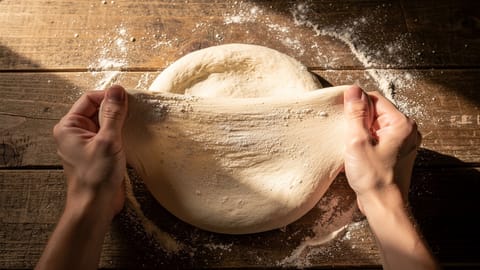
Beginner Pizza Dough
Your first homemade pizza dough, from scratch. A simple same-day recipe with 4 ingredients, plus everything you need to know about mixing, kneading, and shaping.
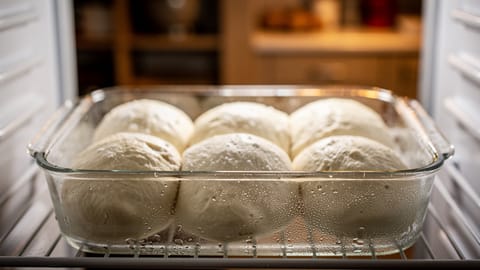
Cold Fermentation Pizza Dough Guide
Slow-rise your dough in the fridge for 24, 48, or 72 hours. The longer it sits, the more complex the flavor gets. Most home bakers hit the sweet spot at 48 hours with 0.1% fresh yeast.
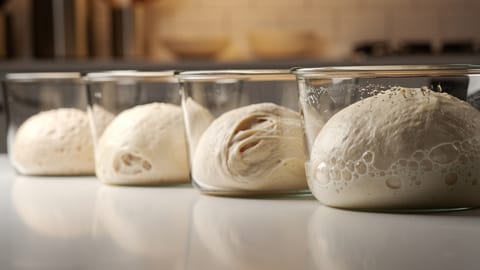
Pizza Dough Fermentation: Room Temperature vs Cold Fermentation
Room temp vs. fridge, 4 hours vs. 72 hours, and how to tell when your dough is actually ready. The time-temperature relationship is the single biggest lever for better-tasting pizza.
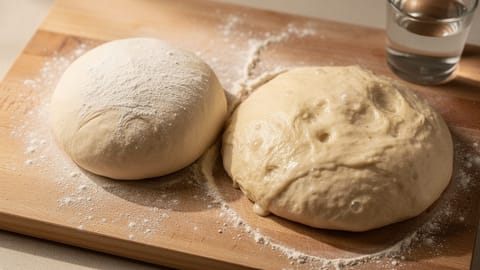
Pizza dough hydration: complete guide to water ratios
How the water-to-flour ratio shapes your crust. 60% gives you a stiff, easy-to-handle dough; 75%+ gives you open, airy crumb but requires more technique. Includes baker's percentages by style, a decision framework, bassinage technique, and fermentation interaction.

Pizza Dough Troubleshooting: Common Problems & Fixes
Dough too sticky? Won't stretch? Bland crust? Tearing during shaping? This guide covers the most common headaches and what's actually going wrong, with quick fixes you can try right now.
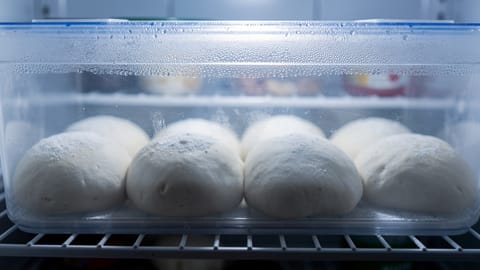
Cold Fermentation
A technique of retarding dough in the refrigerator (2-5°C) for 24-72 hours, slowing yeast activity while allowing enzymes to develop deeper flavors and better texture.

Fermentation
A metabolic process where microorganisms convert sugars into acids, gases, or alcohol — the basis of bread, yogurt, kimchi, and beer.