 Bastien
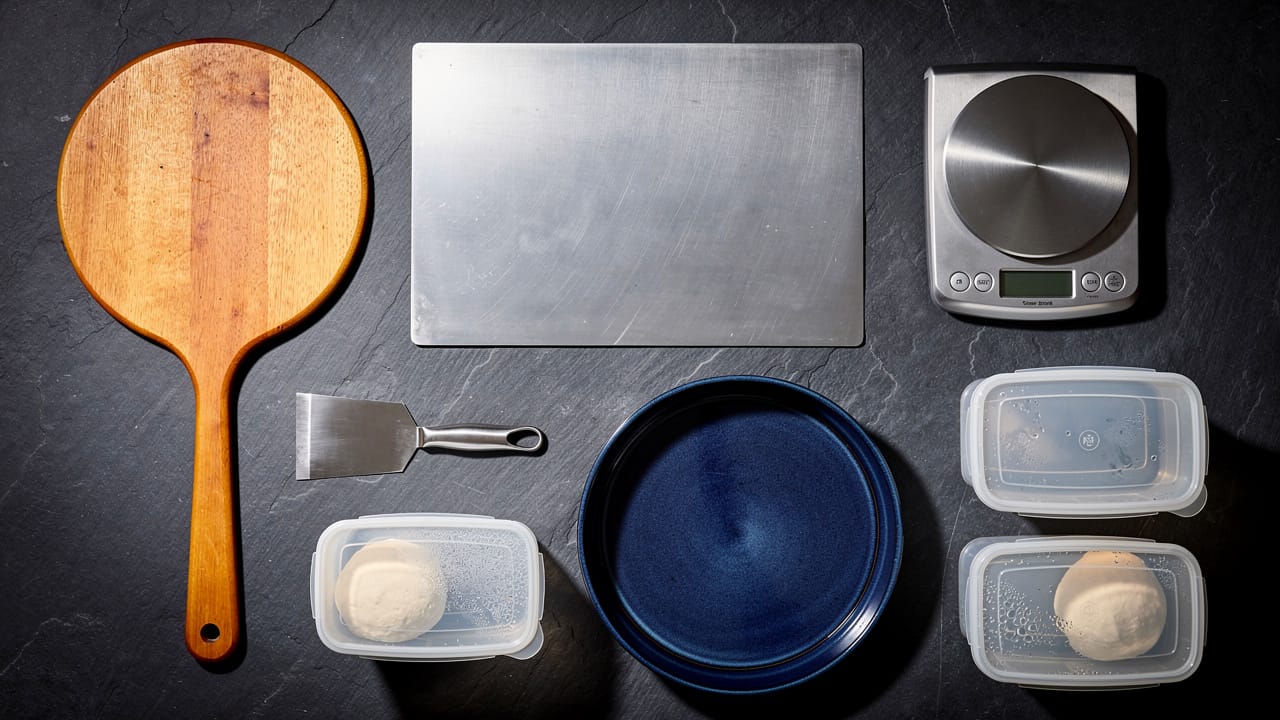
Essential Pizza Equipment: What You Actually Need
Stop wasting money on gadgets. A baking steel, a digital scale, and an infrared thermometer are the upgrades that actually matter. Everything else is a bonus.
TL;DR: The pizza steel vs pizza stone debate has a clear winner for home ovens: steel. It conducts heat roughly 18x faster than ceramic, won't crack, and gives you a crispier bottom in less time. Pair it with a digital scale and an infrared thermometer, and you have the three upgrades that genuinely transform your pizza.
Pizza steel vs pizza stone: which is better?
The surface you bake on is the single most important variable in your kitchen. Both pizza stones and pizza steels store heat, but they perform very differently — and the reason comes down to physics.
Steel has roughly 18 times the thermal conductivity of ceramic. That means when your raw dough hits a preheated steel, energy transfers into the crust dramatically faster than with stone. The result: better oven spring, crispier bottom, and those charred spots that make pizza look (and taste) like it came from a professional oven. This isn't marketing — it's a measurable property of the material. Steel's thermal conductivity is approximately 50 W/m·K versus 2–3 W/m·K for cordierite ceramic.
I burned through two pizza stones before switching to steel. The first cracked after six months when I splashed water near it during a bake. The second survived a year, then split clean in half during a preheat cycle. The day I switched to steel, my only regret was not doing it sooner.
Pizza steels are the better choice for home pizza. You get better oven spring, a crispier bottom, and the steel won't crack if you accidentally splash water on it.
Pizza stones are the classic choice and still work well for bread and general baking. They're lighter and cheaper, but fragile: thermal shock from temperature changes or water splashes will crack them eventually.
The verdict: If you're buying one surface specifically for pizza, get a steel. If you already own a stone and it works for you, there's no rush to replace it: but when it eventually cracks (and it will), upgrade to steel.
Tip: Whichever you choose, preheat it for at least 45–60 minutes at your oven's absolute maximum temperature. Your oven might say it's ready after 15 minutes, but the stone or steel is still cold in the middle. Use the pizza dough calculator to dial in your dough, then let the surface do the rest.
The infrared thermometer: stop guessing your surface temp
Here's a lesson I learned the hard way: your oven's built-in thermometer measures air temperature, not surface temperature. These are two completely different numbers.
My oven said 550°F. I launched a pizza. The bottom came out pale and soft: barely any browning at all. I bought a $20 infrared thermometer, pointed it at the steel, and it read 430°F. The air was hot. The steel wasn't.
An infrared thermometer (also called a laser thermometer) lets you point and shoot at your baking surface to get an instant reading. For pizza, you want the surface at 500–550°F before launching. Some styles push higher. Neapolitan ideally wants 700°F+, which is why dedicated pizza ovens exist.
The $20 infrared thermometer is probably the highest ROI purchase on this list after the steel itself. It eliminates guesswork and teaches you how your specific oven behaves: because every oven has hot spots and cold spots that you can only discover by measuring.
The "double surface" trick
If you want professional results in a home oven, try the two-surface setup. Place one stone/steel on the bottom rack and another on the top rack (about 4–5 inches below the broiler).
- The bottom surface chars the crust from below.
- The top surface reflects radiant heat back down, melting the cheese and blistering the top of the dough.
- This creates a "heat chamber" that mimics a real 900°F pizza oven.
The difference is dramatic. Without the top surface, your cheese melts but doesn't brown. With it, you get the same blistered, caramelized top that professional ovens produce.
The digital scale: essential pizza equipment
If you're still using cups and spoons, you're playing a guessing game. A cup of flour can weigh anywhere from 120g to 160g depending on how tightly you pack it. That's a 33% variance: enough to turn a perfect 62% hydration dough into either a sticky mess or a stiff, dry ball. A kitchen scale eliminates this guesswork entirely.
Understanding baker's percentages is what unlocks real consistency in pizza making: and percentages only work when you weigh your ingredients.
You need two types of scales:
- Main kitchen scale: For flour and water. Look for at least 1g resolution; 0.1g is better. Needs to handle up to 3–5 kg for larger batches.
- Jewelry/pocket scale: For yeast and salt. You need 0.01g resolution here. When a recipe calls for 0.5g of instant yeast for a cold-fermented dough, a standard kitchen scale can't tell the difference between "a little" and "way too much." That 0.5g vs 1.5g difference completely changes your fermentation timeline.
Use the pizza dough calculator to get exact weights for your batch size.
Dough containers and proofing boxes
Fermentation doesn't happen in thin air: you need proper containers. This is one of those things that seems minor until you've scraped dried-out dough from a poorly covered bowl at 2 AM.
For bulk fermentation:
- Clear plastic tubs (2–4 quart Cambro-style containers) are ideal. The straight sides and clear walls let you monitor volume increase without opening the lid. Mark the starting level with a rubber band.
- Lightly oiled: a thin coat of olive oil inside prevents the dough from sticking and makes it easy to fold during bulk ferment.
For individual dough balls:
- Dedicated proofing boxes with lids (the stackable kind) are the professional standard. Each ball gets its own compartment, and the sealed lid prevents skinning.
- Round deli containers (16–32 oz) work just as well for home use. Oil the inside lightly, place one ball per container, and snap the lid on. They stack in the fridge and cost almost nothing.
The key is airtight coverage. Dough that dries out on the surface forms a skin that won't stretch properly: it tears instead of extending, and you end up with holes in your pizza base. If you don't have lids, a damp towel pressed close to the dough works in a pinch, but dedicated containers are a worthwhile investment.
Pizza peels: wooden for launch, metal for retrieval
You shouldn't use the same tool for everything.
- Wooden peels: Use these for building and launching. Raw dough is less likely to stick to wood than to metal. Dust it with a little semolina (not flour) before you put the dough on.
- Metal peels: These are thin and sleek. Use them to rotate the pizza mid-bake and to pull it out. Don't try to build a pizza on a metal peel: it will stick before you even reach for the sauce.
My first pizza stuck to a metal peel and ended up folded in half on the steel. Cheese everywhere, sauce dripping between the grates, smoke alarm going off. That was the day I learned the difference between a launching peel and a turning peel.
Tip: If you're nervous about the "launch," try a perforated metal peel. The holes let excess flour fall through so it doesn't burn on your stone and make your kitchen smoky. Give the peel a quick shake before you commit: if the pizza slides freely, you're good. If it doesn't, lift the edge and blow air underneath or add more semolina.
Pizza screens: the crispier alternative
Pizza screens: those flat mesh discs made of aluminum: sit between the dough and the baking surface. They're not traditional, but they solve a real problem: if you struggle with launching directly onto a steel or stone, a screen lets you build the pizza on the mesh and simply place the whole thing in the oven.
The mesh allows hot air to circulate under the crust, which gives you a crisper bottom than a solid pan. They're especially useful for:
- Beginners who haven't mastered the peel launch yet
- Thin-crust styles where you want maximum crispness
- Batch baking: you can prep multiple pizzas on screens in advance
The tradeoff: you won't get the same charred leopard spots as direct steel/stone contact. But for bar-style thin crust or when you're feeding a crowd, screens are pragmatic.
Pizza pans: only black steel matters
For Detroit, Sicilian, or pan pizza, ignore stainless steel and aluminum. You want seasoned black steel. It conducts heat aggressively and develops a non-stick patina over time: similar to cast iron but thinner and more responsive.
- Detroit style: Look for the classic 8.5" x 12.5" blue or black steel pans. Lloyd Pans is the industry standard.
- Seasoning: Treat them like cast iron. Wipe them with a thin layer of oil and bake at 500°F for an hour before your first use. Repeat 2–3 times for a solid base layer. Never wash them with soap if you can help it: just wipe them clean with a dry cloth or paper towel.
Mixing pizza dough: hands vs. machines
- Hand mixing: I actually recommend this for beginners. It helps you "feel" the dough and understand how gluten develops. You learn to recognize when the dough goes from shaggy to smooth to elastic: that tactile feedback is how you build intuition.
- Stand mixers: Great for large batches (4+ dough balls), but keep it on the lowest speed. High speeds generate friction heat that can accidentally warm your dough past its ideal fermentation temperature. If the dough feels warm after mixing, you went too fast or too long.
- Food processors: Avoid them. They spin way too fast and can destroy the gluten structure in seconds. What took 10 minutes of careful kneading gets shredded in 15 seconds of high-speed blading.
The rocker blade: the finishing pizza tool
Forget the little wheel cutters. A rocker blade (mezzaluna) is faster, cleaner, and won't drag your toppings across the pizza. One decisive "crunch" and you're done. The curved blade also makes it easy to cut into squares for Detroit or Sicilian style: something a wheel cutter handles poorly.
A bench scraper doubles as a portioning tool for dough and a cleanup tool for your work surface. It's not glamorous, but you'll reach for it constantly.
| Equipment | Priority | Why |
|---|---|---|
| Baking Steel | Essential | Better heat transfer = better crust. The single biggest upgrade. |
| Digital Scale (0.1g) | Essential | Consistency is everything in baking. Cups and spoons won't cut it. |
| Infrared Thermometer | Essential | Know your actual surface temp. $20 that saves every bake. |
| Wooden Peel | High | Prevents the stuck-pizza nightmare. Use semolina, not flour. |
| Pocket Scale (0.01g) | High | Yeast precision for cold fermentation. Worth every penny. |
| Proofing Containers | High | Airtight = no skin on dough balls. Deli containers work fine. |
| Metal Peel | Medium | Thin enough to slide under for turning and retrieval. |
| Bench Scraper | Medium | Makes portioning and cleanup 10x easier. |
| Black Steel Pan | Medium | Required for Detroit/Sicilian. Season like cast iron. |
| Pizza Screen | Low | Great for beginners or batch baking. Less char than direct contact. |
| Rocker Blade | Low | Clean cuts, no dragging. Makes you look like a pro. |
Frequently Asked Questions
No. A pizza steel preheated for 45–60 minutes in a standard home oven at max temperature (500–550°F) produces excellent results for New York, Detroit, and pan styles. For true Neapolitan with leopard-spotted char, a dedicated pizza oven (Ooni, Gozney) that hits 800–900°F is the only way, but most styles work beautifully in a regular oven with the right surface.
Pizza steel wins for home pizza baking. Steel conducts heat roughly 18 times faster than ceramic, giving you a crispier bottom crust in less time. It also recovers heat between pizzas in 2–3 minutes versus 8–10 for stone, and it's virtually indestructible. The only advantage of stone is price — $25–50 vs $70–120 for steel. If you bake pizza regularly, the steel pays for itself in durability alone.
For home ovens, a 12-inch wooden peel for launching and a 10-inch metal peel for turning and retrieving is the ideal combination. The wooden peel should be slightly larger than your stretched dough so you have room to work. The metal peel should be thinner — you want to slide it under the pizza without lifting the crust.
You can, but the results won't compare. A standard aluminum baking sheet is too thin to store meaningful heat — the dough absorbs it all instantly and you get a pale, soft bottom. If a steel isn't in your budget yet, flip a heavy cast-iron pan upside down, preheat it for 45 minutes, and use that. It's not as large, but the thermal mass is similar.
Most pizza steels come pre-seasoned, but you can maintain and improve the seasoning the same way you would cast iron: apply a thin layer of flaxseed or vegetable oil, then bake at 500°F for an hour. Repeat 2–3 times for a solid non-stick surface. Between uses, wipe clean — don't wash with soap. If you see rust spots, scrub with steel wool, re-oil, and re-season.
For Neapolitan and New York styles, your steel surface should reach 500–550°F before you launch. An infrared thermometer is the only reliable way to verify this — your oven's built-in thermometer measures air temperature, not surface temperature. Preheat at maximum oven temp for 45–60 minutes. The steel takes much longer than the air to reach full temperature.
You need two scales: a kitchen scale with 1g or 0.1g resolution for flour and water, and a pocket/jewelry scale with 0.01g resolution for yeast and salt. When you're using 0.5g of yeast for a cold-fermented dough, a standard kitchen scale can't distinguish between 0.3g and 0.7g — that's a 133% difference that completely changes your fermentation timing.
No. Hand mixing works perfectly and is actually recommended for beginners because you learn to feel how gluten develops. A stand mixer saves time on large batches (4+ dough balls), but keep it on the lowest speed — high speeds generate friction heat that can warm the dough past its ideal fermentation temperature. A food processor is not a substitute; it spins too fast and destroys gluten structure.
Use a wooden peel for launching (raw dough sticks less to wood than metal) and dust it with semolina, not flour. Semolina acts like ball bearings under the dough. Build your pizza quickly — the longer it sits on the peel, the more moisture seeps through and creates adhesion. Give the peel a quick shake before launching to confirm the pizza slides freely. If it's stuck, lift the edge and blow air underneath or add more semolina.
At bare minimum: a digital kitchen scale (for consistent dough), a baking surface with thermal mass (pizza steel, cast iron pan flipped upside down, or even unglazed quarry tiles), and something flat to launch with (a rimless baking sheet works in a pinch). Everything else improves the experience but isn't strictly required. Add a wooden peel and infrared thermometer next.
Sources
Cook smarter
Join the waitlist for Fond. Recipes, meal plans, and a little AI sous-chef that learns how you cook.
Related guides
Beginner Pizza Dough
Your first homemade pizza dough, from scratch. A simple same-day recipe with 4 ingredients, plus everything you need to know about mixing, kneading, and shaping.
Detroit-Style Pizza Dough
Rectangular pan pizza with a shatteringly crispy caramelized cheese edge and an open, focaccia-like crumb. 70% hydration dough, Wisconsin brick cheese, and cold sauce stripes applied after baking.
Neapolitan Pizza Dough
Neapolitan dough the way Naples does it: 00 flour, 60-62% hydration, long fermentation, and extreme heat. This guide follows AVPN standards and adapts them for home ovens, including flour brands, fermentation schedules, and a full troubleshooting section.
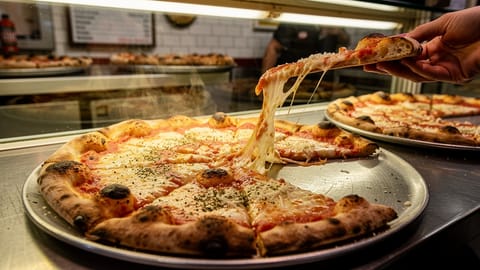
New York Style Pizza Dough
Big, foldable slices with a crispy bottom and chewy bite. NY-style dough uses high-gluten flour, a touch of oil and sugar, and a 48-hour cold ferment for that classic slice-shop flavor.
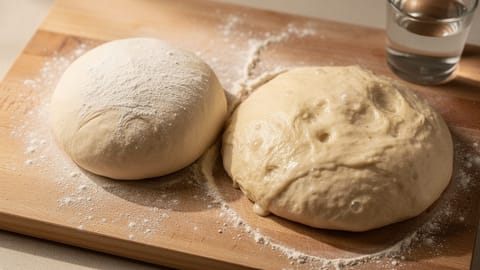
Pizza dough hydration: complete guide to water ratios
How the water-to-flour ratio shapes your crust. 60% gives you a stiff, easy-to-handle dough; 75%+ gives you open, airy crumb but requires more technique. Includes baker's percentages by style, a decision framework, bassinage technique, and fermentation interaction.
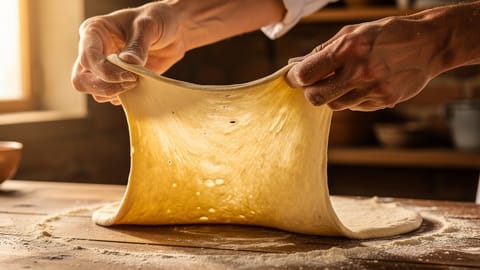
Pizza Dough Troubleshooting: Common Problems & Fixes
Dough too sticky? Won't stretch? Bland crust? Tearing during shaping? This guide covers the most common headaches and what's actually going wrong, with quick fixes you can try right now.
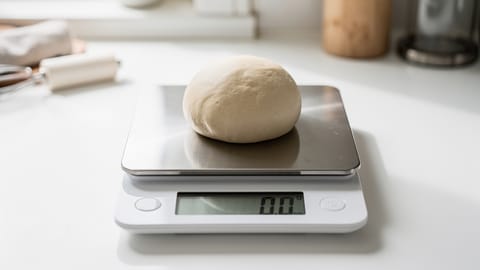
Kitchen Scale
A digital scale for measuring ingredients by weight — far more accurate than cups and spoons, especially in baking.