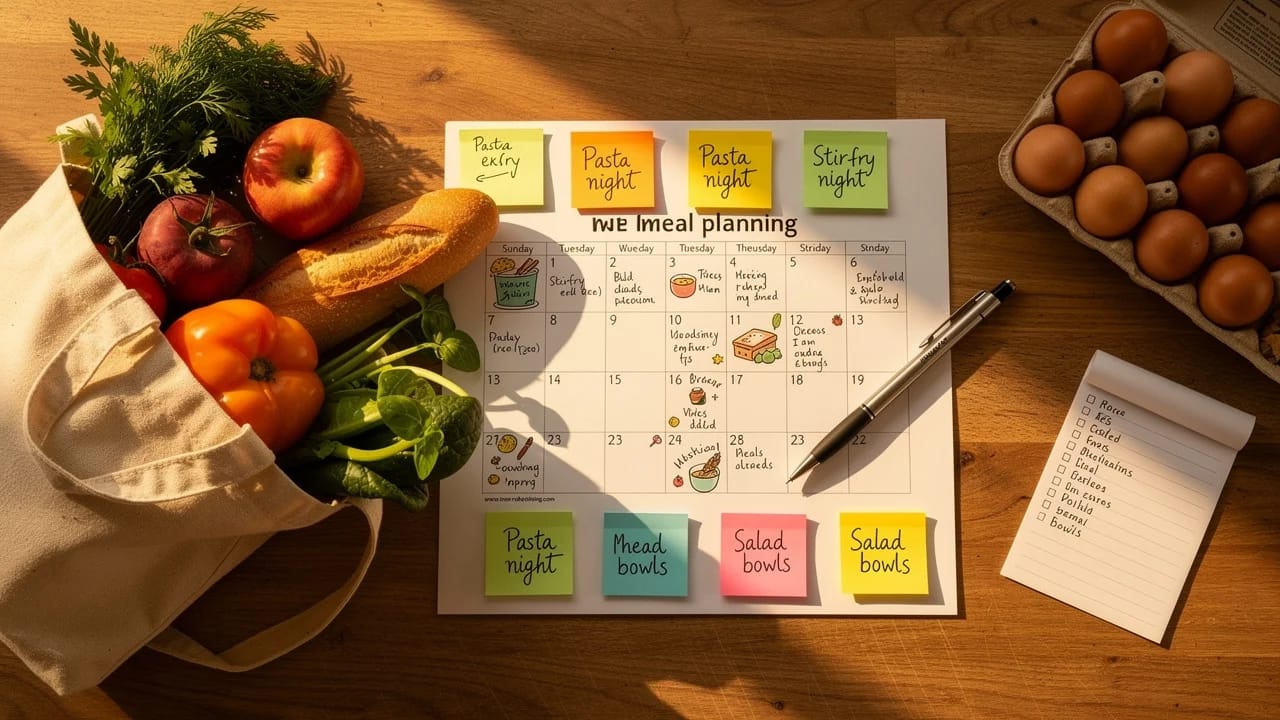
 Bastien
Weekly meal planning for beginners: a practical guide to getting started
A no-nonsense starter guide to weekly meal planning. Covers why it works, how to begin with just a few meals, building a shopping list, common beginner mistakes, and the tools that actually help.
You know you should meal plan. Everyone says it saves money, reduces stress, and cuts food waste. But every time you've tried, it lasted about a week before you were back to staring into the fridge at 6 PM, ordering takeout.
The problem isn't willpower. It's that most meal planning advice is designed for people who already cook regularly and just need to organize it. If you're starting from scratch, that advice skips the hard part.
This guide is for actual beginners. Not "I cook every night but want to be more organized" beginners — more like "I eat out four times a week and want to change that" beginners.
Why meal planning is worth the effort
Before getting into how, it helps to understand why meal planning works so well. Three concrete reasons:
You spend less money. The average household wastes about 30% of the food it buys. That's roughly $1,500 per year thrown in the garbage. When you plan meals before shopping, you buy what you need and use what you buy. Impulse purchases — that interesting cheese, the pre-made salad you'll forget about — drop dramatically.
You eat better. When dinner is a last-minute decision, it defaults to whatever is fastest: takeout, frozen pizza, cereal. With a plan, the healthy meal is also the easy meal because the ingredients are already prepped and waiting. You don't need more discipline, just fewer decisions.
You reclaim mental energy. "What's for dinner?" is a question that burns a surprising amount of daily bandwidth. Deciding once per week instead of once per day frees up that mental space. Parents especially notice this — meal planning removes a recurring source of household friction.
Step 1: Audit what you actually eat
Before planning anything, spend one week just observing. Write down every dinner you eat — whether it's homemade, takeout, frozen, or cereal over the sink. No judgment, just data.
After a week, you'll see patterns:
- How many nights you actually cook versus order in
- What meals you default to when you do cook
- Which nights are hardest (usually Tuesday and Wednesday, when weekend leftovers are gone)
This audit tells you where to start. If you currently cook twice a week, don't plan seven home-cooked dinners. Plan three. That's a 50% improvement with minimal friction.
Step 2: Start with 3-4 meals, not 7
The biggest beginner mistake is planning a full week of unique dinners from day one. That's overwhelming, and it fails fast.
Pick 3-4 meals you already know how to make. Not aspirational recipes from a food blog — actual meals you've cooked before and your household will eat. Pasta with marinara counts. Scrambled eggs and toast counts. Tacos from a kit count.
Write them down. That's your first meal plan.
For the other nights, leave them open. Leftovers, takeout, or whatever happens. You're not trying to fill every slot — you're building a habit of planning some meals before the week starts.
A realistic beginner week might look like:
| Day | Plan |
|---|---|
| Monday | Pasta with sauce (30 min) |
| Tuesday | Leftovers from Monday |
| Wednesday | Chicken stir-fry (25 min) |
| Thursday | Takeout or eat out |
| Friday | Tacos (20 min) |
| Saturday | Open |
| Sunday | Open |
Three cooking sessions. Two nights covered by leftovers or takeout. Two nights completely open. That's manageable.
Step 3: Build a shopping list from your plan
Once you have your 3-4 meals picked, write down every ingredient you need. Then cross off what's already in your kitchen. What's left is your shopping list.
This sounds obvious, but it's where the real savings happen. Without a list tied to specific meals, grocery shopping becomes a guessing game. You buy "some chicken" without knowing how much you need. You grab vegetables that seem healthy but don't connect to any actual meal. Half of it goes bad.
A meal-connected shopping list means:
- No forgotten ingredients. You won't get home and realize you don't have garlic.
- No overbuying. If two recipes need onions, you buy the right number, not a whole bag.
- One trip. Everything for the week, purchased once. No emergency runs to the store Wednesday night.
If you use a recipe app like Fond, this step is automatic — drop recipes into the planner and it generates a consolidated list with combined quantities. For more on making every trip count, check out our grocery shopping tips. But a handwritten list works too. The method matters less than doing it.
Step 4: Pick a planning day and protect it
Meal planning only works as a weekly habit. Pick one day — most people choose Sunday — and spend 15-20 minutes on it. Same time each week.
Here's what that 15-minute session looks like:
- Open the fridge and pantry. What needs to be used up?
- Check the calendar. Any nights with events, late meetings, or dinners out?
- Pick 3-4 meals from your go-to list for the open nights
- Write the shopping list
- Go shopping (or order groceries for delivery)
That's it. No Pinterest boards, no color-coded spreadsheets, no matching lunches. Five steps, fifteen minutes, done for the week.
The key word is "protect." Treat this like an appointment. If you skip it, the whole week falls apart and you're back to daily improvisation. After 3-4 weeks, it becomes automatic — like brushing your teeth.
Step 5: Cook and adapt
Your plan will not survive the week perfectly. That's fine. The point of a meal plan isn't rigid execution — it's having options.
Planned stir-fry on Wednesday but you're exhausted? Swap it with Friday's easier meal. Got unexpected leftovers from lunch? Skip tonight's cooking and shift everything forward. A friend invites you to dinner Thursday? Great, cook Thursday's planned meal on Sunday instead and freeze it.
The ingredients are in the house. Any planned meal can happen any night. That flexibility is what makes meal planning sustainable instead of stressful.
One rule worth keeping: if a fresh ingredient will go bad, prioritize the meal that uses it. Chicken that expires Wednesday shouldn't sit until Friday's plan.
Common beginner mistakes
Planning too many new recipes at once. Stick to meals you know for the first month. New recipes take longer, require more ingredients, and might not turn out well. Add one new recipe per week, max.
Ignoring leftovers. Leftovers aren't a failure — they're strategy. If you cook a big batch of chili on Tuesday, Wednesday's dinner is already done. Plan for this. Build meal prep into your week intentionally rather than treating leftovers as an afterthought.
Making the shopping list too complicated. Your first lists should be simple. Don't try to optimize by store aisle or categorize by food group. Just write down what you need. Optimization comes later when the habit is solid.
Planning without checking the fridge first. Always look at what you have before deciding what to cook. That half-used bag of spinach should drive Monday's plan, not get thrown out because you planned something else.
Being too rigid. If your family doesn't want the planned meal, make something else. A meal plan that creates conflict at the dinner table is worse than no plan at all. Keep 1-2 "emergency" meals in your back pocket — simple things you can always make with pantry staples.
Tools for meal planning
There's no shortage of ways to organize a meal plan. Here's an honest comparison:
Paper and whiteboard. A sheet of paper on the fridge with days and meals written in. Zero learning curve, no technology required. The downside: no automatic shopping list, no recipe storage, and you start from scratch every week. Good for the first few weeks to build the habit.
Spreadsheets. Google Sheets or Excel with a weekly grid. Slightly more structured than paper, easy to copy last week's plan and modify it. Still no connection between recipes and shopping lists. Works if you're already comfortable with spreadsheets.
Dedicated apps. Tools built specifically for meal planning, like Fond. The main advantage is integration: your saved recipes connect to a weekly calendar, and the calendar generates a shopping list automatically. Recipe scaling adjusts quantities when you're cooking for more or fewer people. Shared access means everyone in the household sees the plan.
The right choice depends on where you are. If you're just starting, paper is fine. If you already have recipes saved digitally and want to save time on shopping lists, an app pays for itself quickly. The tool should serve the habit, not the other way around.
How Fond fits in
Fond is a recipe manager with a built-in meal planner. You save recipes from websites or type your own, organize them into collections, then drag them onto a weekly calendar.
The practical benefit for beginners: once your go-to meals are saved, weekly planning takes about 5 minutes. Pick recipes, drop them on days, and the app generates a combined shopping list. No manual ingredient tracking, no forgotten items.
It also handles the "what should I cook?" problem. Filter your recipes by time, ingredients, or tags. If you've tagged quick weeknight meals, pulling up options for a busy Tuesday takes seconds.
But again — the app is a tool. The habit is what matters. If paper and pen get you planning meals consistently, that's a win.
Building up over time
After a month of planning 3-4 meals per week, you'll notice a few things:
- Your grocery bill dropped. Probably by 20-25%.
- You're throwing away less food.
- The "what's for dinner" stress is gone on planned nights.
- You have a mental library of 10-15 go-to meals.
That's when you can expand. Add a fifth planned meal. Start incorporating one new recipe per week. Try batch-cooking a big recipe on Sunday and using leftovers for two weeknight dinners. Experiment with a weekly template — Meatless Monday, Taco Tuesday, whatever structure appeals to you.
The progression looks like this:
- Weeks 1-2: Plan 3 dinners, shop once
- Weeks 3-4: Plan 4-5 dinners, build a go-to recipe list
- Month 2: Add one new recipe per week, start using leftovers strategically
- Month 3+: Full week planned, batch cooking, maybe planning lunches too
Nobody goes from zero to meal-prep-influencer in a week. Give yourself permission to start small and build up. The families who stick with meal planning long-term are the ones who started with three meals on a Post-it note, not seven in a color-coded binder.
The bottom line
Meal planning isn't about being a better cook or a more organized person. It's about making one decision on Sunday so you don't have to make seven decisions during the week.
Start with three meals. Write a shopping list. Go shopping once. Cook, swap as needed, eat. That's the whole system. Everything else — apps, templates, batch cooking, recipe scaling — is optimization on top of that foundation.
The best week to start is this one.
Frequently asked questions
About 20-30 minutes when you're starting out, dropping to 10-15 minutes once you have a routine. Most of the early time goes into deciding what to cook. After a few weeks, you'll have a short list of go-to meals and the process speeds up significantly.
No. Start with dinners only — that's the meal that causes the most stress and waste. Breakfast and lunch tend to be simpler and more repetitive. Once dinner planning feels easy, you can expand if you want, but many people never need to.
Whatever day falls before your main grocery trip. Sunday works for most people, but if you shop on Wednesdays, plan on Tuesday night. The key is consistency — same day each week so it becomes automatic.
Meal planning actually saves money. Studies consistently show that planned shoppers spend 20-30% less on groceries because they avoid impulse buys and waste less food. Plan around affordable staples like beans, rice, eggs, and seasonal vegetables for the biggest savings.
Swap meals around. A good meal plan is flexible — if you planned stir-fry on Tuesday but get home late, swap it with Thursday's simpler meal. The ingredients are already in the house, so any planned meal is available any night.
Start with whatever you'll actually use. A notepad on the fridge works fine. If you want features like automatic shopping lists, recipe scaling, and a shared calendar, a dedicated app like Fond saves time. The habit matters more than the tool.
Cook smarter
Join the waitlist for Fond. Recipes, meal plans, and a little AI sous-chef that learns how you cook.
Related guides
Grocery shopping tips that actually save money
A practical guide to saving money on groceries through meal planning, smart list-building, the 6-to-1 shopping method, understanding store layout psychology, buying smarter (unit prices, store brands, frozen produce), strategic shopping timing, and reducing waste. Includes USDA spending benchmarks and FAQ.
How to import recipes from any website into a recipe app
A practical breakdown of every method for getting recipes off the web and into your kitchen: URL import, browser extensions, AI extraction, and manual entry. What works, what doesn't, and why it matters.
How to meal plan using your recipe collection (a system that sticks)
A realistic approach to weekly meal planning built around recipes you already have. Covers picking recipes, building a flexible weekly template, generating shopping lists, and avoiding the common traps that make people quit.
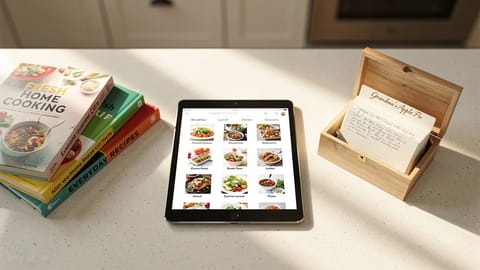
How to organize your recipes digitally (and actually find them again)
A practical system for getting your recipes out of screenshots, bookmarks, and kitchen drawers into one searchable place. Covers tagging, collections, and what to look for in a recipe organizer app.
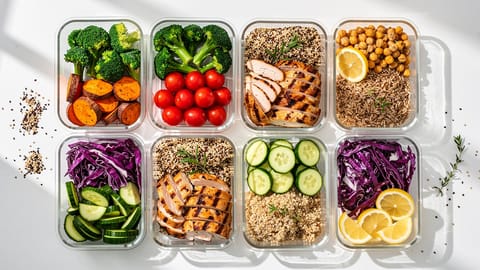
Meal Prep
Preparing meals or meal components in advance, typically for the week ahead, to save time and reduce daily cooking effort.
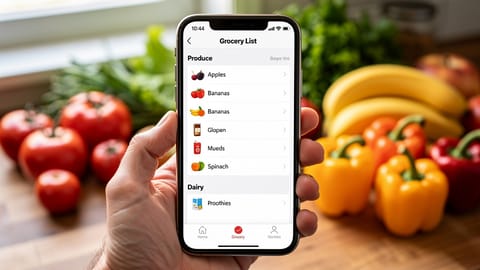
Smart Shopping List
An automatically generated grocery list that combines ingredients from multiple recipes, merges duplicates, and organizes by store aisle.
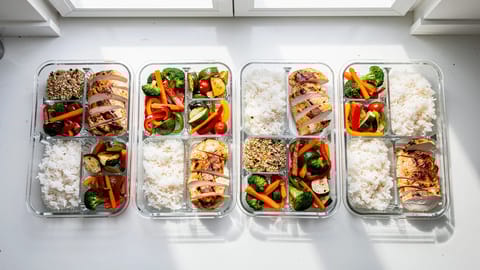
How to meal prep: a practical guide for beginners
Meal prep means dedicating about 2 hours on a Sunday to planning, cooking, and portioning complete meals for the week ahead. Unlike batch cooking, which produces versatile components you mix and match, meal prep gives you finished meals ready to grab and eat. This guide covers everything from equipment and shopping lists to a minute-by-minute prep day timeline and safe storage practices.
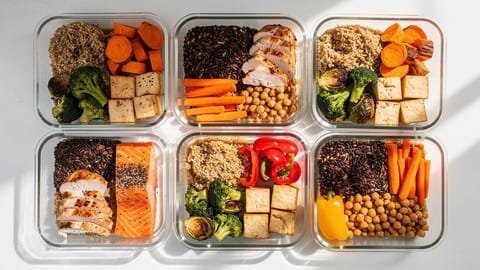
Batch cooking for beginners: how to cook once and eat all week
Batch cooking means dedicating a few hours to cooking large quantities of food that you portion and store for the week ahead. It's not the same as meal prep — instead of assembling complete meals, you cook versatile building blocks (grains, proteins, sauces, roasted vegetables) that mix and match into different dishes every night. This guide covers everything you need to start: planning, cooking, storing, and scaling.