 Bastien
Confit
Confit is a French cooking technique where food is slowly cooked in fat at low temperature, typically between 200-300°F (90-150°C). Originally a preservation method from southwest France, it works with duck legs, garlic, potatoes, tomatoes, and even egg yolks.
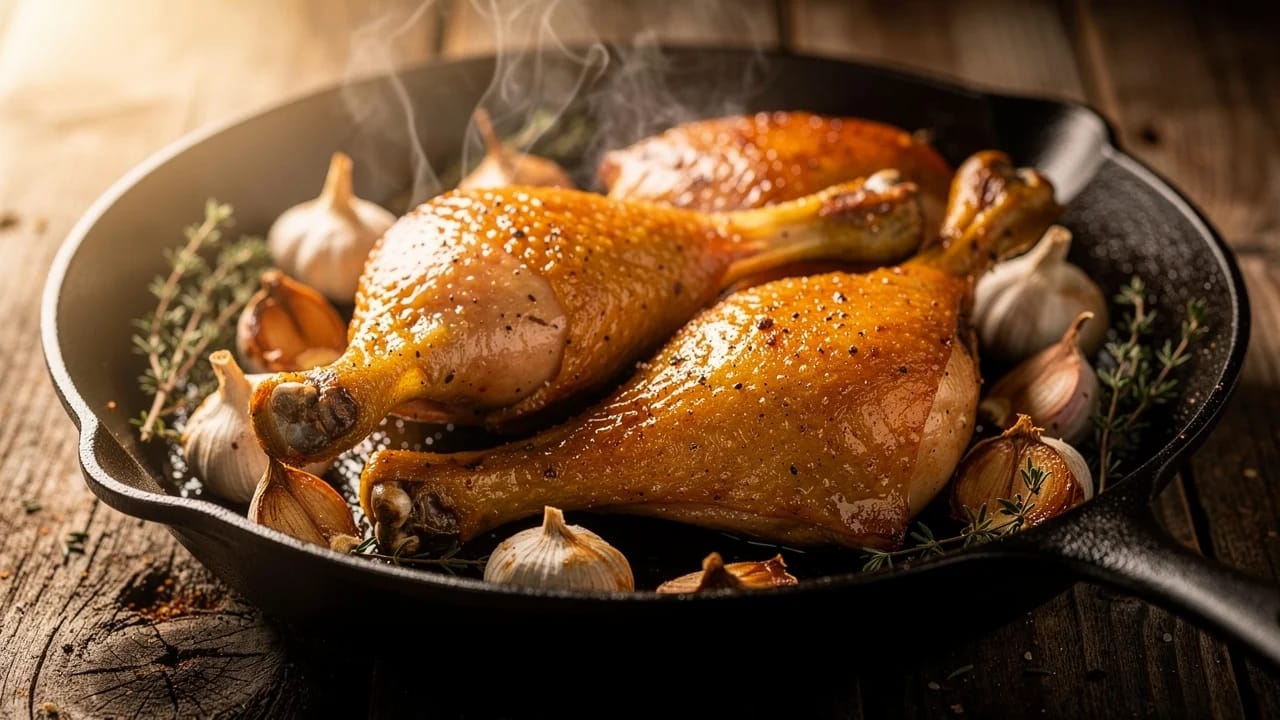
The first time I made duck confit, I expected some complicated multi-day French production. Instead, I rubbed two duck legs with salt and thyme, left them in the fridge overnight, then submerged them in duck fat and slid the pot into a 275°F / 135°C oven for three hours. When I pulled them out, the meat slid off the bone. The skin, crisped under the broiler for two minutes, shattered like glass. No searing, no sauce building, no multi-pot choreography. Just time, fat, and patience.
That is confit (pronounced "kon-FEE") in its purest form. The word comes from the French confire, meaning "to preserve." Before refrigeration, cooks in Gascony and the Dordogne region of southwest France discovered that slowly cooking meat in its own rendered fat, then storing it submerged in that fat, kept it edible for months. The fat sealed out air and bacteria. Today we confit because of the texture and flavor, not because we need to survive winter without a fridge.
TL;DR: Confit means slowly cooking food submerged in fat at low temperature (200-300°F / 90-150°C). It works for duck, garlic, potatoes, tomatoes, and more. The fat doesn't fry the food. It gently poaches it, producing tender, silky results impossible to achieve with other methods.
How confit works
Confit is not frying. The difference is temperature. Frying happens at 350-375°F / 175-190°C, hot enough to rapidly dehydrate the surface and create a crunchy crust. Confit happens at 200-300°F / 90-150°C, just hot enough to slowly break down connective tissue without drying anything out. The fat acts as a gentle, even heat conductor, similar to how water works in poaching, but at slightly higher temperatures and with fat-soluble flavor transfer.
The science is straightforward: at low temperatures, collagen in meat converts to gelatin over time, producing fall-apart tenderness without squeezing out moisture. For vegetables like garlic and tomatoes, the gentle heat softens cell walls and concentrates natural sugars while infusing the food with the flavor of the fat. The umami compounds in the rendered fat also transfer into the food during the long cook.
What you can confit
Confit is not just for duck. Almost anything benefits from a slow swim in warm fat.
Duck legs. The classic. Cure with kosher salt, garlic, and thyme for 24-48 hours. Rinse, dry, then cook submerged in duck fat at 275°F / 135°C for 2.5-3 hours. The meat should be completely tender but not falling apart on its own.
Chicken thighs. Same approach as duck, less curing time (12-24 hours). Cook at 250°F / 120°C for 2-2.5 hours in olive oil or schmaltz. A budget-friendly alternative that's just as good for shredding into salads or rillettes.
Pork belly. Cure overnight, cook submerged in lard at 250°F / 120°C for 3-4 hours. The result is impossibly tender and can be crisped in a pan for tacos or rice bowls.
Garlic. Peel whole cloves, cover with olive oil, and cook at 250°F / 120°C for 1.5-2 hours until golden and spreadably soft. The oil becomes garlic-infused gold for dressings, pasta, and bread.
Tomatoes. Halve cherry or Roma tomatoes, place cut-side up in a baking dish, cover with olive oil. Cook at 275°F / 135°C for 2-3 hours until collapsed and jammy. Concentrated sweetness that works on everything.
Potatoes. Peel and quarter, cook submerged in duck fat at 275°F / 135°C for 1.5-2 hours until knife-tender. Finish in a hot skillet for a crispy exterior and creamy interior. Better than any roasted potato.
Egg yolks. The modern chef trick. Place yolks in olive oil at 150°F / 65°C for 45-60 minutes. The result is a jammy, custard-like yolk perfect for topping grain bowls, ramen, or toast. Use a thermometer. Temperature control matters here.
Citrus (lemons, oranges). Slice thinly, cover with olive oil, cook at 225°F / 107°C for 2 hours. The rind becomes soft and mildly bitter, and it's great on fish or in salads.
Onions. Quarter, submerge in olive oil, cook at 250°F / 120°C for 2-3 hours until caramelized throughout. Deeper flavor than stovetop caramelization.
Choosing your fat
The fat isn't just a cooking medium. It's a seasoning.
| Fat | Best for | Flavor profile | Smoke point |
|---|---|---|---|
| Duck fat | Duck, chicken, potatoes | Rich, savory, meaty | 375°F / 190°C |
| Olive oil (EVOO) | Garlic, tomatoes, fish, vegetables | Fruity, peppery | 375°F / 190°C |
| Lard | Pork belly, sausages | Neutral, clean | 370°F / 188°C |
| Schmaltz (chicken fat) | Chicken, onions, potatoes | Savory, homey | 375°F / 190°C |
Tip: Save and reuse confit fat. After cooking, strain out solids and refrigerate. Duck fat used for confit can be reused 3-4 times, and it gets more flavorful each round. Store it in a glass jar in the fridge for up to 3 months.
Confit vs. similar techniques
Confit also differs from sous vide — both use low temperatures, but sous vide cooks in a sealed bag in water, while confit cooks directly in fat. Sous vide offers more precise temperature control; confit offers fat-infused flavor that vacuum sealing can't replicate.
Safety note: garlic confit and botulism
Raw garlic in oil creates an anaerobic (oxygen-free) environment where Clostridium botulinum spores can produce toxin. This is a real risk, not an overcautious warning. The FDA specifically flags garlic-in-oil mixtures.
To stay safe:
- Refrigerate garlic confit immediately after cooking. Never leave it at room temperature.
- Use within 2-3 weeks if refrigerated.
- Freeze for longer storage — garlic confit freezes beautifully for up to 3 months.
- Never store raw garlic in oil without cooking it first.
Warning: If your garlic confit smells off, is cloudy, or has bubbles forming in the jar, discard it immediately. Botulism toxin is odorless and tasteless. When in doubt, throw it out.
Getting the most from confit
I've confited everything from duck legs for a dinner party to three heads of garlic for a lazy Sunday batch of pasta sauce. The technique scales effortlessly: whether you're cooking for two or twelve, the process is identical. Just make sure everything stays submerged, keep the temperature low, and give it time. Confit rewards patience more than any other cooking method I know.
Sources
Cook smarter
Join the waitlist for Fond. Recipes, meal plans, and a little AI sous-chef that learns how you cook.
Related terms
Braising
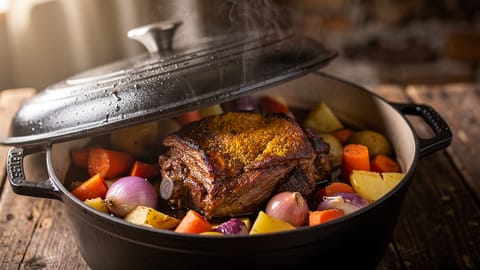
A slow-cooking method that sears food at high heat, then simmers it in liquid in a covered pot until tender.
Olive Oil
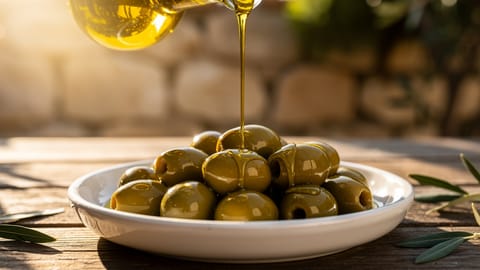
A versatile cooking fat pressed from olives, available in grades from extra virgin (best for finishing) to refined (best for high-heat cooking).
Poaching
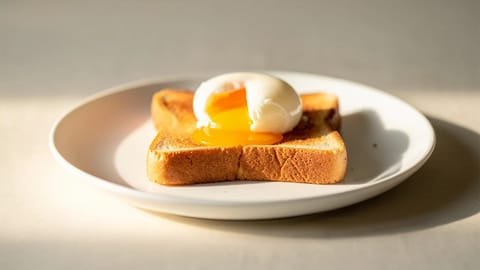
Gentle cooking technique using liquid at low temperatures (160-180°F) to preserve the delicate texture of eggs, fish, and poultry.
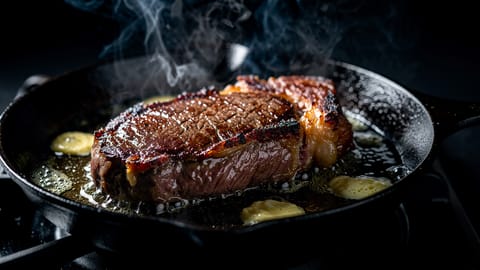
Searing
High-heat browning technique that creates a flavorful Maillard crust on meat, fish, or vegetables.
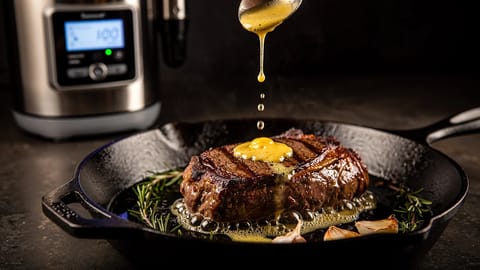
Sous Vide
A precision cooking method where food is vacuum-sealed and cooked in a temperature-controlled water bath for perfectly even results.