 Bastien
Poaching
Gentle cooking technique using liquid at low temperatures (160-180°F) to preserve the delicate texture of eggs, fish, and poultry.
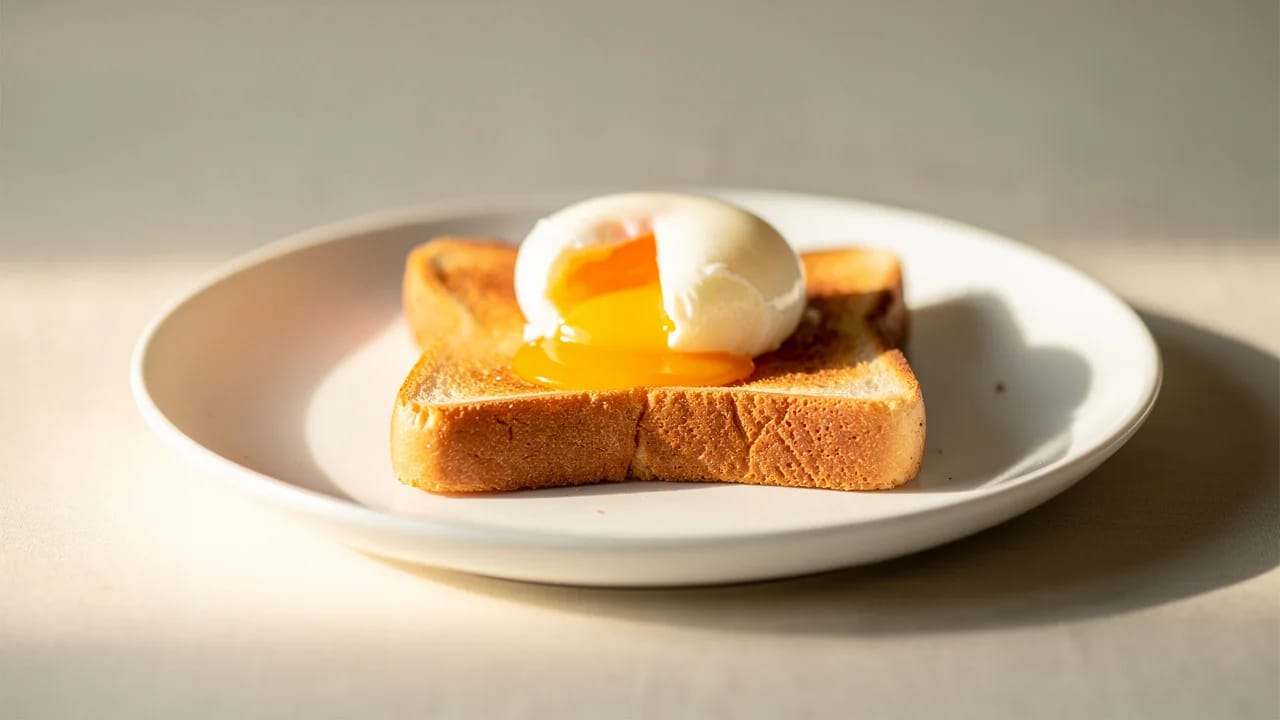
Poaching is a gentle cooking technique where food is submerged in liquid held at 160-180°F (70-82°C) — below the boiling point, with barely a shimmer on the surface. The low temperature preserves the delicate texture of proteins like eggs, fish, and chicken that would toughen or dry out under higher heat.
Poaching is one of the most underused techniques in home cooking. Where searing builds flavor through intense heat and the Maillard reaction, poaching builds tenderness through patience. The result is silky, moist food that lets the natural flavor of the ingredient come through.
Poaching temperatures
Temperature control is everything in poaching. Too hot and proteins seize up, becoming tough and rubbery. Too cool and food cooks unevenly or doesn't cook through. An instant-read thermometer takes the guesswork out.
| Temperature | Visual cue | What's happening |
|---|---|---|
| 140-150°F (60-65°C) | No movement | Sub-poaching / holding zone |
| 160-170°F (70-77°C) | Slight shimmer, steam rising | Ideal for eggs and delicate fish |
| 170-180°F (77-82°C) | Small bubbles forming on bottom | Ideal for chicken, firm fish |
| 180-190°F (82-88°C) | Gentle bubbles breaking surface | Too hot for most poaching — this is simmering |
| 212°F (100°C) | Rolling boil | Too aggressive — will toughen proteins |
The key visual: you want steam and a slight shimmer on the surface, but no bubbles breaking the surface. The moment you see active bubbling, the liquid is too hot for poaching.
Types of poaching
Deep poaching
Food is fully submerged in liquid. Used for poached eggs, whole chicken breasts, and fruit. The liquid surrounds the food completely, cooking it evenly from all sides. This is the most common form of poaching.
Shallow poaching
Food sits in liquid that covers it only halfway, with a lid trapping steam to cook the top. Used for fish fillets and chicken cutlets. The combination of liquid and steam cooking produces exceptionally moist results. After removing the food, the poaching liquid is often reduced into a sauce — a technique closely related to deglazing.
Butter poaching
Food is gently cooked in warm butter (or a butter-water emulsion) at very low temperatures. Used for lobster, shrimp, and delicate fish. The butter bastes the protein while cooking it, producing an incredibly rich, silky result.
How to poach eggs
Poached eggs are the technique most home cooks struggle with. These steps produce consistent results:
- Start with fresh eggs — the whites of fresh eggs cling tightly to the yolk. Old eggs have watery whites that disperse in the water. Check freshness by cracking into a small bowl first
- Heat water to 170-180°F (77-82°C) — use an instant-read thermometer until you learn the visual cue (gentle steam, no bubbles)
- Add vinegar — 1 tablespoon of white vinegar per quart (liter) of water. The acid helps the whites coagulate faster, preventing them from spreading
- Strain the egg first — crack the egg into a fine-mesh strainer and let the watery outer white drain away. This single step eliminates most wispy white problems
- Create a gentle vortex — stir the water to create a slow whirlpool, then lower the egg into the center. The swirling water wraps the white around the yolk
- Cook 3-4 minutes — 3 minutes for a very runny yolk, 4 minutes for a yolk that's set around the edges but still liquid in the center
- Remove with a slotted spoon — drain briefly on a paper towel. Trim any ragged edges with scissors if presentation matters
Poaching liquids
The liquid you poach in becomes a flavoring agent. Choose it based on what you're cooking:
| Liquid | Best for | Flavor contribution |
|---|---|---|
| Water + vinegar | Eggs | Clean, neutral |
| Court-bouillon | Fish, shellfish | Aromatic (herbs, peppercorns, bay leaf, wine) |
| Stock / broth | Chicken, dumplings | Savory depth |
| Milk / cream | Smoked fish, eggs | Silky texture, gentle flavor |
| White wine | Fish fillets | Acidity, complexity |
| Red wine | Pears, beef | Rich, tannic |
| Sugar syrup | Fruit (pears, peaches) | Sweet, aromatic |
| Olive oil | Fish, vegetables | Mediterranean richness |
Court-bouillon is the classic poaching liquid for fish: water simmered with onion, carrot, celery, peppercorns, bay leaf, parsley stems, and a splash of white wine or vinegar. Strain before using. You can make a batch and freeze it for future use.
Poaching chicken breast
Poaching is the best technique for chicken breast that will be shredded for salads, sandwiches, or soups. It produces juicy, tender meat without any browning.
- Place chicken breasts in a pot and cover with cold stock or salted water by 1 inch
- Add aromatics — bay leaf, peppercorns, thyme, garlic, half an onion
- Bring to 170-180°F (77-82°C) over medium heat
- Once at temperature, reduce heat to maintain the gentle shimmer
- Cook for 12-15 minutes for average-sized breasts
- Check with an instant-read thermometer — target 165°F (74°C) internal
- Rest 5 minutes before slicing or shredding — carryover cooking will bring the temperature up a few degrees
The poaching liquid becomes a light chicken stock you can use for soups or sauces.
Poaching fish
Fish is naturally delicate and benefits enormously from poaching. The gentle heat cooks it through without drying it out or breaking it apart.
- Salmon: 10-12 minutes at 170°F (77°C) for a 1-inch fillet. Target 125°F (52°C) internal for medium
- Halibut: 8-10 minutes. Firmer than salmon, handles slightly higher temperatures
- Cod: 8-10 minutes. Flakes easily — handle gently
- Sole/flounder: 5-7 minutes. Very thin fillets need less time
For shallow poaching: place fish in a buttered pan, add liquid halfway up the fillet, cover, and cook on the stovetop or in a 350°F (175°C) oven. The pan liquid becomes the base of a sauce.
Poaching vs other wet-heat methods
| Method | Temperature | Time | Best for |
|---|---|---|---|
| Poaching | 160-180°F (70-82°C) | Short-medium | Delicate proteins, fruit |
| Blanching | 212°F (100°C) + ice bath | Very short | Vegetables, peeling |
| Simmering | 185-205°F (85-96°C) | Medium-long | Soups, sauces, grains |
| Braising | 300-325°F (150-165°C) oven | Long | Tough cuts, root vegetables |
| Boiling | 212°F (100°C) | Varies | Pasta, potatoes, eggs |
The key distinction: poaching uses gentler heat than any other wet-heat method. Simmering has visible bubbles; poaching does not.
Common poaching mistakes
Temperature too high. The most common mistake. If you see bubbles actively breaking the surface, it's too hot. Reduce heat until the liquid barely shimmers. Boiling toughens proteins and breaks delicate foods apart.
Not using enough liquid. Food should be fully submerged (or halfway for shallow poaching). Exposed areas cook unevenly.
Skipping aromatics. Plain water produces bland results. Always add salt at minimum. Aromatics like herbs, peppercorns, and wine build flavor into the food as it cooks.
Moving food too much. Poached eggs, fish fillets, and dumplings are fragile. Let them cook undisturbed. Use a slotted spoon to remove gently.
Discarding the poaching liquid. The liquid absorbs flavor from the food and aromatics. Strain and use it as a base for sauce, soup, or stock.
Poaching in Fond
Fond's Cook Mode tracks poaching temperatures and times. When a recipe includes poaching, Fond prompts you to check the liquid temperature with an instant-read thermometer and sets timers for the cooking duration. For shallow poaching, Fond sequences the sauce reduction step after the protein is removed.
Frequently asked questions
What's the difference between poaching and simmering?
Temperature. Poaching happens at 160-180°F (70-82°C) with no visible bubbles. Simmering is 185-205°F (85-96°C) with small, steady bubbles. The difference matters for delicate proteins — simmering is too aggressive for eggs and most fish.
Can you poach in the oven?
Yes. Place food in an oven-safe dish, add liquid, cover with foil or a lid, and cook at 300-325°F (150-165°C). The oven's even heat maintains a steady poaching temperature better than most stovetops.
Do you need vinegar to poach eggs?
It helps but isn't strictly necessary. The acid speeds up protein coagulation, keeping the whites tighter. If you skip the vinegar, straining the egg through a fine-mesh sieve is even more important.
Can you reuse poaching liquid?
Yes, especially court-bouillon and stock-based liquids. Strain, cool, and refrigerate for up to 3 days or freeze for longer. Each use adds more flavor. Chicken poaching liquid is essentially a light stock.
Cook smarter
Join the waitlist for Fond. Recipes, meal plans, and a little AI sous-chef that learns how you cook.
Related terms
Blanching
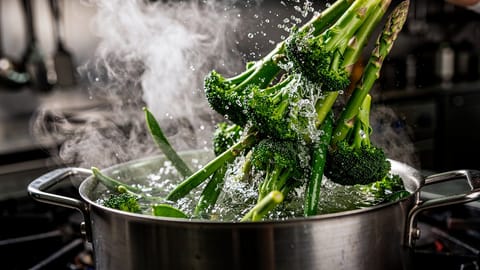
Briefly boiling food then plunging it into ice water to stop cooking — used to preserve color, texture, and nutrients.
Braising
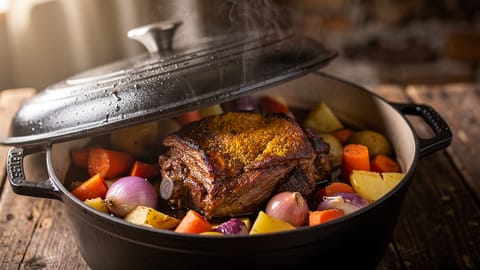
A slow-cooking method that sears food at high heat, then simmers it in liquid in a covered pot until tender.
Carryover Cooking
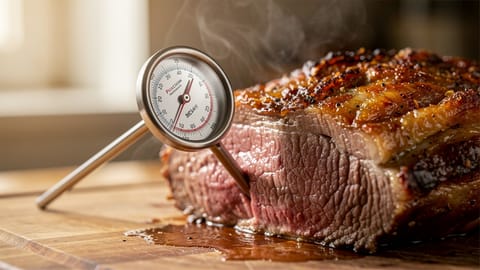
The phenomenon where food continues to cook after being removed from heat, as residual thermal energy from the exterior migrates to the cooler interior.
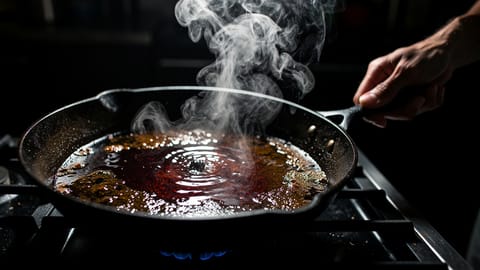
Deglazing
Adding liquid to a hot pan to dissolve the caramelized bits stuck to the bottom, creating a flavorful base for sauces.
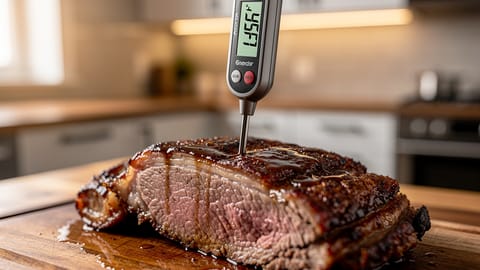
Instant-Read Thermometer
A kitchen thermometer that gives accurate temperature readings in seconds — the most reliable way to check doneness.
Stock vs. Broth
Stock is made from bones and connective tissue for body and richness; broth is made from meat for direct flavor. Both have different culinary uses.