 Bastien
Reduction
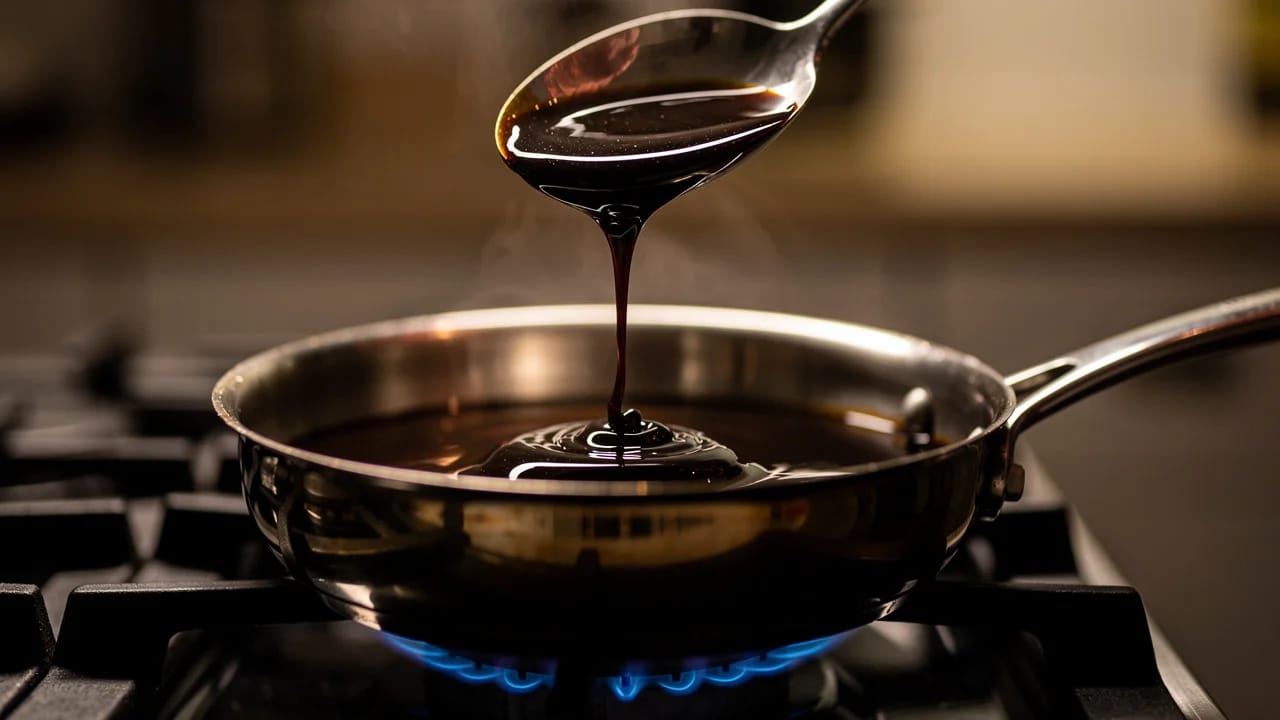
Simmering a liquid uncovered to evaporate water, concentrating its flavor and thickening its consistency into a sauce.
A reduction is one of the most fundamental techniques in sauce-making. You simmer a liquid — stock, wine, vinegar, pan drippings — uncovered over steady heat until a portion of the water evaporates. What stays behind is more concentrated in flavor, thicker in body, and more intensely seasoned than what you started with. No starch, no thickener, no additives. Just patience and evaporation.
If you have ever deglazed a pan with wine after searing meat and let it bubble down to a glossy sauce, you have already made a reduction. The technique appears across nearly every cuisine and sits at the heart of French classical cooking.
How reduction works
When a liquid simmers, water molecules escape as steam. Everything else — dissolved sugars, amino acids, gelatin from stock, acids from wine, aromatic compounds — stays in the pan. As the volume drops, the concentration of those flavor molecules rises.
Several things happen at once during a reduction:
- Flavor intensifies. A cup of chicken stock reduced to a quarter cup tastes four times as rich because the same amount of dissolved solids now occupies far less water.
- Body thickens. Gelatin from stock-based liquids becomes more concentrated, giving the sauce a silky, coating texture without any added starch.
- Sugars caramelize. As water leaves, the remaining sugars can reach temperatures high enough for light caramelization, especially at the edges of the pan where the liquid is thinnest. This adds depth and color.
- Alcohol cooks off. In wine or spirit reductions, most of the alcohol evaporates early. What remains are the acids, tannins, and fruit flavors that give the sauce complexity.
- Salt concentrates. This is the one to watch. If your starting liquid is already seasoned, reducing it will make it saltier. Always season after reducing, not before.
The technique step by step
Reducing a sauce is straightforward, but a few details make a real difference.
1. Choose a wide pan. More surface area means faster evaporation. A 30 cm skillet reduces liquid roughly twice as fast as a narrow saucepan. For pan sauces, stay in the same skillet you used for searing.
2. Bring to a simmer over medium heat. You want a steady, gentle bubble — not a rolling boil. High heat can scorch the sugars and proteins collecting at the bottom and edges of the pan, leaving bitter flavors.
3. Leave the lid off. Covering the pan traps steam and prevents evaporation. The whole point of reducing is letting that moisture escape.
4. Stir occasionally. This prevents fond from burning on the bottom and keeps the reduction even. For cream or butter-enriched sauces, stir more frequently.
5. Watch the volume. Before you start, note the liquid level. If a recipe says "reduce by half," you are looking for the liquid to drop to half its original depth. Some cooks mark the starting level on a wooden spoon handle.
6. Test for doneness. Dip a spoon into the sauce and run your finger across the back. If the line holds without the sauce running back together, it coats the spoon — a classic indicator that the reduction has enough body.
Common reductions
Pan sauce
The most everyday reduction. After searing meat or fish, remove the protein and deglaze the hot pan with wine or stock, scraping up the browned bits. Let the liquid reduce by about half — roughly 3 to 5 minutes for a single pan — then finish with a knob of cold butter swirled in off heat. The butter emulsifies into the reduced liquid, creating a glossy, full-bodied sauce. The whole process takes under 10 minutes. For a deeper walkthrough, see the pan sauce guide.
Balsamic reduction
Pour balsamic vinegar into a small saucepan and simmer over medium-low heat until it reduces by about half and turns syrupy — usually 15 to 20 minutes for one cup. The sharp acidity mellows significantly, and the natural sugars concentrate into a thick, sweet-tart glaze. Drizzle it over grilled vegetables, fresh strawberries, or a caprese salad. Watch it carefully toward the end; balsamic can go from syrupy to burnt in under a minute.
Wine reduction
Red or white wine simmered until it loses roughly two-thirds of its volume. The alcohol evaporates first, then the water. What remains is an intensely flavored base for sauces — concentrated fruit, acidity, and tannins without the booziness. Wine reductions are the backbone of many French sauces, from bordelaise (red wine, shallots, stock, marrow) to beurre blanc (white wine, shallots, butter). A red wine reduction takes about 10 to 15 minutes from one cup to a third of a cup.
Demi-glace and glace de viande
The most concentrated reductions in classical French cooking. Demi-glace starts with equal parts brown stock and espagnole sauce, reduced by half. Glace de viande goes further — stock reduced by 90% or more until it sets into a rubbery, intensely meaty gel when cooled. A teaspoon of glace de viande stirred into a simple pan sauce gives it the depth of a restaurant kitchen. These take hours, but keep for months in the freezer.
Reducing au sec
The French term au sec means "until dry." You reduce a liquid — often wine or vinegar with shallots — until nearly all the moisture has evaporated, leaving just a concentrated paste of flavor at the bottom of the pan. This is a common first step in beurre blanc and other emulsified butter sauces. The small amount of acid left behind helps stabilize the emulsion.
How to tell when a reduction is done
Recipes often say "reduce by half" or "reduce until it coats the back of a spoon," but those can be hard to judge in the moment. Here are more reliable checks:
- Volume markers. Before adding liquid to the pan, note how deep it is. Or measure it: if you started with 500 ml and the recipe says reduce by half, pour the sauce into a measuring cup partway through to check.
- Spoon test. Dip a wooden spoon in, lift it out. If the sauce clings to the spoon in an even layer rather than running off like water, it has body. Draw a line through it with your finger — if the line holds for a few seconds, you are there.
- Bubble size. As liquid reduces, bubbles get smaller and more vigorous. Large, lazy bubbles mean plenty of water remains. Small, tight bubbles mean concentration is increasing.
- Sound. A thin liquid simmers quietly. A concentrated reduction makes a more aggressive, sputtering sound. If it starts crackling, pull it off the heat — you are past au sec and heading toward scorched.
Common mistakes
Heat too high. The number one error. Aggressive boiling causes Maillard browning and caramelization to happen unevenly, creating bitter spots. Medium heat and patience get better results.
Over-reducing. Every dissolved flavor compound concentrates as you reduce — including salt. A beautifully balanced stock can become inedibly salty if reduced too far. Taste frequently during the last few minutes, and remember you can always reduce more but you cannot dilute back easily.
Reducing cream-based sauces too fast. Heavy cream can reduce, but it needs gentler heat than stock or wine. At too high a temperature, the fat separates from the proteins and the sauce breaks into a greasy, grainy mess. Keep cream reductions at a bare simmer.
Seasoning too early. Salt, soy sauce, fish sauce — any salty ingredient added before reducing will intensify as volume drops. Add salt at the very end, once the reduction reaches its target consistency.
Using a narrow pot. A tall, narrow saucepan traps steam and slows evaporation. Use the widest pan that fits your burner.
Reduction in Fond
Fond's recipe timers help you track reduction times while you work on other components. When you follow a recipe that calls for reducing a sauce, set a timer for the expected duration and check back as it counts down — no need to hover. You can also use recipe scaling to adjust liquid volumes when cooking for a larger group.
Cook smarter
Join the waitlist for Fond. Recipes, meal plans, and a little AI sous-chef that learns how you cook.
Related terms
Braising
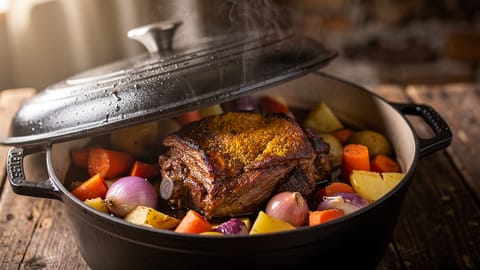
A slow-cooking method that sears food at high heat, then simmers it in liquid in a covered pot until tender.
Deglazing
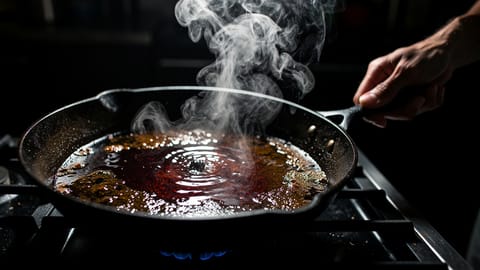
Adding liquid to a hot pan to dissolve the caramelized bits stuck to the bottom, creating a flavorful base for sauces.
Maillard Reaction
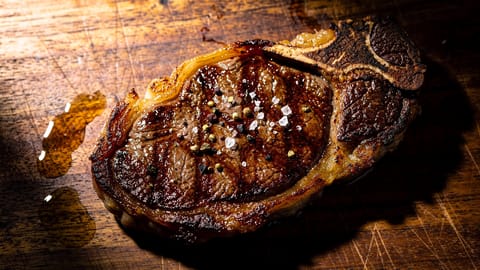
The chemical reaction between amino acids and sugars that occurs when food is heated, creating the brown color and complex flavors of seared meat, toasted bread, and roasted coffee.
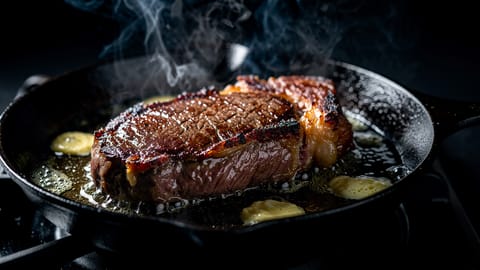
Searing
High-heat browning technique that creates a flavorful Maillard crust on meat, fish, or vegetables.
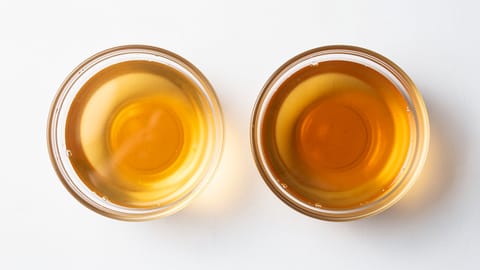
Stock vs. Broth
Stock is made from bones and connective tissue for body and richness; broth is made from meat for direct flavor. Both have different culinary uses.
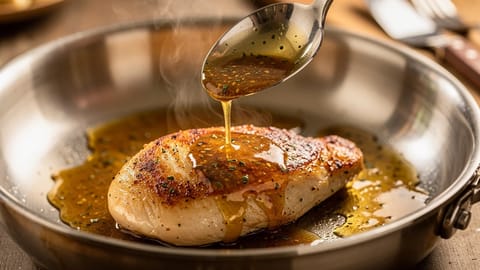
How to make a pan sauce: deglazing 101
A pan sauce turns the browned bits stuck to your skillet into a rich, flavorful sauce in under five minutes. Learn the technique, choose your deglazing liquid, and master pan sauces for chicken, steak, pork chops, and mushrooms.