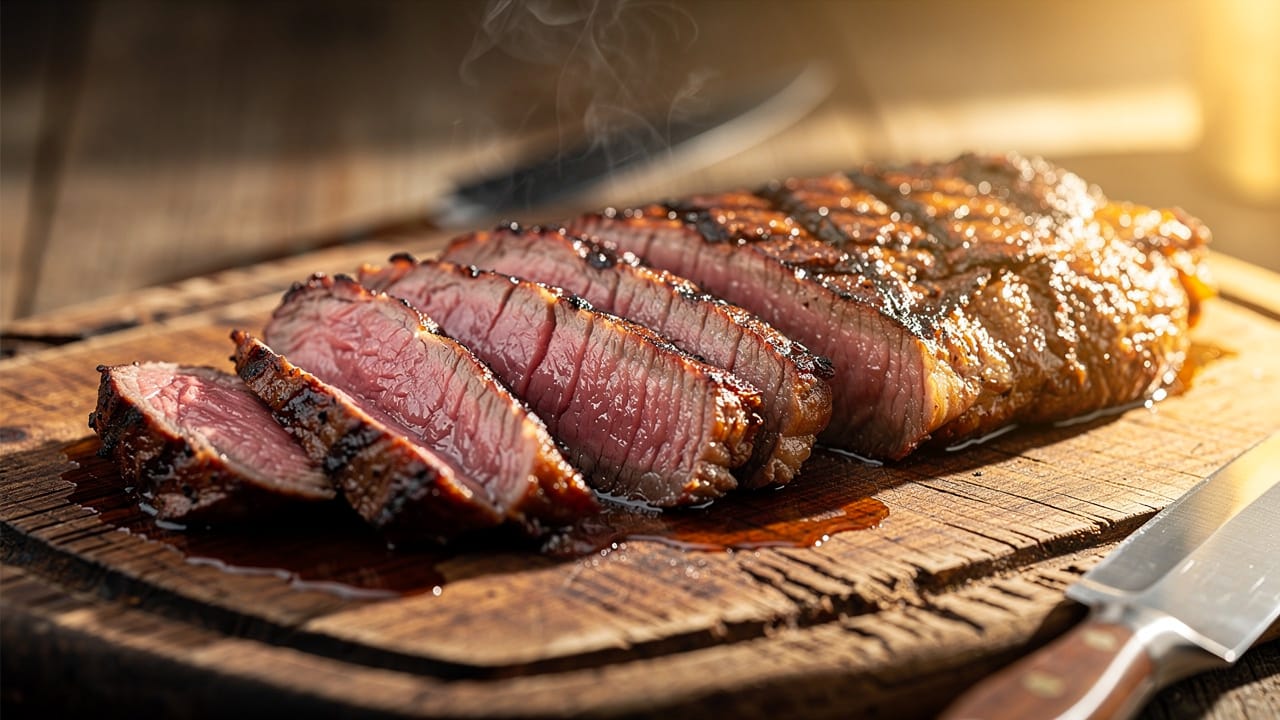
 Bastien
Resting Meat
Letting cooked meat sit before cutting — allows juices to redistribute, resulting in a more flavorful and moist result.
Resting meat is one of the simplest yet most often skipped steps in cooking. Cut a steak straight from the pan and the juices pour onto the cutting board — you can lose up to 40% of the internal moisture. Let it rest 5-10 minutes and those same juices stay in the meat, producing a more flavorful, more tender result with almost no effort.
Why resting works
During cooking, heat causes muscle fibers to contract and squeeze moisture toward the center of the meat. The hotter the exterior gets (especially during searing), the more dramatic this squeeze becomes. When you remove the meat from heat:
- Fibers relax — as the temperature gradient equalizes, the contracted proteins loosen their grip
- Juices redistribute — moisture that was squeezed to the center flows back toward the outer layers
- Temperature equalizes — carryover cooking continues raising the internal temperature while the surface cools
The result: evenly moist meat from edge to center, with juices staying in the cut rather than pooling on the board.
How long to rest
The rule of thumb: rest for roughly half the cooking time, with a minimum of 5 minutes and a maximum of 30-45 minutes for the largest roasts.
| Cut | Size | Rest time | Why |
|---|---|---|---|
| Steak (1") | 200-300g | 5-7 minutes | Small mass cools fast; brief rest is enough |
| Steak (2") | 400-600g | 8-10 minutes | More mass needs more equalization time |
| Pork chop | 2-3 cm | 5-8 minutes | Similar to steak |
| Chicken breast | Boneless | 5 minutes | Lean meat dries out fast; do not over-rest |
| Roast chicken | 1.5-2 kg | 15-20 minutes | Large enough to retain heat well |
| Pork loin roast | 1-2 kg | 15-20 minutes | Dense roast with good heat retention |
| Beef tenderloin | Whole, 1.5 kg | 15-20 minutes | Lean and cylindrical; rests evenly |
| Prime rib / rib roast | 2-4 kg | 20-30 minutes | Large mass with bone; holds heat long |
| Lamb leg | 2-3 kg | 20-30 minutes | Large roast with bone |
| Turkey | 5-8 kg | 30-45 minutes | Very large; needs long rest for juice redistribution |
| Brisket | 3-5 kg | 30-60 minutes | Collagen-rich; benefits from extended rest |
The temperature window
Meat is best served between 54-65°C (129-149°F) for red meat and 65-74°C (149-165°F) for poultry. Use an instant-read thermometer to check that rested meat is still in the serving range.
Where and how to rest
| Method | When to use | Effect |
|---|---|---|
| Cutting board, uncovered | Steaks, chops — when you want a crisp crust | Fastest cooling; best for thin cuts and seared surfaces |
| Wire rack over a board | Steaks, roast chicken | Air circulates underneath, keeping the bottom from steaming |
| Loosely tented with foil | Medium roasts (1-3 kg) | Slows cooling slightly; good balance of warmth and crust |
| Wrapped in foil + towel | Large roasts, brisket | Maximum heat retention; ideal for long rests (30-60 min) |
| Turned-off oven (door ajar) | Large roasts when serving is delayed | Keeps meat warm without further cooking |
What not to do
- Do not wrap steaks tightly in foil — trapped steam softens the seared crust you worked to build
- Do not rest in the hot pan — residual heat from the pan continues cooking the bottom
- Do not slice thin cuts immediately — even chicken breast benefits from 5 minutes
- Do not rest too long — meat below 50°C (122°F) is uncomfortably cold; thin cuts cool in 15 minutes
Resting and carryover cooking
Resting and carryover cooking happen simultaneously. While the meat rests, the hotter exterior continues transferring heat to the cooler center, raising the internal temperature 3-8°C (5-15°F) depending on the cut's size.
This means you must pull meat from heat before it reaches your target temperature. For specifics on pull temps by cut, see the carryover cooking guide.
| Cut type | Expected carryover during rest |
|---|---|
| Thin steak (2.5 cm) | 3-5°C |
| Thick steak (5 cm) | 5-8°C |
| Roast (2+ kg) | 5-8°C |
| Whole poultry | 3-5°C |
The juice loss experiment
The difference resting makes is measurable. In controlled tests:
| Resting time | Juice retained | Result |
|---|---|---|
| 0 minutes (cut immediately) | ~60% | Pool of juice on board, drier meat |
| 5 minutes | ~80% | Noticeable improvement |
| 10 minutes | ~90%+ | Optimal for steaks |
| 20+ minutes | ~90-95% | Optimal for roasts |
The first 5 minutes deliver the biggest improvement. Beyond 10 minutes for steaks, gains are marginal — but large roasts continue to benefit from longer rests.
Resting different proteins
Beef
Beef benefits the most from resting because it is often cooked to medium-rare or medium, where the temperature differential between exterior and interior is largest. A 5-minute rest transforms a good steak into a great one.
Poultry
Chicken and turkey need to rest, but the window is shorter. Lean white meat (breast) dries out if it sits too long uncovered. Rest whole birds 15-20 minutes — they retain heat well due to the bone structure. Use an instant-read thermometer to verify the breast has reached 74°C (165°F) during the rest via carryover.
Pork
Pork chops and tenderloin rest like steaks (5-10 minutes). Pork roasts rest like beef roasts (15-25 minutes). Pulled pork and braised pork shoulder have already been cooked long enough that resting provides less dramatic improvement, but still helps.
Fish
Fish requires minimal resting — 1-2 minutes at most. The fibers are short and delicate, and fish cools rapidly. Serve immediately or with only a brief pause.
Lamb
Lamb racks and chops rest 5-10 minutes. Lamb leg and shoulder, especially bone-in, should rest 20-30 minutes like large beef roasts.
Common mistakes
| Mistake | Why it is wrong | Fix |
|---|---|---|
| Cutting immediately | Juices run out — drier meat, wasted flavor | Always rest at least 5 minutes |
| Wrapping steaks tightly in foil | Steams the crust, ruins the sear | Rest uncovered or loosely tented |
| Resting in the cooking pan | Pan heat continues cooking the contact surface | Transfer to a cutting board or wire rack |
| Resting too long | Meat gets cold and unappetizing | Keep it under 15 min for steaks, 45 min for large roasts |
| Not accounting for carryover | Meat ends up overcooked after rest | Pull 3-8°C early; see carryover cooking |
| Pouring resting juices down the drain | Those juices are concentrated flavor | Save them for a pan sauce or pour over the sliced meat |
Tips
- Save the juices that collect during resting — add them to your pan sauce or spoon them over the sliced meat
- For steaks, rest on a warm (not hot) plate to slow cooling without further cooking
- Use the resting time productively — make a sauce, dress a salad, set the table
- For holiday roasts (turkey, prime rib), the 30-45 minute rest is not wasted time — it is the best time to make gravy and finish sides
- An instant-read thermometer is essential for verifying that meat reaches the right temperature during the rest through carryover
Resting meat in Fond
Fond's cook mode includes built-in rest timers for every protein. When you set your target temperature, the app calculates both the pull temperature (accounting for carryover) and the rest duration. The timer alerts you when the rest is complete and the meat is ready to slice.
Frequently asked questions
Does resting actually make that much difference?
Yes. Studies show that cutting a steak immediately after cooking can lose 30-40% of its juices, while resting for 5-10 minutes retains 80-90%+ of them. The difference is visible on the cutting board and noticeable in every bite.
Should I rest meat covered or uncovered?
For steaks and chops with a seared crust, rest uncovered to preserve the crisp surface. For large roasts where warmth matters more than crust, tent loosely with foil. Never wrap tightly — trapped steam ruins texture.
Can meat rest too long?
Yes. Thin cuts like steaks cool to room temperature in 15-20 minutes and are not enjoyable cold. Large roasts hold heat much longer and can rest 30-45 minutes without issue. If serving is delayed, hold in a turned-off oven with the door slightly ajar.
Why do my resting juices look red — is the meat raw?
The red liquid is not blood. It is myoglobin, a protein that stores oxygen in muscle tissue and is naturally reddish. It is perfectly safe and full of flavor — save it for your sauce.
Do braised and slow-cooked meats need resting?
Less urgently than grilled or roasted meats, because the long cooking process has already broken down proteins and equalized temperatures. However, a brief 10-15 minute rest still helps, especially for sliced cuts like brisket.
Cook smarter
Join the waitlist for Fond. Recipes, meal plans, and a little AI sous-chef that learns how you cook.
Related terms
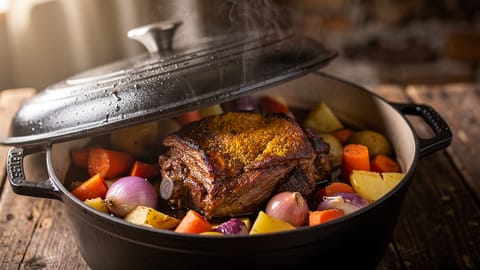
Braising
A slow-cooking method that sears food at high heat, then simmers it in liquid in a covered pot until tender.
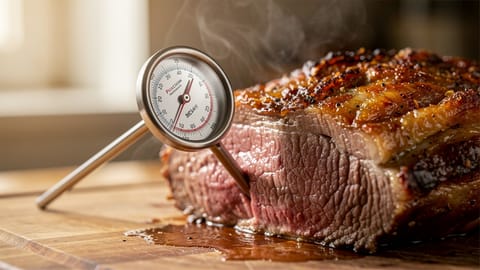
Carryover Cooking
The phenomenon where food continues to cook after being removed from heat, as residual thermal energy from the exterior migrates to the cooler interior.
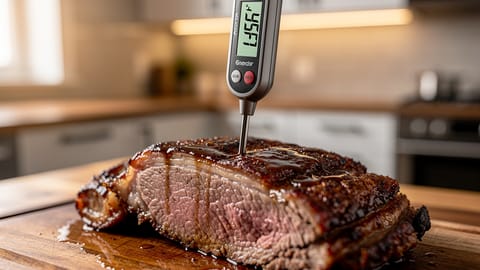
Instant-Read Thermometer
A kitchen thermometer that gives accurate temperature readings in seconds — the most reliable way to check doneness.
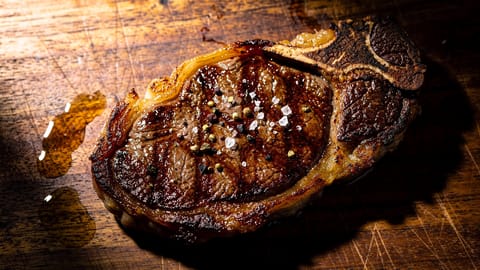
Maillard Reaction
The chemical reaction between amino acids and sugars that occurs when food is heated, creating the brown color and complex flavors of seared meat, toasted bread, and roasted coffee.
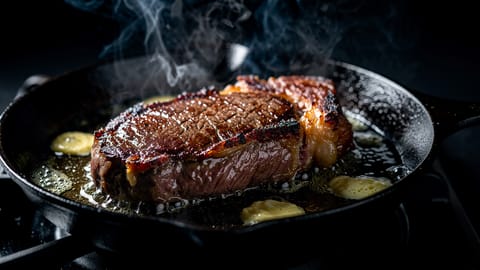
Searing
High-heat browning technique that creates a flavorful Maillard crust on meat, fish, or vegetables.
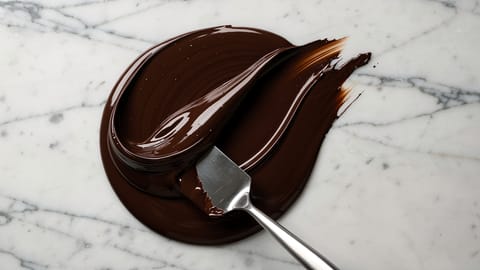
Tempering
Gradually adjusting the temperature of a sensitive ingredient to prevent curdling (eggs) or seizing (chocolate).