 Bastien
Searing
High-heat browning technique that creates a flavorful Maillard crust on meat, fish, or vegetables.
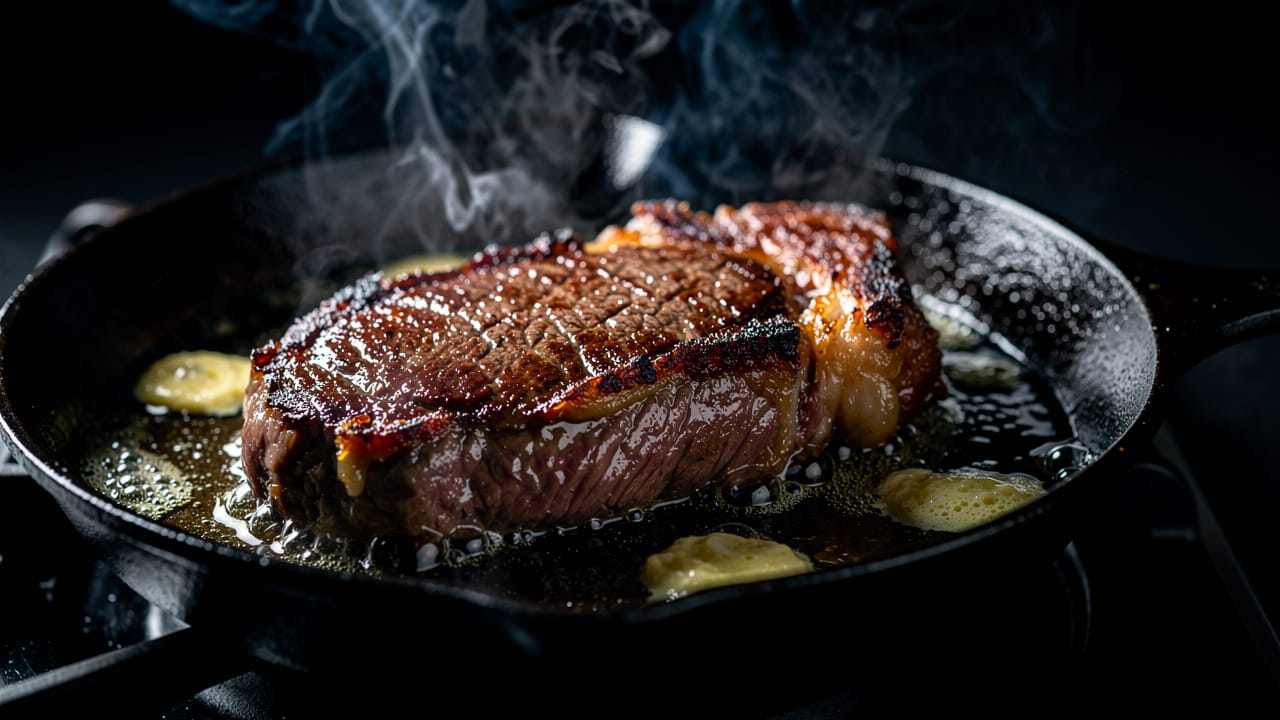
Searing is the process of cooking food at high heat until a deeply browned crust forms on the surface. That crust is the result of the Maillard reaction — a chemical process between amino acids and sugars that creates hundreds of new flavor and aroma compounds. It is what makes a steak taste like a steak instead of boiled beef.
Searing does not "seal in juices" — that is a persistent myth. What searing does is build flavor and texture. The browned crust tastes complex and savory, and the contrast between crispy exterior and tender interior is what makes seared food so satisfying.
How searing works
The Maillard reaction begins around 140°C / 280°F and accelerates rapidly above 175°C / 350°F. For browning to occur, two conditions must be met:
- The surface must be dry — water boils at 100°C, which keeps the surface temperature too low for Maillard browning. Any moisture on the food must evaporate before browning can begin.
- The pan must be hot enough — if the pan temperature drops too much when food is added, you get steaming instead of searing.
This is why the two cardinal rules of searing are: dry your food and preheat your pan.
Step-by-step searing technique
Preparation
- Remove protein from the fridge — let it sit at room temperature for 20–30 minutes. Cold meat drops pan temperature more dramatically.
- Pat completely dry — use paper towels on all surfaces. This is the single most important step. Wet meat steams instead of searing.
- Season generously — salt the protein right before searing. Salt draws out moisture, so either salt 45+ minutes ahead (so moisture reabsorbs) or right before cooking. Pepper and other seasonings go on now too.
- Choose the right oil — use a high smoke-point oil: avocado, grapeseed, refined canola, or light olive oil. Extra virgin olive oil will smoke and burn at searing temperatures.
The sear
- Preheat the pan over high heat — 2–3 minutes. The pan should be very hot. Hold your hand a few inches above the surface — you should feel strong radiant heat.
- Add oil — swirl to coat the bottom. The oil should shimmer immediately and flow like water. If it smokes heavily, the pan is too hot; reduce heat slightly.
- Place the protein presentation side down — lay it away from you to avoid oil splatter. Do not drop food in.
- Do not move it — this is where most people fail. Let the food sit undisturbed for 2–4 minutes. The crust needs time to form. If you try to flip and it sticks, it is not ready.
- Check for release — when the crust has formed, the food releases naturally from the pan. Gently nudge with a spatula; if it lifts cleanly, flip.
- Sear the other side — 1–2 minutes for a crust, less time than the first side.
- Sear the edges — for thick steaks and chops, hold the meat on its side with tongs to brown the fat cap and edges.
- Rest the meat — transfer to a cutting board. Resting allows juices to redistribute. Account for carryover cooking — internal temperature will rise 3–5°C after removing from heat.
After the sear
The browned bits stuck to the pan bottom — called the fond — are concentrated flavor. Deglaze the pan with wine, stock, or other liquid to create a pan sauce. Never waste the fond.
Best pans for searing
| Pan type | Heat retention | Weight | Best for | Notes |
|---|---|---|---|---|
| Cast iron | Excellent — holds heat through contact | Heavy | Steaks, chops, chicken thighs | Best crust formation; must be preheated well |
| Carbon steel | Very good — responds faster than cast iron | Moderate | Fish, thinner cuts, vegetables | Lighter alternative to cast iron |
| Stainless steel | Good — heats evenly | Moderate | Pan sauces (non-reactive), chicken breasts | Food can stick; needs proper technique |
| Non-stick | Poor — coatings limit max temperature | Light | Not recommended for true searing | Cannot reach searing temperatures safely |
Cast iron is the best searing pan for most home cooks. Its mass stores heat energy, so when cold food hits the surface, the temperature recovers quickly. Preheat it for 3–5 minutes over medium-high heat, not blasting high, to let the heat distribute evenly.
What to sear
| Food | Technique | Time per side | Internal temp target |
|---|---|---|---|
| Steak (2.5 cm thick) | High heat, flip once | 3–4 min | 52°C / 125°F (medium-rare) + rest |
| Chicken thighs (skin-on) | Skin down first, medium-high | 5–7 min skin side | 74°C / 165°F |
| Pork chops | High heat, flip once | 3–4 min | 63°C / 145°F + rest |
| Salmon fillet (skin-on) | Skin down first, medium-high | 4–5 min skin side | 52°C / 125°F (medium) |
| Scallops | High heat, flat side down | 2–3 min | Golden crust, translucent center |
| Duck breast | Skin down, cold pan start, render first | 8–10 min skin side | 54°C / 130°F (medium-rare) + rest |
| Vegetables (mushrooms, eggplant) | High heat, single layer | 3–4 min | Deep golden brown |
Use an instant-read thermometer to check doneness — searing time varies with thickness, starting temperature, and pan heat.
Common searing mistakes
| Mistake | What happens | Fix |
|---|---|---|
| Wet surface | Moisture creates steam, preventing browning | Pat completely dry with paper towels |
| Cold pan | Food sticks and steams instead of browning | Preheat 2–3 minutes on high; oil should shimmer |
| Overcrowding | Pan temperature drops; food steams in its own moisture | Leave 2–3 cm between pieces; sear in batches |
| Moving food too soon | Crust tears off and sticks to pan | Wait until food releases naturally; if it sticks, it is not ready |
| Low heat | Slow, uneven browning; overcooked interior | Use high or medium-high heat consistently |
| Wrong oil | Extra virgin olive oil smokes and burns | Use high smoke-point oils (avocado, grapeseed) |
| Skipping the rest | Juices pool out when cut | Rest 5–10 minutes before cutting |
Searing as part of a larger cook
Sear then braise
Many braised dishes begin with a sear. Brown the meat on all sides first, remove it, deglaze the pan, then return the meat to the braising liquid. The Maillard compounds from searing add flavor depth to the entire braise.
Reverse sear
For thick steaks (3 cm+), the reverse sear produces better results than traditional searing:
- Cook the steak in a low oven (120°C / 250°F) until 5–8°C below target internal temperature
- Rest briefly, then sear in a blazing-hot pan for 45–60 seconds per side
- The result: edge-to-edge even doneness with a crispy crust and almost no gray band
The reverse sear works because the low oven dries the surface, so the final sear is faster and more intense.
Sear for pan sauce
The best pan sauces start with a proper sear. After searing:
- Remove the protein
- Pour off excess fat
- Deglaze with wine or stock
- Reduce, then finish with cold butter for a glossy emulsified sauce
Tips for better searing
Dry brine ahead of time. Salting the protein 45 minutes to overnight draws out moisture, which gets reabsorbed. The result: a drier surface that browns faster and meat that is seasoned throughout.
Use enough oil. A thin film across the entire pan bottom ensures even contact between the hot surface and the food. Too little oil creates hot spots and uneven browning.
Press flat food down gently. For chicken breasts or fish fillets that curl, press down gently with a spatula for the first 30 seconds to ensure full surface contact.
Listen to the sizzle. A strong, consistent sizzle means the pan is hot enough. If the sizzle dies down, you have overcrowded the pan or the heat is too low.
Ventilate your kitchen. Searing produces smoke. Turn on the range hood or open a window before you start.
Searing in Fond
Fond's Cook mode walks you through searing with step-by-step timing and technique cues. Recipes that involve searing include temperature guidance and rest time reminders so you get the best crust without overcooking.
Frequently asked questions
Does searing seal in juices?
No. This myth was debunked over a century ago. A seared steak loses roughly the same amount of moisture as an unseared one. What searing does is create flavor through the Maillard reaction — that is its real purpose.
Should I sear before or after slow cooking?
Before. Searing builds a flavor base (the fond) that enriches the entire dish. Some cooks sear after slow cooking for texture, but the flavor benefit comes from searing first.
Can I sear on a grill?
Yes. A very hot grill grate produces excellent searing, with the added benefit of char flavor. Preheat the grill to its highest setting, clean and oil the grates, and follow the same principles: dry food, high heat, do not move until released.
Why does my food always stick when searing?
Three likely causes: the pan is not hot enough, the food is wet, or you are trying to flip too early. A properly heated pan with sufficient oil and dry food will release naturally when the crust has formed. If it sticks, wait another 30 seconds.
Cook smarter
Join the waitlist for Fond. Recipes, meal plans, and a little AI sous-chef that learns how you cook.
Related terms
Braising
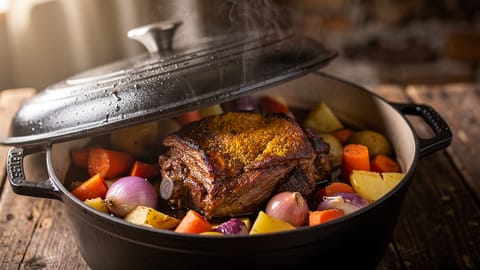
A slow-cooking method that sears food at high heat, then simmers it in liquid in a covered pot until tender.
Carryover Cooking
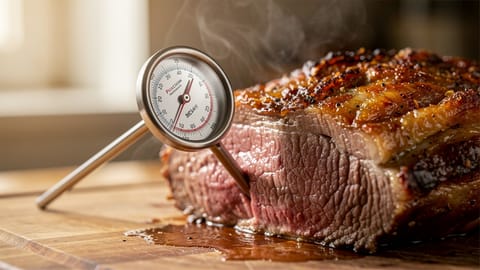
The phenomenon where food continues to cook after being removed from heat, as residual thermal energy from the exterior migrates to the cooler interior.
Deglazing
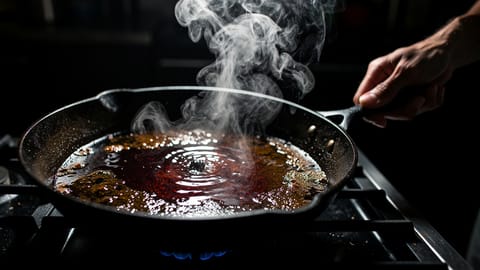
Adding liquid to a hot pan to dissolve the caramelized bits stuck to the bottom, creating a flavorful base for sauces.
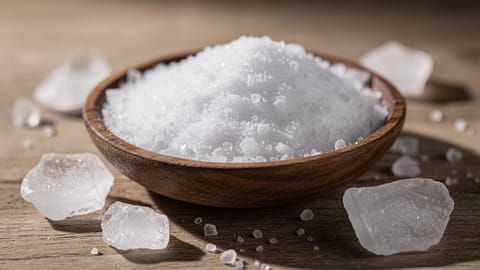
Kosher Salt
A coarse-grained salt with large, flat crystals that's preferred by chefs for seasoning because it's easy to pinch, dissolves well, and has no additives.
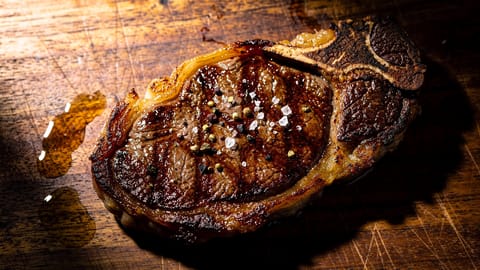
Maillard Reaction
The chemical reaction between amino acids and sugars that occurs when food is heated, creating the brown color and complex flavors of seared meat, toasted bread, and roasted coffee.
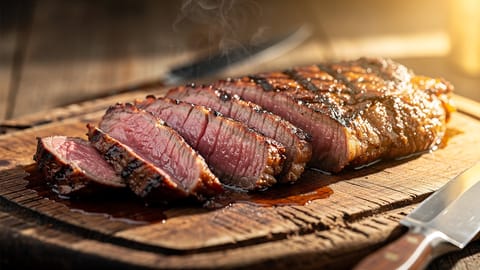
Resting Meat
Letting cooked meat sit before cutting — allows juices to redistribute, resulting in a more flavorful and moist result.
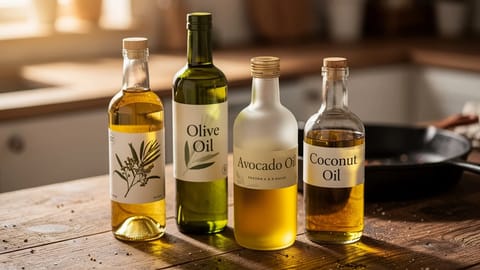
Cooking oil smoke points: the complete guide for every cooking method
Every cooking oil has a temperature limit. Push past it and you get bitter flavors, acrid smoke, and potentially harmful compounds filling your kitchen. That temperature limit is called the smoke point, and knowing it is the difference between a perfect sear and a smoking disaster.
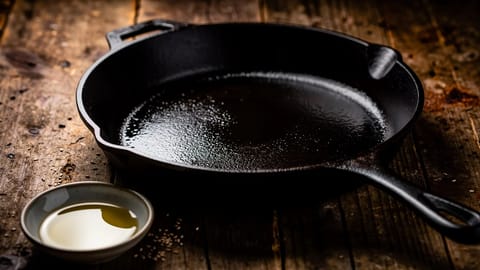
How to season a cast iron skillet: the complete guide
Seasoning is what makes cast iron nonstick, rust-proof, and better with every use. Learn the oven method, stovetop method, best oils for seasoning, and how to fix common problems like sticky residue, flaking, and rust.
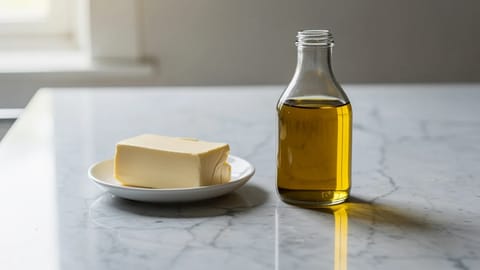
Butter vs oil: when to use each in cooking and baking
Butter and oil each have strengths in the kitchen. Butter brings flavor, browning, and flaky pastry. Oil brings higher heat tolerance, moisture, and a longer shelf life. Knowing when to reach for each — and when to combine them — makes every dish better.