 Bastien
Stock vs. Broth
Stock is made from bones and connective tissue for body and richness; broth is made from meat for direct flavor. Both have different culinary uses.
Stock and broth are two of the most fundamental liquids in cooking, yet they are often confused. Stock is made by simmering bones and connective tissue to extract collagen, which converts to gelatin and gives the liquid rich body. Broth is made by simmering meat (sometimes on the bone) for a shorter time, producing a lighter liquid with more immediate, meaty flavor.
Understanding the difference between stock and broth changes the way you cook. It tells you why a pan sauce made with homemade stock has a silky, coat-the-spoon texture that broth can never match, and why a simple chicken broth is the better choice for a light soup.
The key differences
| Property | Stock | Broth |
|---|---|---|
| Made from | Bones, connective tissue, cartilage | Meat (with or without bones) |
| Cooking time | 4–24 hours | 45 min – 2 hours |
| Gelatin content | High — sets when cold | Low to none |
| Body and mouthfeel | Rich, silky, viscous | Light, thin |
| Flavor profile | Neutral, deep, savory | Meaty, direct, seasoned |
| Typical seasoning | Unseasoned or lightly salted | Seasoned with salt and aromatics |
| Primary use | Sauces, reductions, risotto, braising | Soups, sipping, poaching, light dishes |
The biggest practical difference is gelatin. A well-made stock jiggles like jello when cold — that gelatin is what gives sauces body and sheen. It also acts as a natural emulsifier, stabilizing pan sauces without added starch.
Why bones matter: the science of gelatin
Bones and connective tissue are packed with collagen, a structural protein. During long, slow simmering, collagen molecules unwind and dissolve into the liquid as gelatin. This gelatin gives stock four properties broth cannot match:
- Silky mouthfeel — gelatin coats your palate the way water-based liquids cannot
- Sauce-thickening power — reduced stock naturally thickens without flour or cornstarch
- Natural emulsification — gelatin stabilizes fat-and-water mixtures, which is why stock-based pan sauces stay glossy
- Umami depth — long extraction pulls glutamates from bones and marrow
The jiggle test is the simplest quality check: refrigerate a cup of your stock overnight. If it sets firm, you have plenty of gelatin. If it stays liquid, you need more bones, more collagen-rich parts (feet, knuckles, wings), or longer cooking time.
Making better stock at home
Choosing bones
| Protein | Best bones for stock | Collagen level | Stock time |
|---|---|---|---|
| Chicken | Backs, necks, feet, wing tips, carcasses | Very high (especially feet) | 4–6 hours |
| Beef | Knuckles, neck bones, oxtail, marrow bones | High | 8–12 hours |
| Pork | Trotters, neck bones, ribs | High (trotters are gelatin-rich) | 6–8 hours |
| Fish | Non-oily fish frames and heads (snapper, halibut, sole) | Moderate | 30–45 minutes |
| Mixed | Combination of chicken and pork bones | Very high | 6–8 hours |
Chicken feet and pork trotters are the secret weapons — they are almost pure collagen and produce the most gelatinous stock.
The process
Have your mise en place ready before you start.
- Roast bones (optional, for brown stock) — spread on a sheet pan and roast at 200°C / 400°F until deep golden. This Maillard reaction adds color and complex flavor.
- Cover with cold water — starting cold extracts more gelatin than adding bones to hot water. Use just enough to cover by 2–3 cm.
- Bring to a bare simmer — never let stock boil. Boiling emulsifies fat into the liquid, making it cloudy and greasy. A few lazy bubbles breaking the surface is the target.
- Skim regularly — remove foam and impurities that rise in the first 30 minutes. Skimming produces a clearer, cleaner-tasting stock.
- Add aromatics late — mirepoix (onion, carrot, celery) in the final 1–2 hours. Aromatics break down and turn bitter if cooked too long.
- Strain carefully — pour through a fine-mesh strainer. Do not press the solids — pressing forces cloudy particles through.
- Cool quickly — transfer to an ice bath, then refrigerate. Scrape off solidified fat from the surface before using or freezing.
White stock vs. brown stock
White stock skips the roasting step. The bones go directly into cold water, producing a lighter, more neutral liquid ideal for cream sauces, risotto, and delicate soups. Brown stock uses roasted bones and sometimes tomato paste, yielding deeper color and more complex flavor for demi-glace, braising liquids, and rich sauces.
Making better broth
Broth is faster and simpler than stock but benefits from a few techniques:
- Start with bone-in meat — a whole chicken or bone-in thighs give both flavor and some gelatin.
- Season the water with salt from the start — broth is meant to taste good on its own.
- Add aromatics early — onion, garlic, herbs, and peppercorns go in from the beginning.
- Simmer 45 minutes to 2 hours — longer than that and the meat dries out.
- Strain and season to taste.
Broth is ready to drink as-is. Stock typically needs seasoning and is designed to be a building block, not a finished product.
When to use stock vs. broth
| Dish | Best choice | Why |
|---|---|---|
| Pan sauce | Stock | Gelatin creates a silky, glossy texture when reduced after deglazing |
| Risotto | Stock | Body coats each grain of rice; broth makes it watery |
| Braising | Stock | Enriches and thickens the cooking liquid as it reduces |
| Demi-glace | Stock | Requires heavy reduction; only gelatin-rich stock can handle it |
| Soup base | Either | Broth for light soups; stock for hearty, thick soups |
| Poaching | Broth | Flavors the protein directly with its seasoned liquid |
| Sipping | Broth | More immediate flavor; ready to drink |
| Gravy | Stock | Gelatin gives body; finish with a roux or reduction |
| Searing + sauce | Stock | Deglaze the fond, add stock, reduce for a quick pan sauce |
The shortcut rule: if the recipe reduces the liquid, use stock. If the liquid is the final product, use broth.
Store-bought options
Most commercial "stock" is actually broth — check the label. Signs of real stock:
- Gelatin or collagen listed in ingredients
- Sets when cold (rare in shelf-stable products)
- Short ingredient list without MSG, yeast extract, or excessive sodium
- "Bone broth" — a marketing term that usually indicates a stock-quality product
Better Than Bouillon (concentrated paste) is a practical pantry staple. It has strong flavor and dissolves easily, though it lacks the gelatin of homemade stock.
For the best results in sauces and reductions, homemade stock is worth the effort. For soups and everyday cooking, a good commercial product works fine.
Storing stock and broth
| Method | Duration | Best for |
|---|---|---|
| Refrigerator | 4–5 days | Immediate use |
| Freezer (containers) | 4–6 months | Large batches |
| Freezer (ice cube trays) | 4–6 months | Small portions for deglazing and sauces |
| Pressure canning | 12+ months | Shelf-stable storage |
Freezing stock in ice cube trays is one of the most useful meal prep habits. Pop out a few cubes whenever you need to deglaze a pan or enrich a sauce.
Stock and broth in Fond
Fond's Shopping list feature helps you plan recipes that call for stock or broth. When a recipe needs stock, you will see the exact quantity on your shopping list — or you can note "homemade" and add the bones and aromatics separately.
Frequently asked questions
Is bone broth the same as stock?
Functionally, yes. "Bone broth" is a marketing term that became popular in the 2010s. It is made by simmering bones for long periods — exactly what stock has always been. Good bone broth and good stock are the same product.
Can I substitute broth for stock?
Yes, with caveats. Broth works in soups and poaching liquids. For sauces, reductions, and braising, the result will be thinner because broth lacks gelatin. You can compensate by reducing longer or adding a small amount of powdered gelatin (about 1 tsp per cup).
Why is my stock cloudy?
Three common causes: boiling instead of simmering, pressing solids during straining, or not skimming impurities in the first 30 minutes. Cloudy stock tastes fine but lacks the clarity prized in consommés and clear sauces.
How do I know if my stock has enough gelatin?
The jiggle test: refrigerate a cup of stock overnight. If it sets like jello, you have plenty of gelatin. If it is liquid, add more collagen-rich bones (chicken feet, pork trotters, beef knuckles) and simmer longer.
Cook smarter
Join the waitlist for Fond. Recipes, meal plans, and a little AI sous-chef that learns how you cook.
Related terms
Braising
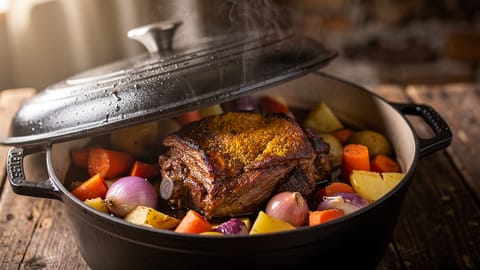
A slow-cooking method that sears food at high heat, then simmers it in liquid in a covered pot until tender.
Deglazing
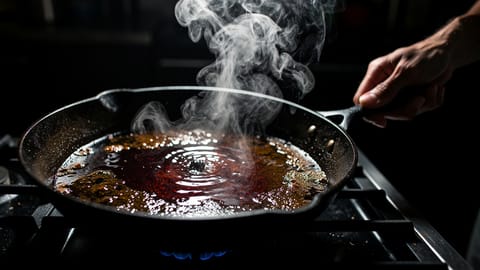
Adding liquid to a hot pan to dissolve the caramelized bits stuck to the bottom, creating a flavorful base for sauces.
Emulsification
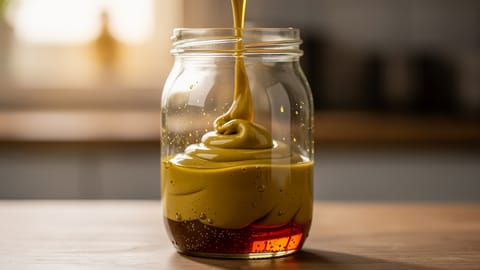
Combining two liquids that normally don't mix (like oil and water) into a stable, uniform mixture.
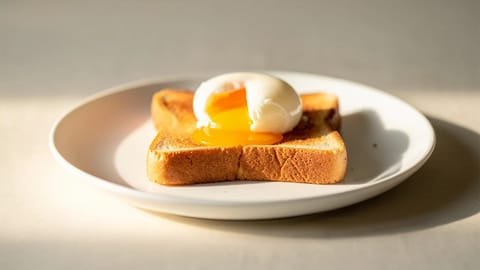
Poaching
Gentle cooking technique using liquid at low temperatures (160-180°F) to preserve the delicate texture of eggs, fish, and poultry.
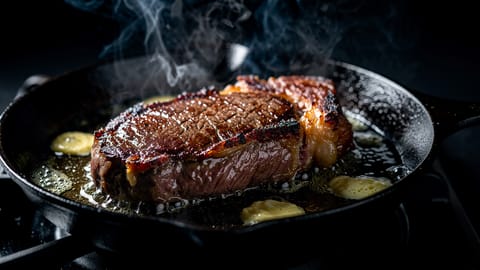
Searing
High-heat browning technique that creates a flavorful Maillard crust on meat, fish, or vegetables.
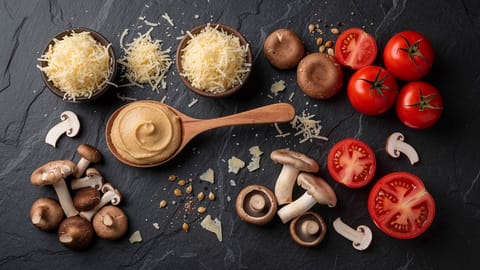
Umami
The fifth basic taste — a savory, meaty depth found in aged cheeses, soy sauce, mushrooms, and fermented foods.
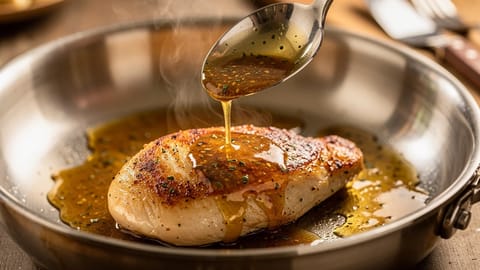
How to make a pan sauce: deglazing 101
A pan sauce turns the browned bits stuck to your skillet into a rich, flavorful sauce in under five minutes. Learn the technique, choose your deglazing liquid, and master pan sauces for chicken, steak, pork chops, and mushrooms.
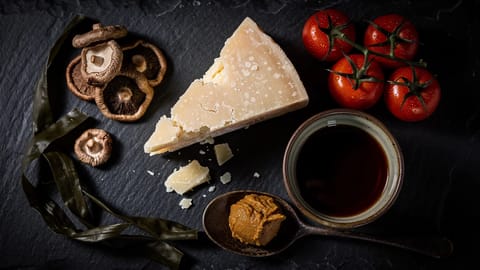
What is umami? The fifth taste explained for home cooks
You know the taste. That deep, savory richness in a slow-cooked broth, a chunk of aged parmesan, or a spoonful of miso stirred into soup. It's the reason tomato sauce tastes better after simmering for hours and why a dash of soy sauce transforms a stir-fry. That taste has a name: umami.